
Diesel Lubricity: Why ULSD Needs Additives
Diesel lubricates its own injection pump and injectors. The refining that takes the sulfur out also removes the compounds that do that job, so ultra-low sulfur diesel is treated to put the protection back.
Diesel lubricity is the fuel's ability to protect the pump and injector parts it lubricates as it flows through them. The hydrotreating that brings sulfur down to 15 ppm also strips the trace compounds that provide it, so ULSD gets a lubricity additive to pass ASTM D975: a 520-micron maximum wear scar on the HFRR test.
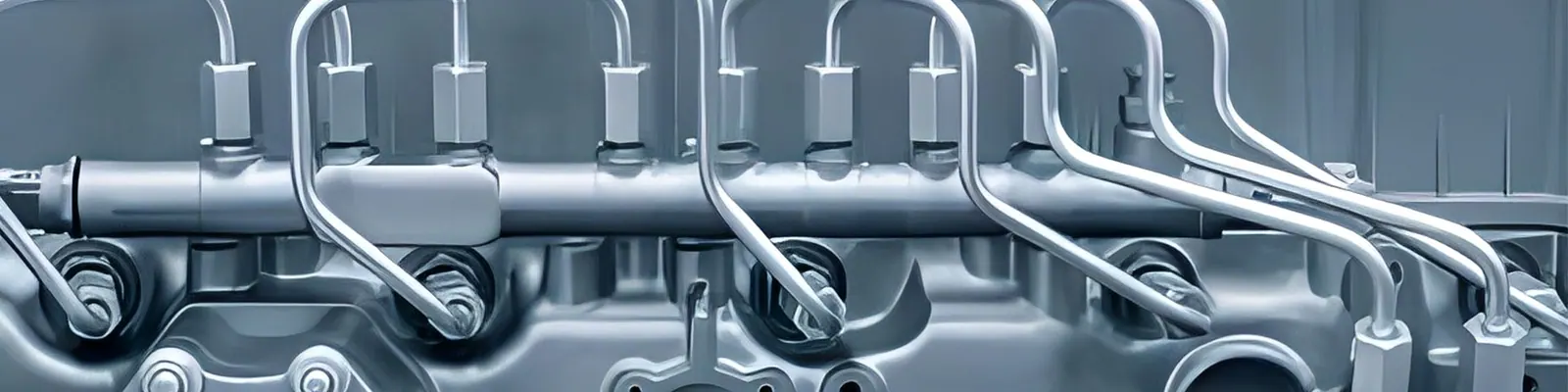
What is diesel lubricity?
Lubricity is how well a fuel prevents wear where metal slides on metal. In a diesel it matters because, as ASTM D975 puts it, diesel fuel "functions as a lubricant in most components of fuel injection equipment such as pumps and injectors." Cummins lists it as one of diesel's three jobs, along with supplying the energy and letting the engine meet its emissions limits. The Worldwide Fuel Charter, published by vehicle and engine makers including the U.S. Engine Manufacturers Association, notes that diesel pumps without an external lubrication system rely on the fuel's lubricating properties to work properly.
D975 names two fuel properties that affect wear. One is viscosity: fuel thick enough for the engine keeps a film between moving parts. The other is a small amount of surface-active trace compounds that stick to metal and form a protective film of their own. Lubricity is about the second one, plus fuel that's thinner than the engine was designed for.
This is the fuel system, not the bottom end. Bearings, rings and liners run on engine oil. That myth is covered in why diesel engines last longer.
Why ULSDWhy ULSD loses its natural lubricity
To get to 15 ppm sulfur, refiners hydrotreat diesel hard (the process is in how diesel is made from crude oil). At a 2012 refiners' Q&A hosted by AFPM, Chevron explained that straight-run fuels have good lubricity because of trace compounds containing sulfur, nitrogen and oxygen, and that "these compounds are removed by hydroprocessing." Suncor added that the hydrotreating needed for today's sulfur limits removes or changes so many of those trace components that adding lubricity additive is much more economical than trying to keep them.
Sulfur itself isn't the lubricant. D975 says the only fuels shown to have lubricity problems were processed severely enough to reduce aromatics or sulfur. The Worldwide Fuel Charter points to heavier hydrocarbons and polar compounds as the components that protect parts, and notes that poor lubricity has turned up in very high-sulfur fuels too. Low sulfur is a marker of the processing, not the cause.
Chevron's point at the same Q&A: it is "impossible to predict the lubricity based on bulk properties." Clear, bright, on-spec-looking diesel can still fail a lubricity test. It has to be measured in a lab.
The full story of the 15 ppm limit, and why engines need it, is in what ULSD is.
How it's measuredHow lubricity is measured: HFRR and the D975 limit
The standard U.S. test is ASTM D6079, the high-frequency reciprocating rig (HFRR). A steel ball rubs back and forth on a steel disc immersed in the fuel. D975 runs the test at 60°C (140°F). The lab then measures the wear scar in microns. A smaller scar means better lubricity. D975 allows D6079 or D7688, a version of the HFRR read by visual observation, and names D6079 as the referee method.
ASTM added the limit to D975 in 2005 "to minimize lubricity-related problems with ultra-low sulfur fuels," per DieselNet. Today D975-24 caps the HFRR wear scar at 520 µm for every No. 1-D and No. 2-D grade, S15 included. Like the rest of D975, it applies at the time and place of delivery, not just at the refinery.
| Spec or guidance | HFRR wear scar at 60°C | What it covers |
|---|---|---|
| ASTM D975-24 | 520 µm max | U.S. diesel, No. 1-D and No. 2-D, all sulfur grades. |
| EN 590 | 460 µm max | European road diesel (Neste handbook table, EN 590:2013). |
| EN 15940 | 460 µm max | European paraffinic diesel, including HVO (Neste handbook table). |
| Worldwide Fuel Charter | 460 µm / 400 µm | Engine and vehicle makers' recommendation: 460 µm in Categories 1–3, 400 µm in Categories 4–5, the fuels for markets with advanced emission rules such as U.S. 2007/2010 heavy-duty and nonroad Tier 4 (6th ed., 2019). |
| Cummins required spec | 520 µm max | Cummins engines on regular diesel (0.52 mm). Its contingency-fuel limit is 600 µm (Service Bulletin 3379001). |
| D975 appendix guidance | 450 / 600 µm | Experts agree fuels below 450 µm "should provide sufficient lubricity in all cases." Fuels above 600 µm "might not prevent excessive wear." |
Smaller numbers are stricter. The U.S. limit is looser than the European one and the engine makers' recommendation, which is why the two are often quoted side by side.
Read results with care. D975's own appendix says HFRR results don't correlate perfectly with injection equipment, the test doesn't cover every fuel-additive combination, and its reproducibility is large. ASTM notes the wear scar is sensitive to contamination, fuel temperature and room humidity. A long-term pump test such as ASTM D6898 is the more accurate check. Treat one HFRR number as a screen, not a verdict, and retest a borderline result.
Who treats itWho adds lubricity additive to ULSD
On the way from refinery to tank, D975-spec ULSD is normally treated by the supplier, not the end user. DieselNet says meeting the 520 µm limit "has forced the widespread use of lubricity additives." Cummins tells its customers that lubricity additives "need to be added by the fuel supplier to prevent fuel system damage."
- Refinery. Hydrotreating cuts sulfur and lubricity together. Some refiners add additive after blending: Suncor told the AFPM Q&A its additives go in "downstream of blending," with the finished fuel.
- Pipeline. Diesel often shares pipelines with jet fuel. According to Fuel Oil News, that's why refiners generally can't add lubricity improver before pipeline shipment.
- Terminal. Lubricity additive is often injected at the distribution terminal, before the fuel is sold to wholesalers (Fuel Oil News). Resellers can also treat it after the terminal.
- Delivered fuel. D975 allows additives at up to 1% of the finished fuel's volume, and lists lubricity among the properties they're used for. The 520 µm limit applies to what arrives at your tank.
For a buyer, the practical job is simple: order fuel sold to D975, ask the supplier to confirm it meets the lubricity limit, and don't dilute it with fuels that lack one.
AftermarketAftermarket lubricity additives: when they make sense
Bottle and bulk lubricity additives exist, and engine makers are cautious about them. Cummins writes that its engines are built to run on commercially available fuel that meets its spec, "therefore, it is not our policy to recommend fuel additives." It lists a lubricity enhancer as a legitimate fix when fuel doesn't meet the lubricity spec, and says to talk to the fuel supplier or Cummins first.
A known lubricity gap
- A lab result above the limit on fuel you have to burn.
- Kerosene or jet fuel in the tank. Cummins says most jet fuels are too low in lubricity and need an additive plus upgraded fuel-system parts.
- Contingency fuels in an emergency, within the engine maker's limits.
What Cummins warns about
- Overdosing. Overuse of fuel additives "can cause adverse effects such as fuel filter plugging and reduced aftertreatment life."
- Ash. Additives with ash build deposits and fill a particulate filter with material regeneration can't burn off.
- Power claims. "There are no known additives that increase the power or improve the efficiency of a properly maintained engine."
Two more checks. Cummins notes that U.S. EPA allows only registered fuel additives to be sold, and that additives behave differently in different fuels, so the product has to be one your fuel responds to. Neste recommends lubricity additives of neutral chemistry, because they don't affect the fuel's acid number. Read the engine maker's fuel bulletin before treating. Cummins says engine damage from additives it hasn't approved isn't covered by its warranty. More on dosing mistakes is in additive misuse.
BiodieselBiodiesel blends as a lubricity improver
Biodiesel adds lubricity, even at low levels. NREL's Biodiesel Handling and Use Guide says the exact amount needed to meet the 520 µm limit depends on the base diesel, "but 2% biodiesel almost always imparts adequate lubricity," and a blend with at least 2% biodiesel can do away with the need for other lubricity additives. The HFRR test method itself applies to biodiesel blends.
D975 already allows up to 5% biodiesel in ordinary diesel. The trade-offs show up at higher blends: cold flow, water uptake and storage life. They're covered in biodiesel vs diesel. Use what the engine maker approves, and if you rely on a blend for lubricity, confirm with the supplier that the blend level is consistent from load to load.
Renewable dieselRenewable diesel (R99, HVO) and lubricity
Renewable diesel is made by hydrotreating fats and oils, and Neste says neat renewable diesel has about the same lubricity as sulfur-free fossil diesel. The Department of Energy's fuel properties table says renewable diesel "requires lubricity additive, like ultra-low-sulfur diesel."
About 650 µm neat
Neste's renewable diesel handbook lists its fuel at roughly 650 µm when shipped without additive as a blending component. That's over the D975 limit.
460 µm or better
Delivered for use in vehicles, it carries lubricity additive and meets 460 µm or less. Neste says the additives used in fossil diesel work in renewable diesel too.
Neste's advice is to always check lubricity, whether the fuel is used neat or blended. The Worldwide Fuel Charter says the same thing about HVO: it generally has poor lubricity and needs the right additives in the finished fuel. Because R99 is sold to the D975 spec, the 520 µm limit applies to it the same way. More on the fuel is in what HVO is and renewable diesel vs biodiesel.
Winter blendsKerosene, #1 diesel and winter blends
Thinner fuel is the other way to lose lubricity. D975 says lubricity concerns also arise when fuel is thinner than the engine was designed for. That matters in winter, when #2 gets cut with lighter fuel:
- #1 diesel must meet the same 520 µm limit as #2, but Chevron says its lubricity is likely a little lower because it's thinner. See #1 vs #2 diesel.
- Kerosene is made to ASTM D3699, which has no lubricity test at all. See kerosene vs diesel.
- Blending decisions belong with cold-flow planning. See preventing diesel gelling.
Symptoms of low-lubricity fuel, and when to test
There's no gauge for lubricity, and you can't see it in a sample jar. The damage is wear in the pump and injectors. Cummins: fuels with low lubricity "cause increased wear and possible seizure of fuel system components." The Worldwide Fuel Charter adds higher tailpipe emissions and, in some cases, catastrophic pump failure. It cites a Bosch scale on which normal pump wear corresponds to an HFRR scar of about 400 µm, while higher ratings mean shorter pump life and, at the top, possible breakdown.
Water does similar damage by a different route, because it lubricates poorly. If pumps or injectors are wearing out, rule out water and dirt as well: see water in diesel fuel and diesel fuel contamination.
When an HFRR test is worth ordering
- Fuel with no paperwork: a tank inherited with a site, or a generator tank nobody has records for.
- Heavy blending with kerosene, jet fuel or #1, beyond what the engine maker approves.
- Neat renewable diesel from a new source, per Neste's advice to always check it.
- Repeated pump or injector failures where water, dirt and the wrong fuel have been ruled out.
Sample it right. Lubricity results react to trace contamination. D975 quotes D6079: sample containers "shall be only fully epoxy-lined metal, amber borosilicate glass, or polytetrafluoroethylene." Ask the lab for its own bottle. How to pull a good sample, and which other tests to run, is in how to test diesel for contamination and generator fuel quality testing.
FuelGo deliverySpec diesel and R99, delivered
FuelGo delivers clear on-road ULSD #2, 15 ppm sulfur max to ASTM D975, in B0, B5, B10 or custom bio-blends. We also deliver red-dyed off-road diesel to the same ULSD #2 spec, and R99 renewable diesel, which meets D975. Drops run 20 to 4,400 gallons, with transport loads up to 7,500 gallons, into site tanks, generators or straight into trucks with mobile fleet fueling.
For a tank with an unknown history, lab fuel testing checks water, microbes, stability, cloud point, sulfur and, on request, lubricity (HFRR, ASTM D6079), and fuel polishing, tank cleaning and pump-out deal with what it finds. Dispatch runs 24/7/365. Get a delivered quote or call 800-720-4546. A dispatcher replies within the hour.
Common questionsDiesel lubricity FAQ
What is diesel lubricity?
Why does ULSD have low lubricity?
What is the ASTM D975 lubricity limit?
What is an HFRR test?
Does ULSD already contain lubricity additive?
Do I need to add a lubricity additive to my diesel?
Does biodiesel improve lubricity?
Does renewable diesel need a lubricity additive?
Sources: ASTM D975-24 (NCWM copy): Table 1, 5.1.13, 7.1.1, Appendix X4 · ASTM D6079-26, HFRR test method (scope) · DieselNet, U.S. diesel fuel standards · AFPM Q&A (2012), lubricity in ultra-low sulfur fuels (Chevron, Suncor) · Worldwide Fuel Charter, 6th ed. (Oct. 28, 2019) · Cummins Service Bulletin 3379001, Fuels for Cummins Engines · Fuel Oil News, Taking the mystery out of lubricity (Mar. 4, 2010) · NREL/DOE, Biodiesel Handling and Use Guide, 6th ed. · Neste Renewable Diesel Handbook (May 2016)