
Kerosene vs. Diesel: Differences, Cost and When to Use Each
Kerosene is made for heaters and lamps. Diesel is made for engines. They come from the same part of the barrel, and kerosene is a useful winter blending stock, but it isn't a drop-in replacement for diesel.
Kerosene (ASTM D3699, grades 1-K and 2-K) is a thinner distillate made for heaters and lamps. Diesel (ASTM D975) is made for engines, with cetane and lubricity limits kerosene's spec lacks. Kerosene holds about 2% less energy per gallon and usually costs more. In engines, use it only as winter blending stock, at 15 ppm sulfur.
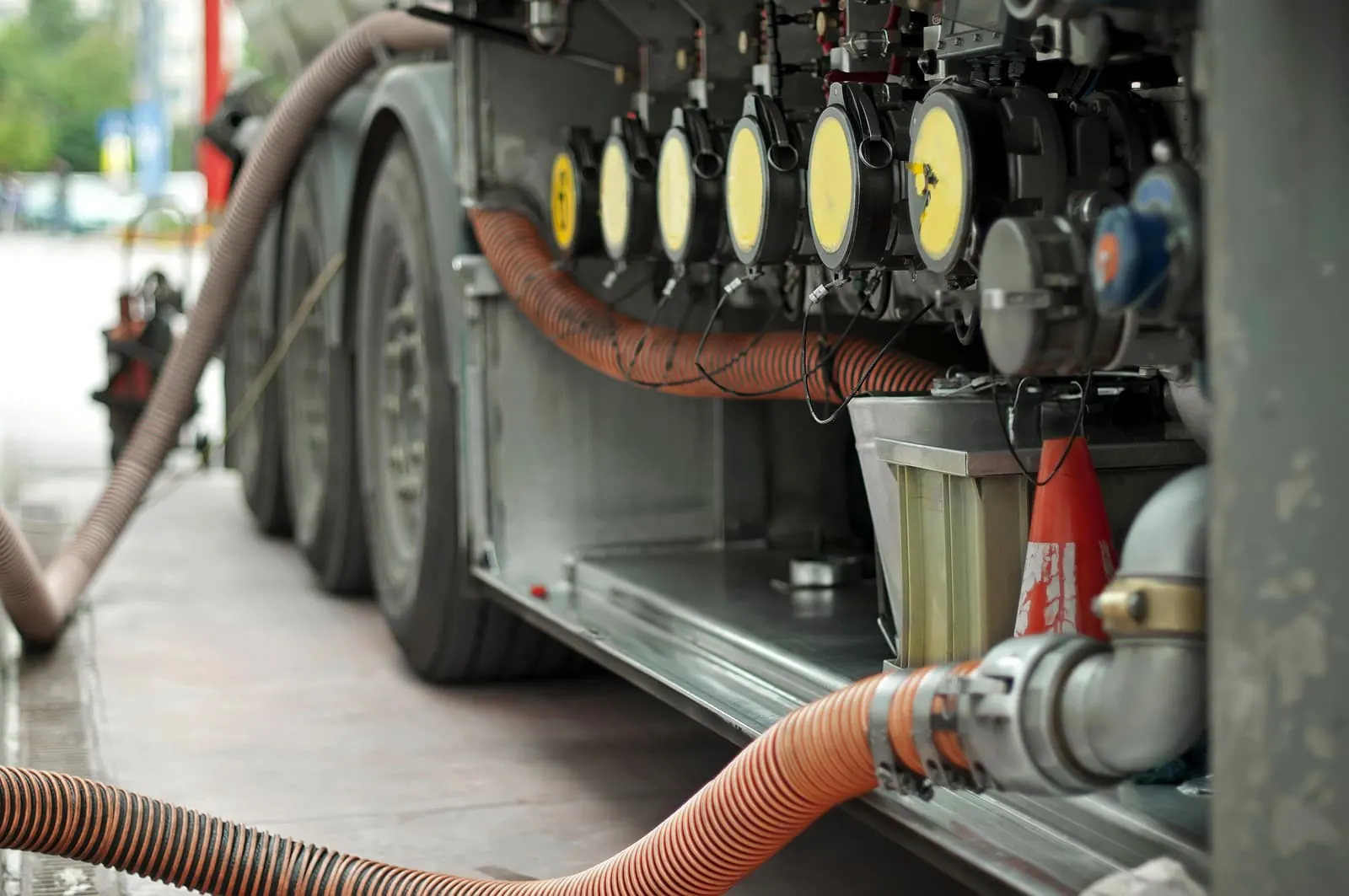
Kerosene vs diesel: K-1 vs #1 vs #2 at a glance
Kerosene and #1 diesel are cut from the same light end of the distillate range. #2 diesel is heavier. What separates them is what each fuel is certified for, and that shows up in the limits below. The full #1 vs #2 breakdown is in diesel #1 vs #2, and the short version of #1 vs kerosene is here. This page is about kerosene against both.
| Property | Kerosene (No. 1-K) | #1 diesel (1-D S15) | #2 diesel (2-D S15) |
|---|---|---|---|
| Spec and purpose | ASTM D3699, for heaters without a flue and wick lamps. 2-K is for flue-connected appliances. | ASTM D975, for engines that need a lighter fuel | ASTM D975, the general-purpose engine fuel |
| Sulfur, max | 400 ppm (2-K: 3,000 ppm) | 15 ppm | 15 ppm |
| Flash point, min | 100°F | 100°F | 126°F |
| Viscosity at 40°C | 1.0–1.9 mm²/s | 1.3–2.4 mm²/s | 1.9–4.1 mm²/s |
| Cetane and lubricity | No limit in the spec | Cetane 40 min; 520 µm wear scar max | Cetane 40 min; 520 µm wear scar max |
| Energy, gross | 135,000 Btu/gal | A few percent below #2 (sources vary) | About 137,381 Btu/gal (ULSD) |
| Federal excise tax | 24.4¢/gal undyed | 24.4¢/gal undyed | 24.4¢/gal undyed |
Kerosene limits: ASTM D3699 as adopted in Alabama (Ala. Admin. Code 80-1-17) and Maryland (COMAR 03.03.05.03). Diesel limits: ASTM D975-24. Energy: EIA. Tax: IRS Pub 510. Retail cans often say "K-1"; the ASTM grade name is 1-K.
Energy contentKerosene vs diesel energy content: about 1.7% less per gallon
EIA's conversion factors put kerosene at 5.670 million Btu per barrel, or 135,000 Btu per gallon, and ultra-low sulfur diesel at 5.770 million Btu per barrel, about 137,381 Btu per gallon. That makes a gallon of kerosene about 1.7% lighter on energy. Both are gross (higher heating value) figures from EIA's Monthly Energy Review. Kerosene is less dense, so it also weighs less per gallon: see diesel weight per gallon.
In a blend, the penalty scales with the share. By the same EIA factors, 30% kerosene in #2 lowers the blend's energy per gallon by roughly half a percent. Cummins adds that thinner fuels also cost power through internal leakage in the fuel system, and notes that winter blends cost more for both reasons: a higher price and lower energy content.
Lubricity, cetane, viscosityWhy engines care: lubricity, cetane and viscosity
Diesel does more than burn. Cummins lists its three jobs: supply the energy, cool and lubricate the fuel pump and injectors, and let the engine meet its emissions limits. Kerosene's spec is written for a clean, steady flame, so it leaves out the properties that protect an injection system.
No lubricity limit for kerosene
D975 caps diesel at a 520 µm wear scar. D3699 has no lubricity test at all. Cummins says many contingency fuels are low in viscosity and lubricity and that low-lubricity fuel can cause fuel system failures. It adds that most jet fuels are too low in lubricity, and that such fuel then needs a lubricity additive and upgraded fuel system parts.
Thinner than engines want
Kerosene's spec allows 1.0–1.9 mm²/s. Cummins requires 1.3–4.1 cSt (the same unit) and sets 1.3 as the floor even for contingency fuels, so kerosene at the thin end is below it. Low viscosity, Cummins says, causes rapid wear of pumps and injectors.
Ignition quality isn't specified
D975 requires cetane 40. Cummins asks for 42 above 32°F and 45 below. D3699 sets no cetane limit, so it varies by batch. Cummins says cetane below 42 can mean poor starting, excessive white smoke and poor idling.
Lights more easily
Kerosene's minimum flash point is 100°F, against 126°F for #2 diesel. Cummins warns that jet fuels and kerosene are much more flammable than normal diesel, so keep ignition sources away when handling them.
Can you use kerosene in a diesel engine?
As a blend component, often yes. As a straight substitute in a modern engine, treat it as an emergency measure at most, and check the manual first. Cummins lists jet fuels and kerosene as contingency fuels "only meant to be used for short periods of time when no other fuels are available," warns they can hurt performance and durability, and says it assumes no warranty responsibility for repairs that result. Other engine makers set their own rules. Your engine's operator manual and warranty terms decide what's allowed.
Sulfur is the second problem. Federal rules require diesel fuel to meet the 15 ppm ULSD standard, and Cummins says engines with diesel particulate filters, oxidation catalysts or SCR must run on ULSD. 1-K allows 400 ppm and 2-K 3,000 ppm. The exception is kerosene that also meets the ULSD rules: federal regulations let a "dual-use" fuel be designated as ULSD, kerosene or jet fuel. If you blend kerosene into engine fuel, it has to be that kind, at 15 ppm.
| Situation | What to do |
|---|---|
| Cold snap coming, tanks of #2 | Blend in #1 diesel or 15 ppm kerosene before the fuel reaches its cloud point, or treat it with anti-gel. See the winter section below. |
| Truck or machine with DPF, SCR or DOC | ULSD only: #2, #1 or a winter blend. Kerosene only if it's certified at 15 ppm and the blend still meets the engine's fuel spec. |
| Out of diesel, K-1 on the shelf | Get diesel delivered. Standard 1-K is 400 ppm sulfur, and Cummins treats kerosene as a short-term contingency fuel with no warranty cover. |
| Older engine, "it always ran on kerosene" | Go by the manual, not habit. Cummins notes contingency fuels can cause hot-restart trouble in distributor-type pumps and extra wear on fuel system parts. |
| Heater or wick lamp | 1-K kerosene only, never diesel or gasoline. See heaters and lamps below. |
Is kerosene cheaper than diesel?
Usually not, and it buys less energy per gallon. EIA tracked refiner prices for both fuels, excluding taxes, until 2022. At wholesale (refiner sales for resale), kerosene cost more than No. 2 diesel in every year from 2010 to 2020, by 0.5 to 8.5 cents a gallon, and 4.7 cents less in 2021:
| Year | Kerosene | No. 2 diesel | Kerosene vs diesel |
|---|---|---|---|
| 2010 | $2.299 | $2.214 | +8.5¢ |
| 2011 | $3.065 | $3.034 | +3.1¢ |
| 2012 | $3.163 | $3.109 | +5.4¢ |
| 2013 | $3.084 | $3.028 | +5.6¢ |
| 2014 | $2.882 | $2.812 | +7.0¢ |
| 2015 | $1.735 | $1.667 | +6.8¢ |
| 2016 | $1.383 | $1.378 | +0.5¢ |
| 2017 | $1.730 | $1.691 | +3.9¢ |
| 2018 | $2.160 | $2.130 | +3.0¢ |
| 2019 | $2.017 | $1.958 | +5.9¢ |
| 2020 | $1.310 | $1.286 | +2.4¢ |
| 2021 | $2.069 | $2.116 | −4.7¢ |
U.S. refiner sales for resale, annual average, dollars per gallon excluding taxes. Source: EIA, Refiner Petroleum Product Prices by Sales Type. EIA discontinued the series; its last release was June 1, 2022.
Sales to end users showed a bigger gap. Sold by refiners directly to end users, kerosene cost 50 to 86 cents a gallon more than No. 2 diesel in each year EIA published it (2010–2013 and 2018; other years were withheld), and in March 2022, the last month in the series, it was $4.689 against $3.689. For comparison, EIA's No. 1 distillate cost more than kerosene at wholesale in every year from 2010 to 2021.
EIA doesn't publish a current kerosene price. For diesel it does: the U.S. on-highway retail average was $6.276 a gallon for the week of October 19, 2026. Week-by-week numbers are in our diesel price report. Whatever the per-gallon quote, kerosene's 1.7% lower energy means it costs about 1.7% more per Btu at the same price.
Prices here are historical EIA averages and one dated retail figure, shown for comparison. They aren't a quote or a forecast, and local kerosene prices vary widely. Tax rules change; check current rates with your state revenue agency or a tax professional.
Kerosene and diesel taxes: dyed vs undyed
Federal tax treats the two fuels the same. IRS Publication 510 puts 24.4 cents a gallon on undyed diesel and undyed kerosene. Dyed diesel and dyed kerosene pay only the 0.1-cent LUST tax because they're sold for nontaxable uses, and the same red dye rule covers both. If you paid tax on undyed kerosene and used it for a nontaxable purpose, Pub 510 allows a credit or refund; see off-road diesel tax refunds.
States are less uniform. Our diesel taxes by state table covers diesel only: as of October 16, 2026, the gap between on-road and dyed diesel runs from $0.24 a gallon in Rhode Island to $0.94 in Pennsylvania. Kerosene rules vary by state and aren't in that table, so ask your state revenue agency. When you blend, keep it simple: clear into clear, dyed into dyed. Dyed fuel stays off the road; see dyed vs clear diesel.
WinterBlending kerosene into diesel for cold weather
This is where kerosene earns its keep with engines. It carries less wax than #2, so diluting #2 with it lowers the cloud point. Cummins calls dilution with #1 diesel or jet fuel "the most common method" of preventing wax problems. A typical blend runs 30 to 60% light distillate, which Cummins says lowers the cloud point about 5.4 to 12.6°F and the pour point 9 to 20°F. A common rule of thumb is about 2–3°F per 10% added; see our winter blend guide.
- Add it before wax forms. Cummins: lower-wax fuel "must be added BEFORE wax forms to be effective." Once the tank has clouded, blending won't clear it until the fuel warms.
- Use 15 ppm blend stock in any engine with aftertreatment. 400 ppm 1-K raises the sulfur of the whole tank.
- The blend still has to meet the engine's spec. Cummins wants at least 1.3 cSt viscosity and cetane 45 below 32°F in the finished fuel.
- Don't expect miracles. One fuel-lab writer argued in 2015 that 30% kerosene lowered the CFPP of #2 by only about 7–11°F, and that a good cold-flow additive can do more for less. Ask for the blend's measured cloud point and CFPP.
- Count the fuel already in the tank. The heel dilutes your blend. The math is in how to prevent diesel gelling.
Gel temperatures for #2, #1 and blends are in what temp does diesel gel? Additives, heaters and fixing gelled fuel are in the prevention guide.
Heaters & lampsKerosene heaters and lamps: which grade, and why it matters
ASTM D3699 was written for these appliances. 1-K is the low-sulfur grade for burners without a flue and for wick-fed lamps. 2-K is for flue-connected burners. The U.S. Consumer Product Safety Commission's advice for kerosene heaters:
- Use only water-clear 1-K kerosene. Never gasoline or any other fuel. CPSC says even small amounts of gasoline mixed into kerosene can substantially raise the risk of fire or explosion.
- Buy certified 1-K. Grades other than 1-K can release more pollutants indoors, and the grades can look the same.
- Keep it in a blue kerosene can, never a red gasoline can or one that has held gasoline.
- Refuel outdoors, with the heater off and cool.
- Keep the heater at least three feet from furniture and clothing, and run it with the room's doors open.
FuelGo doesn't deliver heating oil or home heating fuel. For heating oil and how it compares with diesel, see what is heating oil?
Which oneKerosene or diesel: when to use each
Use #2 diesel
Trucks, equipment and generators. More energy per gallon, a lower price, and the cetane and lubricity limits engines are built around.
Use a winter blend
#2 blended with #1 diesel or 15 ppm kerosene, or treated with cold-flow additive, before the cold arrives. Judge it by cloud point and CFPP.
Use 1-K kerosene
Unvented heaters and wick lamps need 1-K. Flue-connected appliances can take 2-K where the maker allows it. Diesel doesn't belong in either.
Use straight #1 diesel
Where #2 can't cope, #1 diesel is the engine-certified light fuel. It carries the cetane and lubricity limits kerosene doesn't.
Diesel delivered, and kerosene on request in some areas
FuelGo delivers dyed off-road and clear on-road diesel, gasoline, DEF and R99 renewable diesel nationwide, including winter blends, plus winter blending and additive packages for tanks and equipment that sit outside. That's 20 to 4,400 gallons per drop, and transport loads up to 7,500 gallons, into site tanks, generators and equipment, or straight into trucks with mobile fleet fueling. Dyed or clear, off-road or on-road, we match the fuel to your engines and how you're taxed.
Kerosene (1-K and 2-K) is available on request in some areas; ask dispatch. Not sure what's in a tank? Lab fuel testing checks it, and fuel polishing, tank cleaning and fuel pump-out deal with what it finds. Dispatch runs 24/7/365. Get a delivered quote or call 800-720-4546. A dispatcher replies within the hour.
Common questionsKerosene vs diesel FAQ
What is the difference between kerosene and diesel?
Can you use kerosene in a diesel engine?
Is kerosene cheaper than diesel?
Is K-1 kerosene the same as #1 diesel?
Does kerosene have more energy than diesel?
How much kerosene can you add to diesel for winter?
Can you burn diesel in a kerosene heater?
Is kerosene taxed like diesel?
Sources: ASTM D3699-25, Standard Specification for Kerosine (scope) · Ala. Admin. Code 80-1-17, Standards for Kerosene · COMAR 03.03.05.03, kerosene (ASTM D3699) · ASTM D975-24, Standard Specification for Diesel Fuel (NCWM copy) · U.S. EIA, Monthly Energy Review (Sept. 2026), Appendix A, Table A1 · U.S. EIA, British thermal units (Btu) · Cummins Service Bulletin 3379001, Fuels for Cummins Engines (2013 revision) · U.S. EIA, Refiner Petroleum Product Prices by Sales Type (annual) · U.S. EIA, Refiner Petroleum Product Prices by Sales Type (monthly) · U.S. EIA, Gasoline and Diesel Fuel Update (week of Oct. 19, 2026) · IRS Publication 510 (Dec. 2025), Excise Taxes · 40 CFR 1090.305, ULSD standards · 40 CFR 1090.1015, dual-use kerosene · U.S. CPSC, kerosene heater safety · Oil & Energy Online, Kerosene doesn't winterize new distillates well (Jan. 2015)