
Off-Road Diesel Tax Refunds: Claiming Federal Tax Back on Form 4136 and 8849
Clear diesel burned in off-road equipment, generators or on the farm paid road tax it didn't owe. Here's who can claim it back, on which form, and what records the IRS expects.
If you paid federal excise tax on clear diesel and burned it in a nontaxable use, such as off-road business equipment, generators or farming, the ultimate purchaser can claim back $0.243 a gallon. Claim it once a year on Form 4136 with your income tax return, or quarterly on Form 8849, Schedule 1, once claims reach $750.
Not tax or legal advice. This is general information about IRS and state fuel tax rules, not tax or legal advice. FuelGo is a fuel supplier, not a tax preparer or law firm. Check with a tax professional or attorney before you file a claim.
Why you can claim a refund for off-road diesel tax
Clear diesel carries 24.4¢ a gallon in federal tax: the 24.3¢ excise plus the 0.1¢ Leaking Underground Storage Tank (LUST) tax (IRS No. 60 on Form 720). That tax pays for highway use. When taxed clear fuel goes into a machine that never uses a public road, the tax code treats it as a nontaxable use and lets the buyer claim the excise back.
The claim rate is $0.243 a gallon for most nontaxable uses of undyed diesel (Form 4136, line 3). The 0.1¢ LUST tax generally isn't refunded, so Pub. 510 warns your claim will usually come in slightly under the tax you expensed. Our diesel taxes by state table shows $0.2483 a gallon in federal charges because it also counts LUST and a small Superfund charge. The claim returns the 24.3¢ only.
Example: a contractor burns 10,000 gallons of taxed clear diesel in excavators and loaders that never drive on public roads.
10,000 gal × $0.243 = $2,430 of federal tax to claim. State tax, if your state refunds it, is a separate claim with the state.
Who can claim: the ultimate purchaser
For nontaxable use of undyed diesel, the Form 4136 instructions say "the ultimate purchaser of the diesel fuel is the only person eligible to make this claim." In practice that's the business that bought the fuel and burned it. A few rules decide who that is:
- It has to be a business use. The 2025 Form 4136 opens with a Part I: you must have owned or operated a business with qualifying use of qualifying fuels. You enter the business name, EIN, business activity code, and the make, model and type of the equipment that burned most of the fuel. Separate business activities each get their own Schedule A (Form 4136).
- Farms: whoever bore the cost. Pub. 510 lets the owner, tenant or operator claim fuel used on the farm for farming purposes. If a neighbor or custom operator does the work on your farm, you're treated as the ultimate purchaser. If owner and tenant split the fuel bill, each claims their share.
- Partnerships don't file Form 4136. They report each partner's gallons, type of use and rate on Schedule K-1 (Form 1065), and each partner claims on their own return.
- Governments and many tax-exempt organizations file Form 8849. The United States, states and local governments, and 501(a) organizations that don't have to file Form 990-T make annual claims on Form 8849, Schedule 1, within 3 years after the tax year closes. For diesel sold for a state or local government's exclusive use, the claim usually belongs to the registered vendor or credit card issuer, not the agency (Pub. 510).
Which uses qualify for a federal diesel tax refund
Pub. 510's Type of Use Table numbers every nontaxable use. You enter that number on the claim. These are the ones that matter to most commercial buyers of undyed diesel:
| Use | Type of use | Form 4136 line, rate | What counts |
|---|---|---|---|
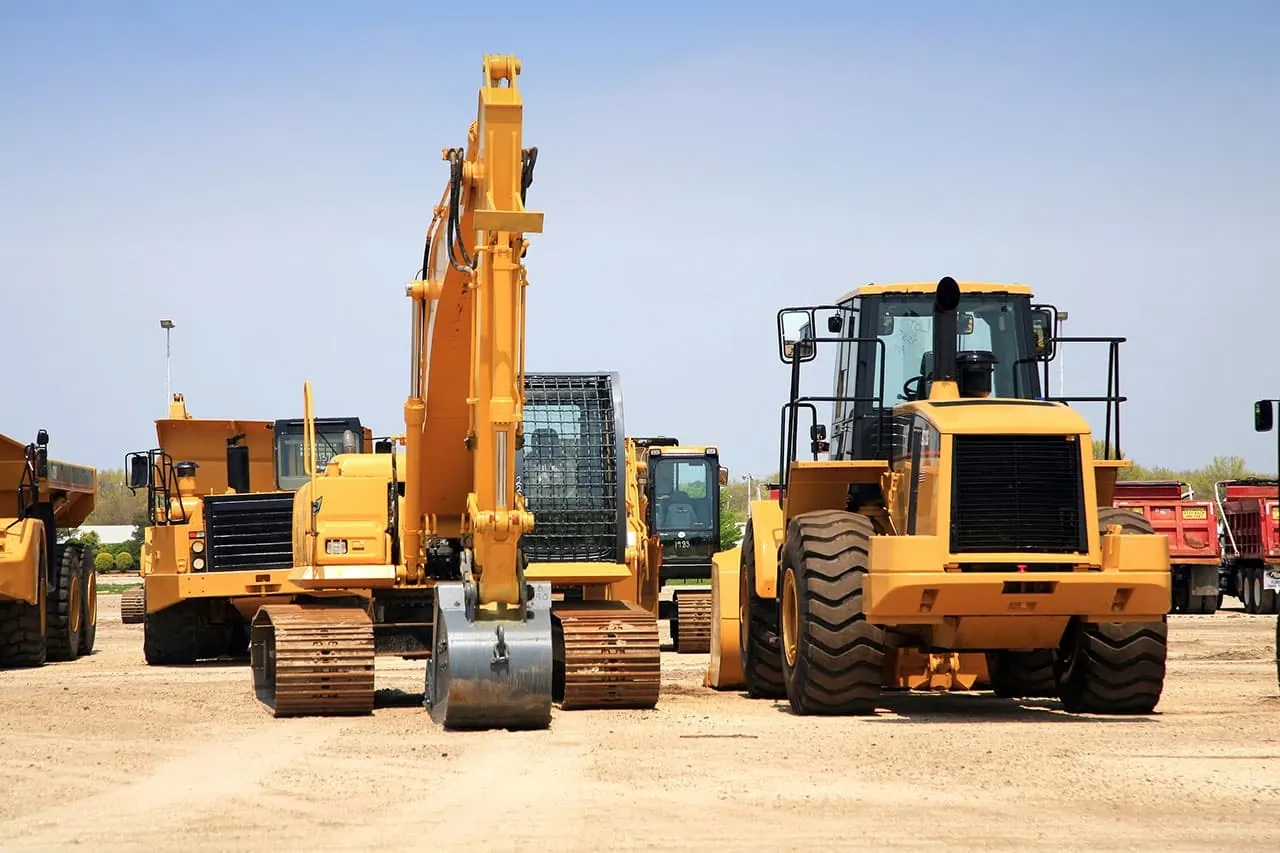
| Construction and industrial equipment | 2, off-highway business use | 3a, $0.243 | Fuel used in a trade or business other than in a highway vehicle registered or required to be registered. Pub. 510 names forklifts, bulldozers and earthmovers. |
| Generators, compressors and other stationary engines | 2 | 3a, $0.243 | Pub. 510: "stationary machines such as generators, compressors, power saws, and similar equipment." Fuel used for cleaning counts too. |
| Reefer units, pumps and generators with their own motor | 2 | 3a, $0.243 | A separate motor running special equipment is off-highway business use. If it shares the truck's tank, you estimate its share from your records (see below). |
| Farming | 1, on a farm for farming purposes | 3b, $0.243 | Cultivating, raising or harvesting crops; caring for livestock; maintaining the farm and its equipment; handling or storing raw commodities you mostly grew. |
| Trains | Use in a train | 3c, $0.243 | Locomotives, work trains, switching engines and track maintenance machines. |
| School buses | 7 | 3a, $0.243 | Buses carrying students and school employees. |
| Heating and other non-engine uses | 8 | 3a, $0.243 | Undyed diesel used other than as fuel in a highway vehicle or train engine, such as heating oil or in boats (no boat use counts as off-highway business use). |
| Certain intercity and local buses | 5 | 3d, $0.17 | A reduced rate. The operator can waive the claim to a registered vendor. |
| Export | 3 | 3e, $0.244 | Fuel shipped out of the U.S. to stay there, with proof such as an export bill of lading. Fuel in a vehicle's own tank isn't exported. |
Rates and lines from the 2025 Form 4136. Schedule 1 (Form 8849) uses the same rates and lines. Form 720, Schedule C numbers its lines differently (farm use is line 3d there). The full table has 16 types of use; see Pub. 510.
Reefers and shared tanks: the estimate the IRS allows
A reefer, pump or generator with its own motor qualifies even when it draws from the truck's tank. Pub. 510 says you can make "a reasonable estimate based on your operating experience and supported by your records." Its own example: a hubometer shows 90% of a refrigerated truck's fuel went to propulsion, so 10% is off-highway business use. Fuel burned idling or warming up the engine counts as propulsion. A reefer with its own tank is simpler: it can take dyed fuel from the start. See reefer fuel.
ExclusionsWhat doesn't qualify
- The propulsion engine of a registered highway vehicle, even when it also runs equipment through a power take-off. Pub. 510's example is a concrete mixer truck: the fuel that turns the drum through the PTO isn't off-highway business use.
- Farm trucks on the road. Fuel used off the farm, "such as on the highway," isn't farming use, even when you're hauling livestock, feed, crops or equipment.
- Processing. Packaging, freezing, canning and similar processing aren't farming purposes.
- Personal use. Mowing your lawn, minibikes, snowmobiles and other nonbusiness equipment aren't off-highway business use.
- Fuel that was lost, spilled or stolen. Pub. 510 says fuel lost or destroyed through spillage, fire or other casualty isn't off-highway business use. One more reason to keep fuel from walking off the job.
- Dyed diesel. It never paid the 24.3¢, so there's nothing to claim. Form 4136 and Schedule 1 both make you certify the fuel "did not contain visible evidence of dye," or attach an explanation.
- The 0.1¢ LUST tax. It generally isn't refunded, which is why the rate is $0.243, not $0.244.
Mobile machinery is a special case. A self-propelled machine built on a special chassis, such as some truck-mounted drilling or construction rigs, may not count as a highway vehicle if it traveled under 7,500 miles on public highways in the year. Pub. 510 says that fuel can only be claimed as an annual credit on Form 4136, not quarterly.
The formsForm 4136 vs Form 8849 vs Form 720: which to file
All three return the same tax. You pick one for each gallon: Pub. 510 says "only one credit may be taken for each amount of any fuel type," and each form bars amounts claimed on the others.
| Form | When you get the money | Minimum | Deadline | Best for |
|---|---|---|---|---|
| Form 4136, Credit for Federal Tax Paid on Fuels | As a credit on your annual income tax return | None | With the return for the year you used the fuel. Amended returns: generally the later of 3 years from filing or 2 years from paying the tax (Pub. 510). | Smaller users, anything under $750 a quarter, mobile machinery |
| Form 8849, Schedule 1, Nontaxable Use of Fuels | As a refund during the year | $750, from one quarter or several quarters of the same tax year | During the first quarter after the last quarter in the claim. One claim per quarter. | Steady off-road burn that tops $750 a quarter |
| Form 720, Schedule C, Claims | As a credit against excise tax you owe that quarter | $750, same rules as Schedule 1 | With Form 720. Only if you report a liability in Part I or II. | Businesses that already file Form 720 |
Sources: Instructions for Form 4136 (2025), Form 8849 (Rev. May 2026), Schedule 1 (Form 8849) (Rev. May 2020), Instructions for Form 720 (June 2026), Pub. 510 (Dec. 2025).
How the $750 rule works
The $750 minimum applies to the claim, not to each quarter. You can carry a short quarter forward and add it to the next one, as long as both are in the same income tax year and neither has been claimed. Pub. 510 walks through a construction contractor running clear diesel in unregistered equipment:
| Quarter (2025) | Gallons used | × rate | Claim | What happens |
|---|---|---|---|---|
| Jan–Mar | 2,750 | $0.243 | $668.25 | Under $750. Can't file yet; carry it forward. |
| Apr–Jun | 2,500 | $0.243 | $607.50 | Combined $1,275.75 clears $750. File Form 8849 with Schedule 1 by September 30, 2025. |
If the year ends and a quarter or two never reached $750 together, you don't lose them. Pub. 510 says tax on nontaxable uses under $750 for the year, and any tax you left out of quarterly claims, goes on Form 4136 with the income tax return.
Step by stepHow to claim on Form 4136 (and Form 8849)
- Split your gallons by use. Total the taxed clear gallons that went into each nontaxable use for the period: off-highway business use, farming, trains and so on. Pub. 510 wants your records to "show separately the number of gallons used for each nontaxable use."
- Complete Part I of Form 4136. Business name, EIN, six-digit principal business activity code, and the make, model and type of the equipment that used most of the fuel. More than one qualifying business activity? Fill out a separate Schedule A (Form 4136) for each and carry the totals over.
- Fill in line 3. Enter the type of use number, the rate ($0.243 on lines 3a–3c), gallons, and the credit. New for 2025, column (d) asks for the actual fuel cost from your records. Keep the receipts; don't attach them.
- Carry the total to your return. Line 17 goes to Schedule 3 (Form 1040), line 12; Form 1120, Schedule J, line 20b; Form 1120-S, line 24c; Form 1041, Schedule G, line 17; or the matching line of other returns. An individual who wouldn't otherwise file must file to get the credit.
- Or claim quarterly instead. Once a claim reaches $750, file Form 8849 with Schedule 1: enter the period of claim, line 3 gallons and rate, and the total refund. Mail it to the IRS in Cincinnati, OH 45999-0002, or e-file through an IRS excise e-file provider. Don't file any other schedule with Schedule 1.
- Count the refund as income. If you deducted the full cost of the fuel, tax included, the credit or refund goes back into gross income (cash method: the year you receive the refund, or the year you file Form 4136). Pub. 510's example: a 2024 credit claimed on a return filed in 2025 shows up as income on the 2025 Schedule C.
The Form 4136 instructions warn that "falsely claiming the FTC will result in severe consequences, including civil and criminal penalties." Claim only gallons you can tie to a qualifying use, with records.
Records to keep for a diesel fuel tax credit
The IRS doesn't want receipts with the return, but it can ask for proof later. Pub. 510 lists what the ultimate purchaser must keep, at your principal place of business:
- Gallons purchased and used during the claim period.
- Dates of purchase.
- Each supplier's name and address, and how much you bought from each.
- The nontaxable use the fuel went to.
- Gallons for each nontaxable use, shown separately.
- Proof of export, if you claim exported fuel.
Keep them for at least 3 years from the date the return is due or filed, whichever is later (Form 4136 instructions). Day to day, that means delivery tickets and invoices that show product and gallons, a fuel log by machine and hour meter, and a list of the equipment each tank serves. If a mixed tank feeds both road trucks and equipment, you need a way to show which gallons went where. Wet-hose fueling, where each unit is filled and logged on its own, makes that split easier to document. Record-keeping for dyed fuel is covered in our off-road diesel compliance guide.
State taxState refunds for off-road diesel tax
The federal claim returns only federal tax. State tax on clear diesel is often larger: in Pennsylvania, combined on-road diesel tax is $1.0003 a gallon in our diesel taxes by state table (as of October 5, 2026). Whether you can get the state part back depends entirely on the state, and the rules differ more than the federal ones. Four examples from state revenue departments:
| State | On-road tax (our table) | State refund for off-road diesel | Form and deadline |
|---|---|---|---|
| California | $0.7330 | "Diesel fuel exempt users" who bought tax-paid diesel and used it other than on public highways can claim. Register for a diesel fuel user account and file the CDTFA-32 questionnaire and an equipment list. Farmers and exempt bus operators can't claim; they buy undyed diesel tax-free from the vendor (farmers with form CDTFA-608), and the supplier claims. CDTFA treats fuel used in DPF regeneration as highway use. | Claim through CDTFA online services. Generally within 3 years of purchase. |
| Illinois | $0.8173 | Refunds of tax paid on motor fuel used for non-highway purposes; IDOR names manufacturing, construction and landscaping. No refunds on dyed diesel. Farmers can't claim undyed diesel used in tractors: IDOR says to use dyed diesel. | Form RMFT-11-A, or MyTax Illinois with a refund account. Non-licensed claimants: within 2 years of paying the tax. |
| New York | $0.5085 | Anyone who bought fuel with the excise tax passed through and used it in a nontaxable manner may qualify. No refund for fuel used to run a truck or tractor on New York highways. Reefer claims need a way to show how much fuel the reefer used. | Form FT-946/1046, filed with Form FT-500 for sales tax (and AU-630 for petroleum business tax on farm use). Within 3 years of purchase (TSB-M-15(2)M). |
| Texas | $0.4497 | Off-highway diesel refunds expired January 1, 2005. Exceptions: feedstock in manufacturing, drill-cutting removal, and moveable equipment used only in oil well servicing. Since September 1, 2025, diesel used in power take-off or auxiliary power units on motor vehicles also qualifies (not air conditioning or heating). | Form 06-106. Generally by the first anniversary of the first day of the month after purchase or use. Keep records 4 years. |
On-road totals are combined federal and state per-gallon taxes from FuelGo's diesel tax data, as of October 5, 2026. Refund rules from CDTFA, the Illinois Department of Revenue, the New York Department of Taxation and Finance and the Texas Comptroller; check the current forms before you file.
Every other state: check your state revenue department. Many states have their own refund forms, deadlines and minimums, and a few won't refund off-road use of clear diesel at all, as Texas shows. Start from your state's rates on our diesel taxes by state page, then look up its refund rules.
The simpler routeSkip the refund: buy dyed diesel for off-road equipment
Every refund claim exists because someone bought taxed fuel for an untaxed use. If you know the fuel is headed for equipment, generators or farm machines, buy dyed diesel. It leaves the terminal without the 24.3¢ federal excise; only the 0.1¢ LUST tax applies (Pub. 510). In most states it's also exempt from state motor fuel excise, though a few tax it heavily: Connecticut $0.4973, Rhode Island $0.4065, Kentucky $0.2953 and West Virginia $0.1573 a gallon in total dyed tax (our table, October 5, 2026).
No tax paid, no claim to file
The savings show up on the invoice, not a year later on your return. No $750 tracking, no Schedule A, no refund back into income. Your cash isn't tied up waiting on the IRS.
Flexible, but more paperwork
Makes sense when one tank feeds road trucks and equipment, or when off-road use is small and occasional. You pay the tax, track gallons by use, and claim it back.
The trade-off with dyed fuel is discipline. It must never go into a registered road vehicle. The federal penalty is the greater of $1,000 or $10 a gallon (26 U.S.C. 6715), and states add their own. Keep separate tanks and labeled fill points. Not sure which fits each machine? See dyed diesel vs clear diesel, and compare the numbers for a mixed fleet in the fleet fueling cost calculator.
Under Executive Order 14435, the IRS said on October 14, 2026 (IR-2026-122) that it won't impose federal dyed-fuel penalties for highway use from October 1 through December 31, 2026. The tax is deferred, not forgiven, state rules still apply, and the relief ends December 31, 2026 unless extended.
It doesn't change anything on this page. The release says more guidance is coming on Form 720; it doesn't mention Forms 4136 or 8849. Dyed fuel is still for nontaxable uses, and the clear-diesel refund rules above are unchanged.
This page summarizes IRS forms, instructions and Publication 510, and state revenue department guidance, as of October 16, 2026. It is general information only and isn't tax, legal or accounting advice, and reading it doesn't create any professional relationship with FuelGo. Rates, forms and deadlines change. Talk to a tax professional or attorney before you file a fuel tax claim, and confirm state rules with your state revenue department.
Dyed and clear diesel on one account
FuelGo delivers dyed off-road diesel and clear on-road diesel nationwide, on the same account and often on the same route. They're billed as separate line items, and invoices are itemized by gallons, product and site. Before the first drop, we confirm dyed is the right product for your equipment and tax position.
With mobile fleet fueling, each truck and machine is filled with the right product where it's parked, and gallons are logged by vehicle, time and location on an itemized invoice. For tanks, we deliver 20 to 4,400 gallons per drop and transport loads up to 7,500 gallons. Dispatch runs 24/7/365. Get a free quote or call 800-720-4546; a dispatcher replies within the hour.
Common questionsOff-road diesel tax refund FAQ
Can I get a refund for off-road diesel tax?
What is Form 4136 used for with diesel?
What's the difference between Form 4136 and Form 8849?
How much is the federal diesel tax refund per gallon?
Can I claim a refund on dyed diesel?
Can I claim fuel used by a reefer unit or a PTO?
What records do I need for a diesel fuel tax credit?
Is the fuel tax credit taxable income?
Sources: IRS, Instructions for Form 4136 and Schedule A (2025) · IRS Form 4136 (2025) · IRS Publication 510, Excise Taxes (Dec. 2025) · IRS Form 8849 and instructions (Rev. May 2026) · IRS Schedule 1 (Form 8849) (Rev. May 2020) · IRS, About Form 8849 · IRS, Instructions for Form 720 (June 2026) · IRS IR-2026-122 (Oct. 14, 2026) · 26 U.S.C. 6715 · CDTFA, diesel fuel tax refund claims · Illinois Department of Revenue, motor fuel refunds · New York, Instructions for Form FT-946/1046 (3/26) · New York, TSB-M-15(2)M · Texas Comptroller, motor fuels tax refunds. State on-road and dyed tax totals from FuelGo's diesel tax data as of October 5, 2026. All other information as of October 16, 2026.