
Off-road diesel delivered to your equipment today.
Red-dyed, tax-exempt diesel for jobsites, generators, farms and tower compounds. Tell us what needs fuel and a dispatcher comes back within the hour.
Get an off-road diesel quote
Step 1 of 3Two quick questions, then your details.
What needs fuel?
Select all that apply — most sites have more than one.
Pick at least one — or choose “Not sure”.
How much, how often, and where?
Estimates are fine — this just sizes the truck.
Add the estimated gallons plus street, city and ZIP.
Where should we send the quote?
Prefer to talk? 800-720-4546 — 24/7, 365 days
Fueling equipment for teams at






Off-road diesel for operations that can't stop
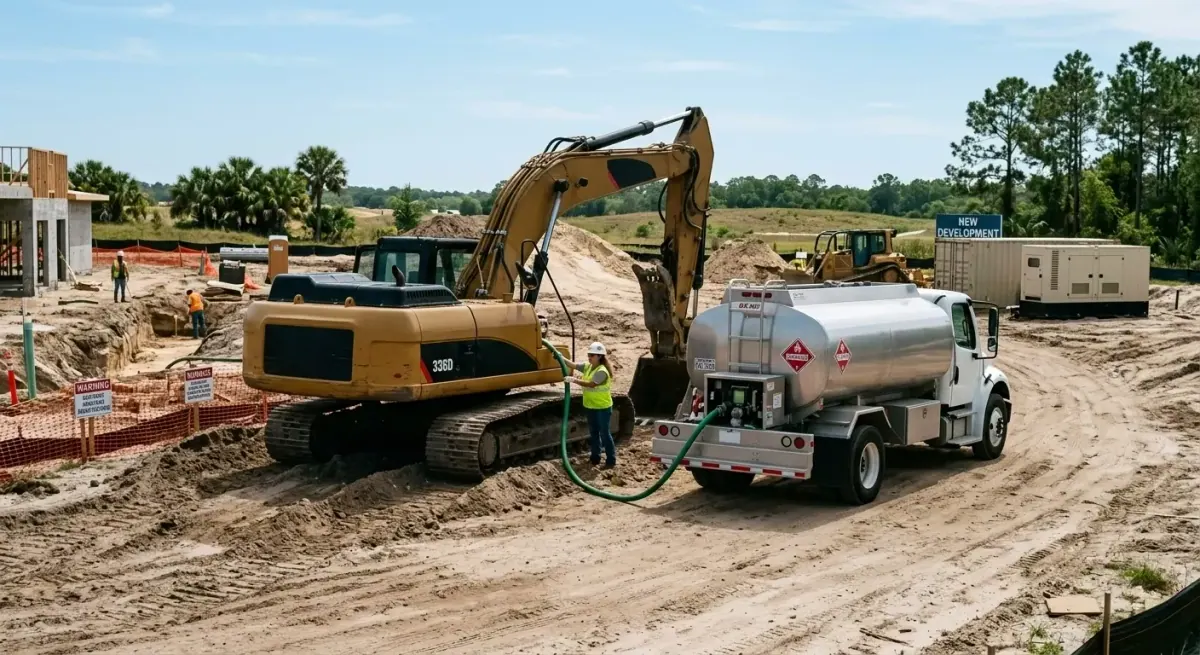
Construction
Jobsite equipment, light towers and site generators fueled on schedule, plus rental tanks where there's nowhere to store fuel.
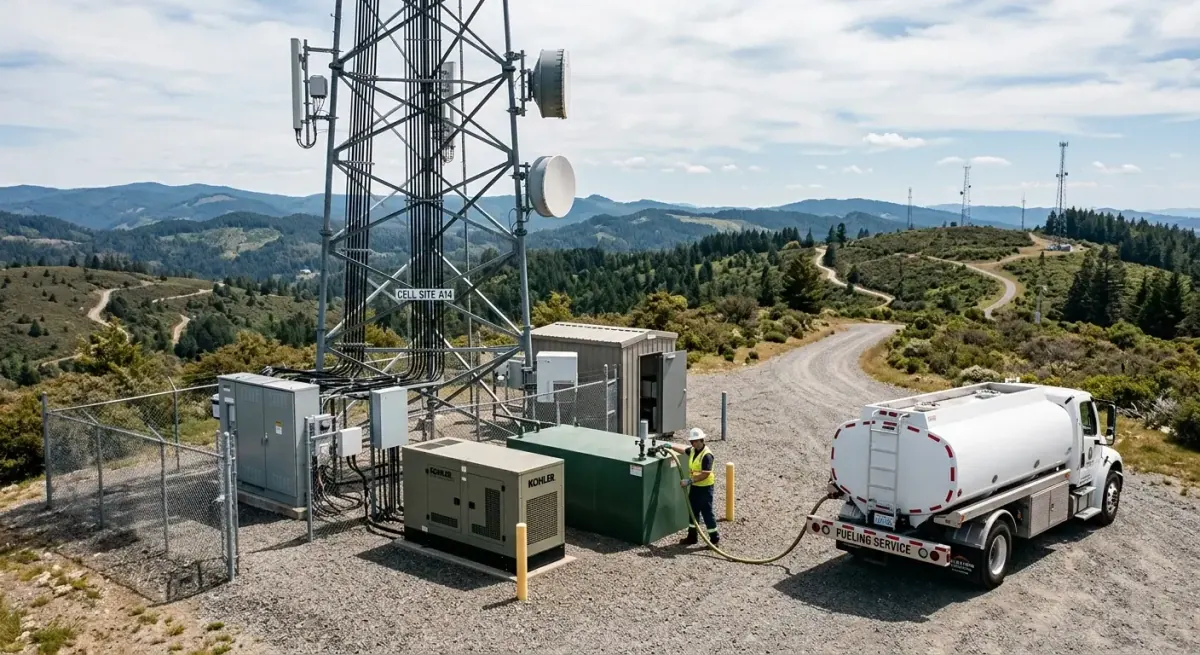
Telecom & tower sites
Generator fills at tower compounds nationwide, with gate access, escorts and fill levels coordinated before the truck rolls.

Data centers
Backup generator fueling sized to runtime targets, with R99 renewable diesel available where carbon reporting matters.
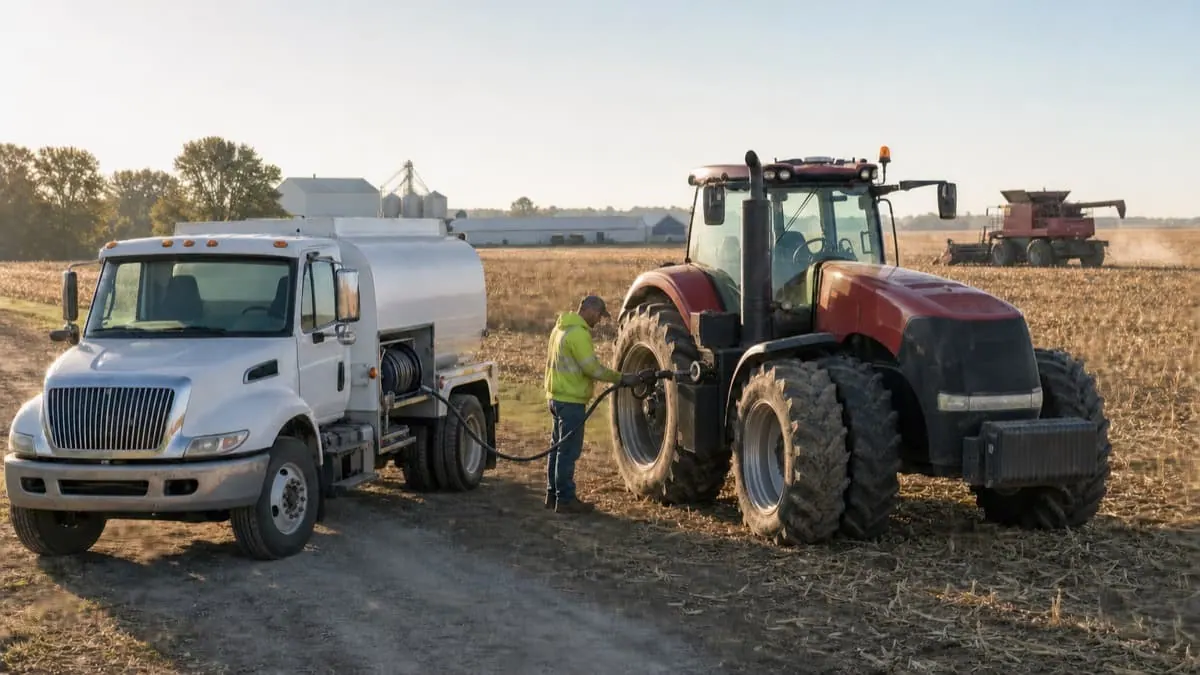
Agriculture
Tractors, combines and irrigation pumps kept running through planting and harvest, including remote acreage.
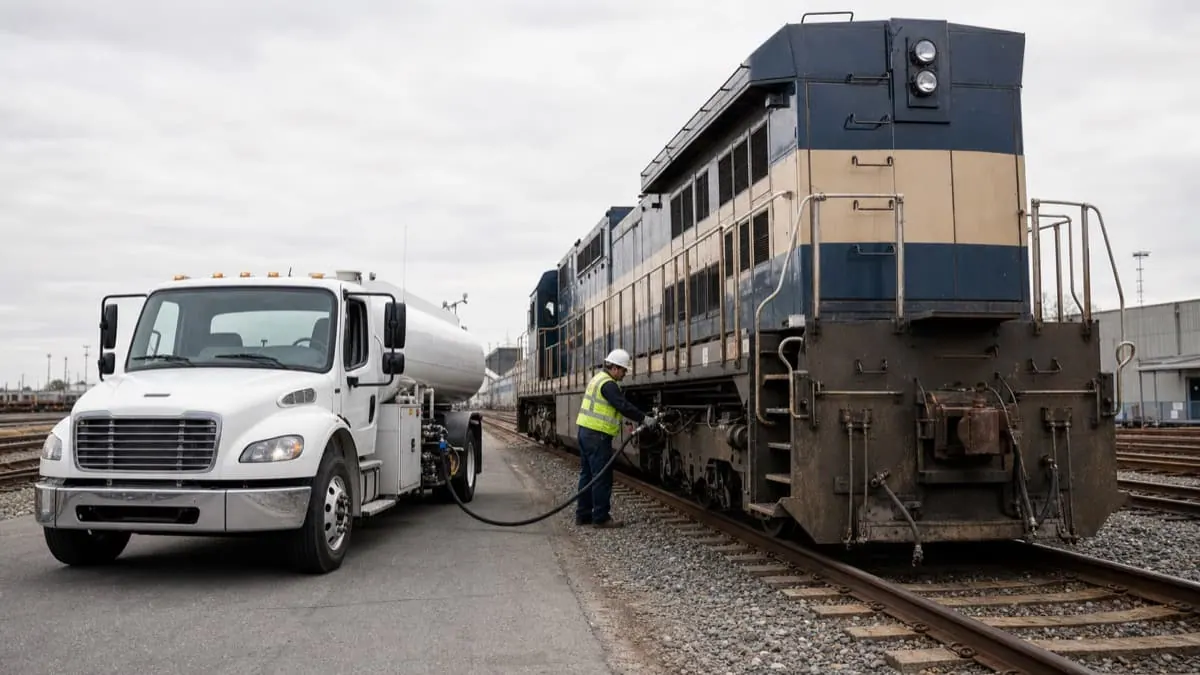
Rail & heavy industry
Locomotive and yard equipment fueling, plus standby power for operations where a stoppage is expensive.
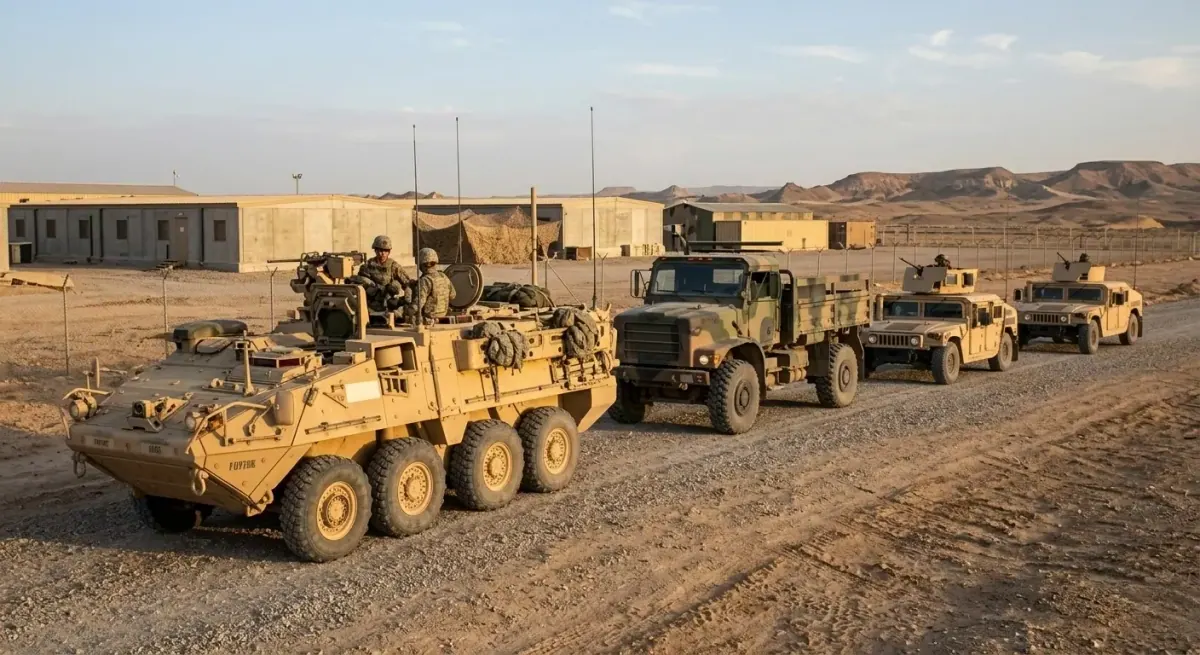
Power, government & facilities
Temporary power, emergency response deployments, hospitals and property portfolios with rooftop or bulk tanks.
Equipment that takes dyed diesel
If it never touches a public road, it can legally run on off-road diesel. These are the assets we fuel most — pick yours to see how we handle it.
Dyed diesel for generators
Standby and prime power sets, sub-base and belly tanks, plus temporary power units. Scheduled fills or emergency response when a site loses utility power.
Generator fuelingDyed diesel for construction equipment
Excavators, dozers, loaders, cranes, light towers, air compressors and pumps — fueled where they sit, so nothing crawls off the pad to refuel.
Construction fuelingDyed diesel for reefer units
Refrigerated trailers and container gensets keeping temperature-sensitive loads in spec, at the yard or at a drop.
Reefer fuelingDyed diesel for farm equipment
Tractors, combines, irrigation pumps and grain dryers, timed around planting and harvest windows on remote acreage.
Agricultural fuelingDyed diesel for on-site tanks
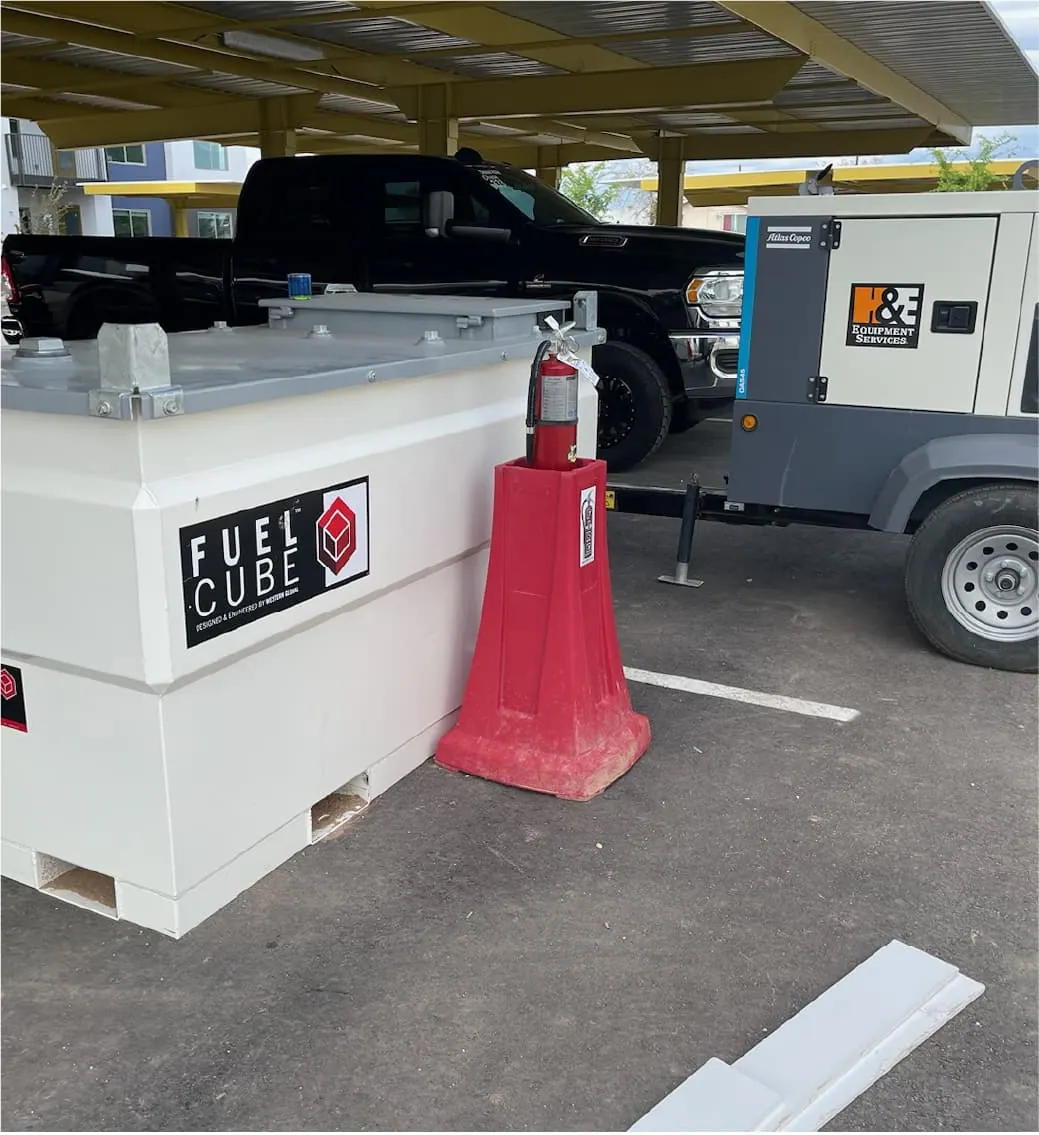
Skid tanks, fuel cubes, towable tanks and bulk storage. We rent compliant tanks too, sized to your burn rate and permit thresholds.
Tank rentalsDyed diesel for locomotives & rail
Switchers, yard equipment and maintenance-of-way machinery, fueled trackside on schedules that fit operating windows.
Rail fuelingDyed diesel for solar & wind construction
Pile drivers, trackers, cranes and generator sets across large renewable build sites, often miles from the nearest road.
Solar farm fuelingDyed diesel for refuse & material handling
Off-highway haulers, compactors, wheel loaders and yard equipment at transfer stations and landfills.
Waste fleet fuelingDyed diesel for ground support equipment
Tugs, belt loaders, pushbacks, de-icers and airfield generators operating entirely inside the perimeter fence.
Airport fuelingDyed diesel for government & military
Base equipment, generator farms and emergency-response deployments, with high-volume drops and monitoring.
Government fuelingNot listed? Forklifts, boom and scissor lifts, concrete pumps, crushers, screeners, wood chippers, mobile welders, arena ice resurfacers and marine auxiliaries all run on dyed diesel too. If the machine stays off public roads, we can fuel it — call dispatch and describe the site.
Three ways we put off-road diesel where you need it
Most sites use more than one of these. Dispatch picks the method that fits your access, volume and how fast you burn through it.
Wet-hose fueling
Direct to equipmentOur driver fuels each machine individually — excavators, dozers, light towers, generators. Ideal where equipment can't leave the site to refuel and there's no on-site tank. Usually run overnight or before shift start so nothing waits on fuel.
Tank wagon
20–4,400 gal per dropThe workhorse. Fills on-site tanks, rental tanks and sub-base generator tanks. Small enough to reach constrained yards and gated compounds, big enough to cover a week of heavy burn in one visit.
Transport load
Up to 7,500 galFull tanker for bulk storage — large projects, fuel farms and high-volume operations. Best cost per gallon, and the right choice when you're filling storage rather than equipment.
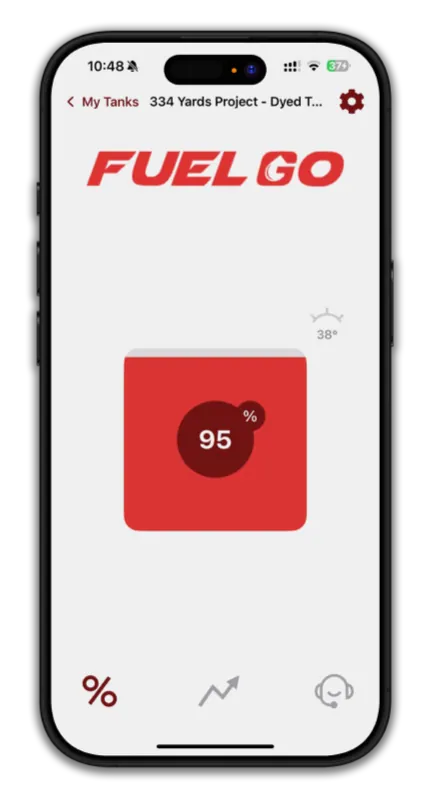
Stop sending someone out to stick a tank
On monitored tanks you see the level on your phone, and so do we. Refills get triggered by actual consumption instead of a guess, which is how sites stop running dry on a Friday afternoon.
What does off-road diesel delivery cost?
Anyone quoting a flat national price per gallon is guessing. Diesel is a commodity that reprices daily, so what you should be comparing is the method a supplier uses to price it — and whether you can audit it afterwards.
We quote off OPIS rack pricing plus a transparent, agreed differential. When the rack moves, your price moves with it in a direction you can verify against a published index, rather than against a number we made up. No fuel surcharges buried in the footer.
The details that decide whether a delivery actually happens
Fuel is a commodity. Getting it into your equipment, on the day you were told, without a failed drop-off, is not.
We ask about fittings before we dispatch
Pump specifications, hose reach, fill-point type, tank height. Getting this wrong is the most common reason a truck arrives and leaves without delivering — so we confirm it up front rather than discovering it on site.
Pricing you can audit
OPIS and rack-plus models, stated clearly, with no hidden fees. You can check our number against a published index, which is the only pricing promise worth anything.
Invoicing that fits your back office
Automated, itemized invoices, and direct connection to ARIBA and COUPA. Where you need something bespoke, our IT team integrates with your systems instead of asking your AP clerk to re-key line items.
The hard deliveries are the normal ones
Tower compounds up a service road, remote military bases, storm response, time-critical emergency refuels. This is routine work for our dispatch team, not an exception that gets declined.
Nationwide, one point of contact
A vetted carrier network across the lower 48 means multi-state operators stop managing a different fuel vendor in every region — one dispatch line, one invoice format.
Someone answers at 3am
Dispatch is staffed 24/7, 365 days a year. Outages, storms and blown schedules don't wait for business hours, and neither does a voicemail box.
Four steps, one dispatch line
Tell us the site
Equipment or tanks, rough volume, location and access notes. Call, email or use the form.
A fuel expert sizes it
We confirm dyed is the right product for your equipment and tax position, then price it off the rack.
We commit to a window
A confirmed delivery window, with gate access, fill points and safety requirements locked in first.
Delivered, clean invoice
Itemized by gallons, product and site — and monitoring set up if you want refills on autopilot.
What is dyed diesel?
Dyed diesel is ordinary ultra-low sulfur diesel (ULSD #2) with red dye added so inspectors can tell at a glance that federal and state highway taxes were never paid on it. Chemically it is the same fuel that goes into an over-the-road truck — the dye is a tax marker, not an additive that changes how it burns.
Because the highway tax is excluded, off-road diesel costs meaningfully less per gallon than clear diesel. That is the whole reason it exists: equipment that never touches a public road shouldn't be paying to maintain one. Excavators, dozers, cranes, light towers, standby generators, irrigation pumps, tractors, combines and refrigeration units all run on it legitimately.
If some of your fleet is on-highway and some isn't, you don't need two suppliers. We deliver clear on-road diesel on the same account, often on the same route, and bill them as separate line items so your tax treatment stays clean.
Where operators get caught out
Running dyed diesel in a vehicle registered for highway use is a federal violation, and the penalty structure is unpleasant: the IRS assesses a minimum penalty per occurrence, states stack their own on top, and inspectors can dip a tank at a weigh station or a jobsite gate.
The grey areas cause more trouble than outright cheating — a pickup that hauls equipment on public roads, a service truck that also runs a hydraulic pump, a reefer unit whose tank shares a fill point. If any of that sounds like your operation, ask dispatch before the first delivery rather than after an inspection.
Off-road diesel questions we answer daily
What are the other names for off-road diesel?
Dyed diesel, red diesel, red-dyed diesel, non-highway diesel, marked diesel, farm diesel and tax-exempt diesel all refer to the same product: ULSD #2 with red dye, sold without highway tax. If a supplier uses a term you don't recognise, ask which of these they mean before you order.
Why is off-road diesel dyed red?
The dye is a tax marker required by the IRS and EPA so inspectors can identify untaxed fuel in a tank without laboratory testing. Federal rules (26 CFR 48.4082-1) require Solvent Red 164; Solvent Red 26 is only the standard used to measure dye strength. Some states add their own markers. The dye doesn't change how the fuel performs.
Is off-road diesel cheaper than on-road diesel?
Yes — typically by roughly the combined federal and state highway excise tax, which varies by state. The base fuel is identical, so the saving comes entirely from the tax exemption rather than a lower-grade product.
What happens if I use dyed diesel in a highway vehicle?
It's a federal violation with a minimum IRS penalty per occurrence, and states assess additional penalties on top. Inspectors can and do dip tanks at weigh stations and jobsites. If part of your fleet is on-highway, keep clear and dyed fuel on separate fill points and ask us to invoice them separately.
Is there a minimum order for off-road diesel delivery?
No. We deliver anything from a single generator top-off to a 7,500-gallon transport load. Cost per gallon improves with drop size, so we'll tell you if consolidating deliveries would save you money.
How fast can you deliver?
Emergency and same-day delivery is available nationwide, subject to distance from the nearest rack and site access. Dispatch is staffed 24/7, 365 days a year — call 800-720-4546 and you'll speak to a person who can give you a realistic window rather than a callback promise.
Can you supply a tank as well as the fuel?
Yes. We rent compliant on-site storage — skid tanks, fuel cubes, towable tanks and DEF totes — sized to your burn rate and kept under local permit thresholds where possible. Refills are included in the programme.
Do you deliver to remote or hard-to-access sites?
That's most of this work. Tower compounds, remote acreage, pipeline right-of-ways, military installations and storm-response deployments are routine. Dispatch confirms gate codes by phone, escorts, road conditions and fill-point specifics before the truck is assigned.
Off-road diesel, where the equipment is.
Quotes in the same hour. Dispatch around the clock, 365 days a year.