
Diesel Fuel Storage
Tank Size Calculator
Find the right tank size for your operation — enter your equipment, daily hours, and autonomy needs to get a precise recommendation instantly.
Diesel Storage Tank Size Calculator
Build your equipment list, set your conditions, get your tank size
How to choose the right diesel fuel storage tank size
Choosing the wrong tank size is one of the most common and costly mistakes in fuel management. A tank that's too small means frequent deliveries, potential runouts, and operational downtime. A tank that's too large ties up capital, may trigger EPA SPCC compliance requirements, and can lead to fuel degradation if diesel sits for more than 12 months without treatment. The right size sits at the intersection of your daily consumption, required autonomy, and regulatory thresholds.
The formula is straightforward: daily consumption (gallons) × days of autonomy × safety buffer = minimum tank size. The calculator above handles this automatically, but understanding the components helps you make better decisions about buffer size and delivery frequency.
Start with your actual burn rate
Add up the hourly consumption of every piece of diesel-powered equipment on site, multiplied by actual daily operating hours. Use 75% load as your baseline — most equipment rarely runs at 100% continuously.
How long between deliveries?
Construction sites typically need 5–14 days of autonomy. Emergency standby generators need 72–96 hours minimum. Remote sites may need 30–60 days. Match your tank to your delivery access, not just your consumption.
Always add 25% minimum
Never design to run a tank below 25%. Deliveries get delayed by weather, logistics, and supply disruptions. For critical operations like hospitals and data centers, size for 50% buffer to allow for emergency situations.
Know your compliance threshold
EPA SPCC regulations apply to facilities with total aboveground storage exceeding 1,320 gallons. If you're approaching this threshold, consider whether splitting into multiple smaller tanks or going above with full compliance is the better approach.
Diesel consumption by equipment type — full reference table
Use this table to manually calculate your daily fuel consumption if you have equipment types not listed in the calculator above.
| Equipment type | Typical size | Gal/hr (75% load) | Gal/day (10 hrs) | Gal/week (5 days) | Tank needed (7-day autonomy) |
|---|---|---|---|---|---|
| Excavator (mid-size) | 20–30 ton | 6 gal/hr | 60 gal | 300 gal | 375 gal |
| Bulldozer (D6–D8) | 20,000–40,000 lb | 7 gal/hr | 70 gal | 350 gal | 438 gal |
| Wheel loader (mid) | 15,000–25,000 lb | 5 gal/hr | 50 gal | 250 gal | 313 gal |
| Crane (lattice boom) | 100–300 ton | 10 gal/hr | 100 gal | 500 gal | 625 gal |
| Generator (100 kW) | 100 kW | 6 gal/hr | 60 gal | 300 gal | 375 gal |
| Generator (500 kW) | 500 kW | 31 gal/hr | 310 gal | 1,550 gal | 1,938 gal |
| Light tower | 6 kW | 0.6 gal/hr | 6 gal | 30 gal | 38 gal |
| Compactor / roller | 10–20 ton | 2.5 gal/hr | 25 gal | 125 gal | 156 gal |
| Skid steer | 1,700–3,000 lb op cap | 2 gal/hr | 20 gal | 100 gal | 125 gal |
| Diesel forklift | 5,000–15,000 lb cap | 1.5 gal/hr | 15 gal | 75 gal | 94 gal |
| Semi truck (fleet) | Class 8 | — | 150 gal | 750 gal | 938 gal |
| Concrete pump | 40–60 meter boom | 4 gal/hr | 40 gal | 200 gal | 250 gal |
Which type of diesel storage tank is right for your operation?
250–2,000 gallons
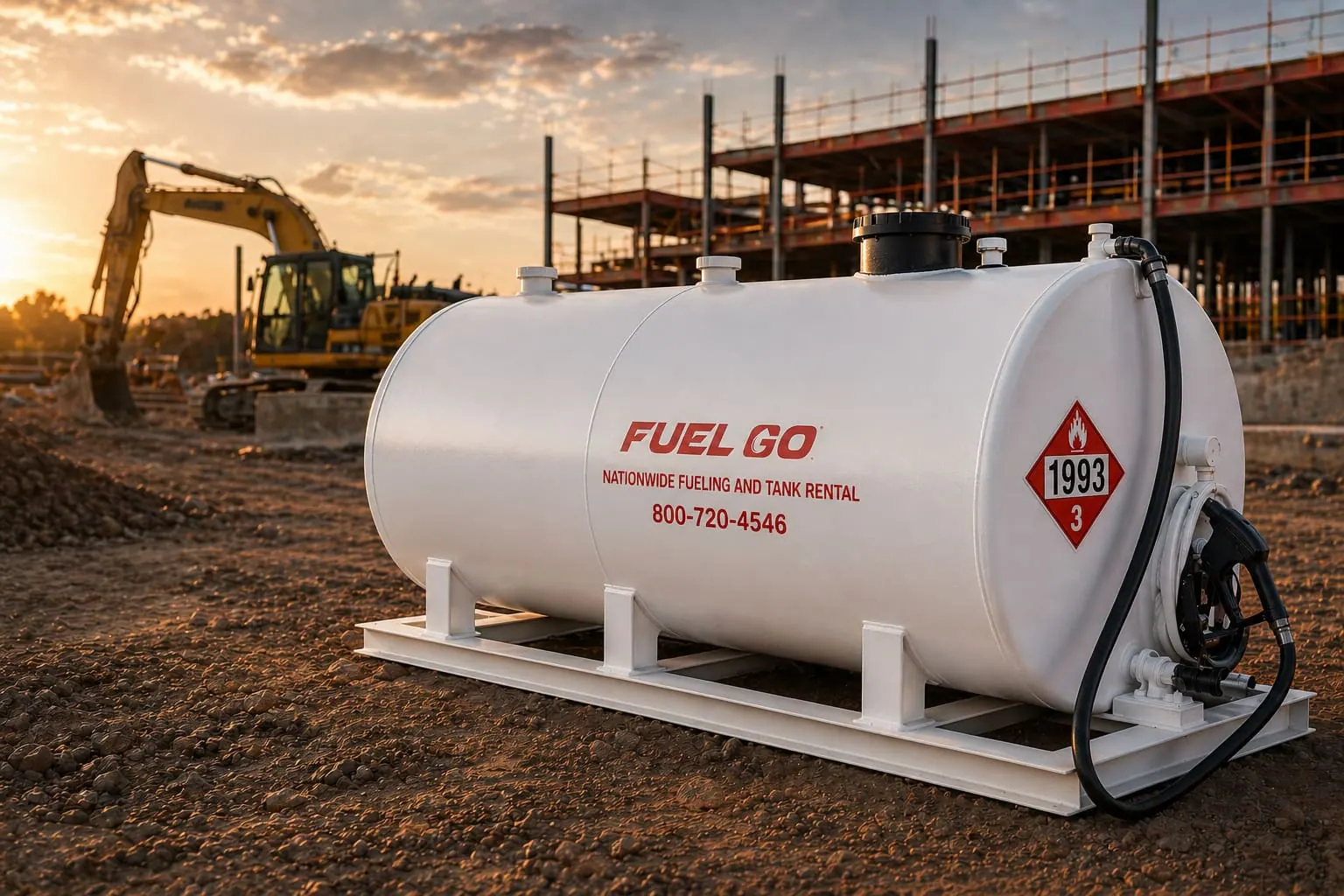
The most common choice for construction sites and job sites. Portable, double-walled, and compliant with most regulations. Can be moved by forklift. FuelGo rents skid tanks with built-in pumps and fuel management systems.
3,000–12,000 gallons
For permanent or semi-permanent installations. Higher capacity with smaller footprint than horizontal tanks. Typically require a concrete pad and secondary containment berm at larger sizes.
5,000–25,000 gallons
For large industrial facilities, fleet yards, and agricultural operations. Low profile allows for easier gravity-fed dispensing. Most require SPCC compliance plans at these sizes.
100–330 gallons
Maximum flexibility for sites where equipment access is limited. No DOT certification required for transport under 140 gallons. FuelGo's FuelCube tanks include pump, hose, and fuel management system.
For most construction site managers and fleet operators, renting a fuel tank from FuelGo is more cost-effective than purchasing — especially for project-based work where storage needs change. FuelGo's rental tanks include delivery, setup, ongoing maintenance, and pickup at end of project, with no capital outlay required. Rental terms range from one month to multi-year for permanent installations.