
What Is Reefer Fuel? Dyed Diesel, Taxes and Keeping Reefers Full
Reefer fuel is plain diesel for the refrigeration unit, burned from the unit's own tank. Here's when it can be dyed, how states treat it, how fast reefers burn it, and how to keep every unit full.
Reefer fuel is the diesel that runs a refrigerated trailer's cooling unit: ordinary ultra-low sulfur diesel, not a special formula. Because the reefer engine cools cargo instead of moving the truck, federal rules allow untaxed dyed diesel in the unit's own separate tank. The tractor's tank always takes clear diesel. State rules vary. See reefer fuel delivery.
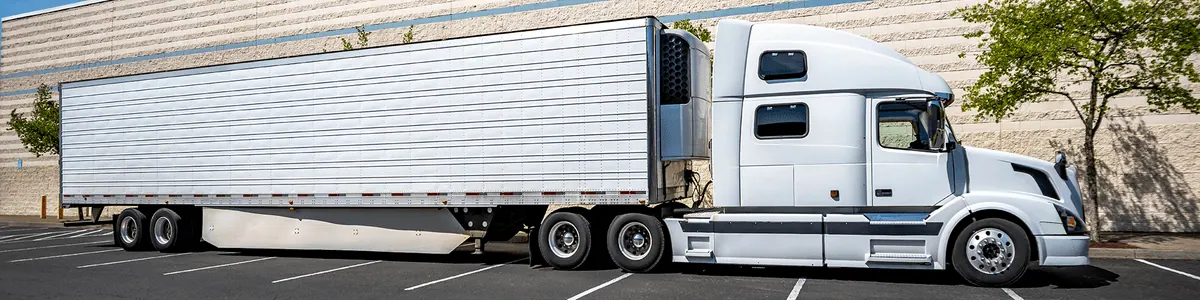
What a reefer unit is, and why it has its own fuel tank
A reefer, or transport refrigeration unit (TRU), is the cooling unit mounted on the front wall of a refrigerated trailer. Most have a small diesel engine that powers the refrigeration system, and that engine draws from a fuel tank of its own, separate from the tractor's. FreightWaves puts most reefer tanks at about 50 gallons. Filling those tanks is called reefer fueling, or refrigerated trailer fueling.
The separate tank is what makes a reefer work. The unit has to hold temperature when the tractor is shut off, when a loaded trailer sits at a drop lot, and when no tractor is hooked up at all. It's also why reefer fuel is its own line on a fuel plan: two tanks, two fills, and often two different fuels on the same rig.
There's no "reefer diesel" formula. It's the same ultra-low sulfur diesel that goes into the tractor (grades and specs are in diesel fuel grades). The question that matters is whether it's dyed or clear.
Dyed or clearWhy reefer fuel can be dyed diesel
Federal diesel excise tax doesn't apply to fuel that's indelibly dyed and destined for a nontaxable use (26 U.S.C. 4082). IRS Publication 510 lists off-highway business use as one of those uses, and it spells out that this "includes fuel used in a separate motor to operate special equipment, such as a refrigeration unit." The same section draws the line: it doesn't include fuel used in the propulsion motor of a registered highway vehicle, even when that motor also runs equipment through a power take-off.
So the rule follows the engine and the tank, not the trailer. Here's how common setups sort out:
| Setup | Fuel for that tank | Why |
|---|---|---|
| Reefer with its own engine and its own tank | Dyed allowed federally; check your state | A separate motor running a refrigeration unit is off-highway business use (Pub. 510). |
| Reefer that draws from the tractor's tank | Clear | The tank feeds the propulsion engine. The reefer's share can be claimed back with records (below). |
| Refrigeration driven by the truck's own engine | Clear | Pub. 510: fuel in a propulsion motor isn't off-highway use, even when it runs equipment by power take-off. |
| Tractor or truck propulsion tank | Clear, always | It's highway vehicle fuel. Dyed diesel never goes here. |
Never in the tractor's tank, and never through a fill point both tanks share. The IRS penalty for dyed fuel in a highway vehicle is the greater of $1,000 or $10 a gallon, and inspectors sample tanks. That's the only time we'll mention it here: inspections and record-keeping are covered in our off-road diesel compliance guide, and the product differences in dyed vs. clear diesel.
If your reefer shares the tractor's tank
Fuel the whole tank with clear diesel, then claim back the federal tax on what the reefer burned. Pub. 510 allows "a reasonable estimate based on your operating experience and supported by your records." Its own example is a refrigerated truck with a separate motor for the reefer: the hubometer shows 90% of the fuel moved the truck, so 10% counts as off-highway business use. Fuel burned idling or warming up the engine counts as propulsion. The forms and lines are in our guide to off-road diesel tax refunds.
State rulesReefer fuel tax by state: check yours
Federal rules are only half of it. Each state decides whether dyed reefer fuel owes state motor fuel tax, sales tax, or neither, and what paperwork it wants. A few examples, checked against each state's own rules:
| State | How it treats reefer fuel | Source |
|---|---|---|
| Texas | Exempts dyed diesel delivered by a license holder into the fuel supply tank of a refrigeration unit "powered by a separate motor from a separate fuel supply tank." | Tax Code 162.204(a)(11) |
| Georgia | Dyed diesel for a refrigeration unit attached to a highway vehicle, but not propelling it, is exempt from Georgia motor fuel and prepaid state taxes. It still owes state and local sales and use tax. | Rule 560-9-1-.11(4) |
| California | Diesel used to run reefer units is a nontaxable use, and tax paid on it can be refunded. Claims need records of fuel put into a separate reefer tank, or hour-meter readings if the reefer shares the vehicle's tank. | CDTFA diesel user refund FAQ |
| Minnesota | To claim a refund on clear fuel bought to power a refrigeration unit, get a written statement from the seller that the fuel had no visible dye. | Minnesota Revenue |
Rules as published on each state's site in October 2026. Other states differ; ask your state revenue department before you set up a program.
For each state's current on-road and dyed diesel rates, see diesel taxes by state.
This is a summary of published federal and state rules, not tax or legal advice. Confirm your setup with your tax advisor or state revenue department.
How much fuel does a reefer burn per hour?
Roughly 0.5 to 1 gallon per hour of engine runtime. TEN's vice president of refrigeration told Transport Topics (March 2026) that a single-temperature unit burns about 0.8 gallon per runtime hour and a multi-temp unit about 0.9. FreightWaves gives a range of half a gallon to a gallon, averaging around 0.75. These are rules of thumb. The real number for your fleet depends on the unit, the setpoint, outside temperature, door openings and how long trailers sit.
| Unit | Runtime a year | Fuel a year |
|---|---|---|
| Single-temperature | ~2,500 hours | ~2,000 gallons |
| Multi-temperature | ~3,500–4,000 hours | ~3,150 gallons |
TEN figures as reported by Transport Topics, March 31, 2026.
How long a reefer tank lasts
Divide the tank by the burn. A 50-gallon tank gives about 100 runtime hours at 0.5 gal/hr, 62 at 0.8, and 50 at 1.0. Those are engine hours, not clock hours: a unit cycling on and off to hold a setpoint runs fewer hours than the trailer sits.
The weekend is the test. A loaded trailer dropped at 6 p.m. Friday and picked up at 6 a.m. Monday sits 60 hours. Running continuously at 0.8 gallon an hour, that's 48 gallons, nearly a full 50-gallon tank. Start it half full and the unit can stop cooling on Sunday with nobody there to see it.
OperationsKeeping reefer tanks full
A reefer that runs dry stops cooling, and food or pharmaceutical cargo can drift out of spec before anyone notices. Most of the fixes are routine:
- Fill before every dispatch, not when the gauge looks low. A reefer tank filled at the yard is one less fuel stop on the road.
- Top off before weekends, holidays and long drops. Use the tank math above against the longest the trailer will sit.
- Watch dropped trailers. Loaded reefers at drop lots and customer docks burn fuel with no driver around. Trucking Info calls running out of fuel one of the most costly TRU maintenance problems: a unit that runs dry can lose its prime and need a technician before it restarts. If your units report fuel level, set a low-fuel alert.
- Keep the fill points apart. Label the reefer fill, keep dyed and clear nozzles separate, and never route dyed fuel through a fill that reaches the tractor's tank.
- Record gallons by unit and location. State refund claims and audits run on those records, and they show which units burn more than they should.
- Plan for winter. Reefer tanks sit outside all season, and dyed diesel gels like clear. See how to prevent diesel gelling.
Overnight yard fueling: wet-hosing reefers
Wet-hosing means a fuel truck comes to where the equipment is parked and fills each tank directly. For reefers that means the yard, overnight or between shifts, so trailers leave full and drivers start the run without a station stop. The general case for it is in the benefits of wet-hosing and fleet fueling. To put numbers on your own fleet, the fleet fueling cost calculator compares driver time at the pump and card fees against delivered fuel.
Every unit, overnight
Each reefer wet-hosed where it's parked, overnight or between shifts, so the morning starts full.
Staged and dropped trailers
Loaded reefers waiting for a tractor get fueled where they sit, so they don't run down.
Tractors and DEF too
Clear diesel for the tractors and DEF alongside reefer fuel, each its own line item on one invoice.
Fuel between deliveries
Want staff to fuel reefers themselves? Rental tanks with an optional fuel management system log who drew fuel and into which unit.
Reefer fuel delivery from FuelGo
FuelGo runs reefer fuel delivery for the refrigeration units on trailers and containers at refrigerated fleets, 3PLs, distribution centers and cold storage sites. What that includes:
- Dyed or clear, confirmed first. We check your setup before the first delivery: off-road dyed diesel for reefers with their own tank, clear on-road diesel for tractors and shared tanks.
- Separate line items. Dyed for the reefers, clear for the tractors, invoiced separately and itemized by gallons, product and site.
- Yards, terminals and drop lots, overnight or between shifts, with a confirmed window for every delivery.
- No minimum order. Schedules and volumes set to your fleet, from a few units to a full yard, and adjusted as the season changes.
- Tanks. Help installing or replacing damaged or undersized reefer tanks, and double-walled yard tanks from 119 to 17,000 gallons with optional fuel management systems.
- Cold storage generators. Generator fueling for the standby sets that protect refrigerated inventory, on a schedule or in an emergency.
- 24/7/365 dispatch, and a dispatcher replies to quote requests within the hour. Card, ACH or check.
Reefer fuel questions
What is reefer fuel?
Can I use dyed diesel in my reefer unit?
Can you put reefer fuel in a semi truck?
Is reefer fuel taxed?
How much fuel does a reefer use per hour?
How long does a reefer fuel tank last?
What if my reefer draws fuel from the tractor's tank?
Do you fuel reefers at our yard overnight?
Sources: IRS Publication 510, Excise Taxes (Rev. December 2025) · 26 U.S.C. 4082, exemptions for dyed diesel · Texas Tax Code 162.204 · Georgia Rule 560-9-1-.11, dyed diesel fuel · CDTFA, diesel user claim for refund · Minnesota Department of Revenue, legal and illegal use of dyed fuel · Transport Topics, How Should Reefer Fleets Tackle the Diesel Double Whammy? (March 31, 2026) · FreightWaves Ratings, What Is Reefer Fuel (January 18, 2023) · Trucking Info, specing reefer trailers