
What Is ULSD? Ultra-Low Sulfur Diesel Explained
ULSD is diesel with no more than 15 ppm sulfur. It's what U.S. diesel pumps sell and what dyed off-road tanks hold, and it's what modern engines are built around.
ULSD (ultra-low sulfur diesel) is diesel fuel with 15 parts per million of sulfur or less. EPA phased it in for highway diesel from 2006 to 2010 and for nonroad, locomotive and marine diesel from 2007 to 2014, so clear and dyed diesel are both ULSD today. Low sulfur lets particulate filters and other exhaust catalysts work.
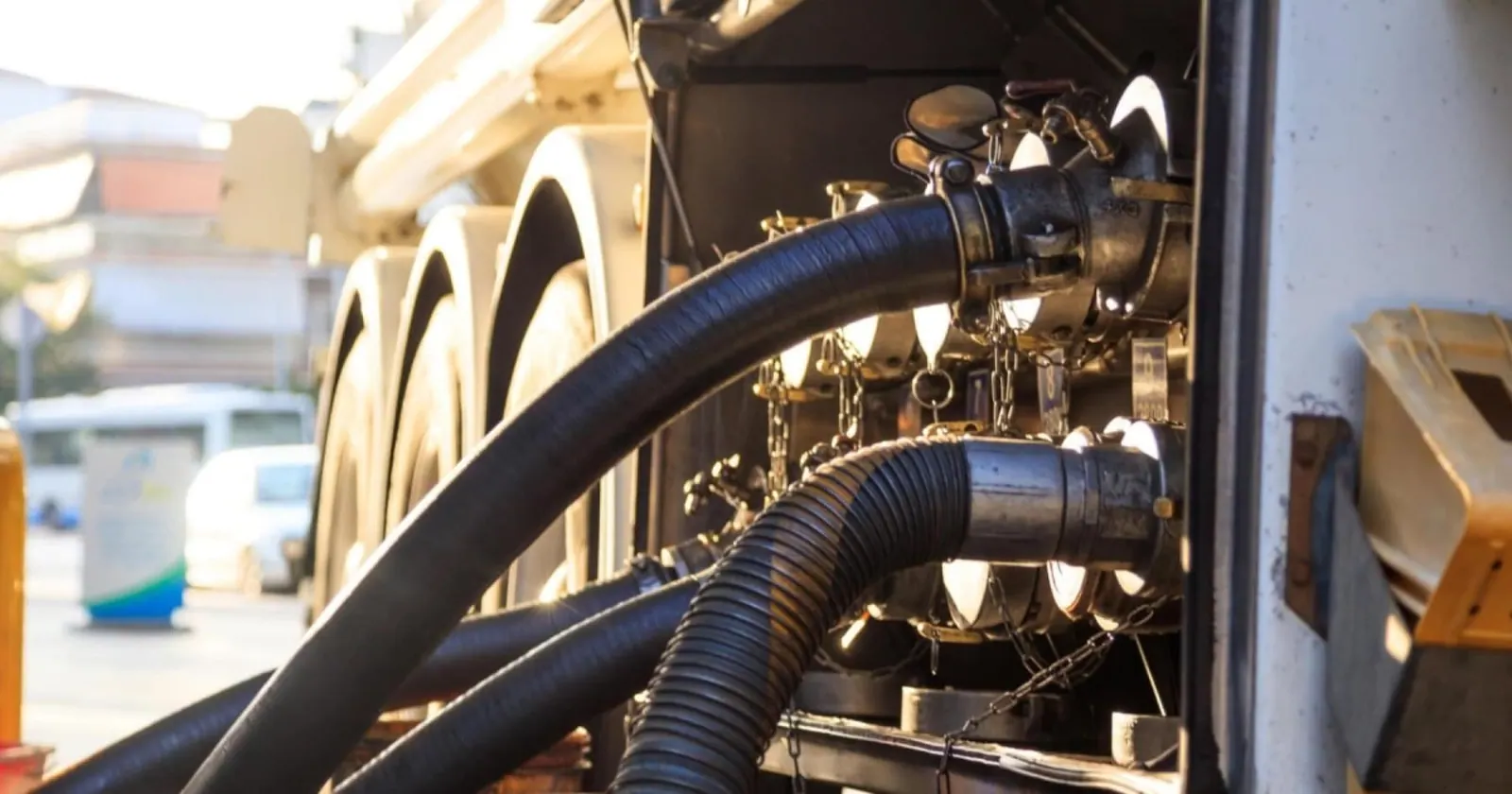
What is ULSD?
ULSD is a sulfur grade, not a separate fuel. ASTM D975, the U.S. diesel specification, labels its grades by sulfur: S15, S500 and S5000, for 15, 500 and 5,000 ppm maximum. D975 itself says the S15 grades "are commonly referred to as" ultra-low sulfur grades, or ULSD. The diesel you buy for a truck, a loader or a generator is almost always No. 2-D S15. Winter #1 is No. 1-D S15. D975 has no S15 version of the heavy No. 4-D grade.
Federal law sets the same ceiling. Under 40 CFR 1090.305, diesel fuel, including nonpetroleum diesel, must carry no more than 15 ppm sulfur and meet either a cetane index of at least 40 or a maximum of 35% aromatics by volume. The ppm is by weight: Caterpillar writes the limit as 15 ppm (mg/kg).
Grade and sulfur are separate questions. #1 vs #2 is about volatility, wax and cold flow (see #1 vs #2 diesel). The full family of grades and fuel types is in diesel fuel grades explained. This page is about the sulfur.
ULSD vs LSD vs high sulfurULSD vs low sulfur and high sulfur diesel
"Low sulfur diesel" (LSD) and "regular" or high-sulfur diesel are the older grades. D975 notes that S500 matches the old "Low Sulfur" grades and S5000 the old "regular" ones. They still exist on paper, but federal rules have moved highway and nonroad engines to 15 ppm.
| Fuel | Sulfur limit | Where it was or is used |
|---|---|---|
| ULSD (S15) | 15 ppm max | All U.S. highway diesel since the 2006–2010 phase-in. Nonroad, locomotive and marine diesel since the 2007–2014 phase-in, with some exceptions for older locomotive and marine engines (EPA). |
| Low sulfur diesel (S500) | 500 ppm max | U.S. highway diesel from October 1993 until ULSD replaced it. Nonroad, locomotive and marine fuel from June 2007 as a step toward ULSD (DieselNet). |
| High sulfur (S5000) | 5,000 ppm max | Highway diesel before 1993, under the old ASTM limit of 0.5%. Nonroad fuel stayed there until 2007, averaging about 3,000 ppm in use (DieselNet). |
| No. 1-K kerosene | 400 ppm max | Heaters and lamps, not diesel engines. See kerosene vs diesel. |
| EU diesel (EN 590) | 10 mg/kg max | Every diesel sold in the EU since January 1, 2009 (European Parliament). Often called "sulfur-free." |
Limits from ASTM D975-24, 40 CFR 1090.305 and the sources listed below. 1 ppm by weight = 1 mg/kg.
Why it existsWhy ULSD exists: exhaust aftertreatment
EPA's 2001 rule cut highway diesel sulfur from 500 ppm to 15 ppm, a 97% reduction, because sulfur had to come down "to enable modern pollution-control technology" on model year 2007 trucks and buses. DieselNet describes ULSD the same way: a "technology enabler" for sulfur-sensitive, catalyst-based emission controls.
DPFs need ULSD
Alaska's environmental agency puts it plainly: "DPFs require the use of ultra-low sulfur diesel fuel." A filter-equipped truck, loader or generator is built around 15 ppm fuel.
SCR and DEF came next
Many diesel engines also use SCR, which runs on DEF, to cut NOx. DEF doesn't replace ULSD. An SCR engine needs both. See what DEF is.
What higher-sulfur fuel does
Caterpillar lists the effects of fuel above 15 ppm in Tier 4 machines: more engine wear, corrosion and deposits, more frequent regeneration, poorer aftertreatment performance, and repairs not covered by warranty.
Look at the fuel inlet
Cat machines with aftertreatment carry an "ULTRA LOW SULFUR FUEL ONLY" label near the fuel fill. Other makers mark their equipment in their own way. If you see one, the engine is built for 15 ppm fuel.
When ULSD became the standard
| Date | What changed |
|---|---|
| October 1993 | Highway diesel capped at 500 ppm, replacing the old ASTM 0.5% limit. Nonroad fuel stays unregulated (DieselNet). |
| June 1, 2006 | Refiners and importers start making 15 ppm highway diesel. It has to reach retail by October 15, 2006 (DieselNet). |
| June 1, 2007 | Nonroad, locomotive and marine fuel capped at 500 ppm (DieselNet). |
| 2010 | All highway diesel is ULSD, and all highway diesel vehicles must use it (EPA). Nonroad fuel goes to 15 ppm on June 1, 2010 (DieselNet). |
| October 1, 2010 | Stationary diesel engines covered by EPA's engine standards, including many generators, must burn diesel that meets the nonroad standard (40 CFR 60.4207). |
| June 1, 2012 | Locomotive and marine fuel goes to 15 ppm (DieselNet). |
| 2014 | The nonroad, locomotive and marine phase-in ends. All of it must be ULSD, with some exceptions for older locomotive and marine engines (EPA). |
This is background on how the fuel changed, not compliance guidance. Small-refiner and other transition provisions are left out.
How it's madeHow refiners take the sulfur out
Refiners remove sulfur by hydrotreating: the diesel stream runs over a catalyst with hydrogen, the sulfur leaves as hydrogen sulfide gas, and that gas is processed to recover the sulfur. The refinery steps, and how many gallons of diesel a barrel of crude gives, are in how diesel is made from crude oil.
Side effectsWhat changed in the fuel besides sulfur
Additives make up the difference
Deep desulfurization also strips some of the fuel's natural lubricity. In 2005 ASTM added a lubricity limit to D975, a maximum 520-micron wear scar on the HFRR test, "to minimize lubricity-related problems with ultra-low sulfur fuels" (DieselNet). Lubricity additive is often blended in to meet it.
About 1% less, at most
EIA says the sulfur cut had "only a minor effect" on energy: U.S. distillate went from about 138,600 Btu per gallon in 1994 to an estimated 137,500 in 2014, roughly 0.8% less. Alaska's environmental agency cites estimates of about 1% lower fuel economy.
They run on it
"Older vehicles and equipment will run on ultra-low sulfur diesel," per Alaska's environmental agency, which notes EPA and the engine makers' association didn't expect problems. Very old gaskets can shrink and leak, so owners of old engines may want to replace them.
Same rules as any diesel
ULSD still clouds and gels in the cold, and it still picks up water and ages in a tank. See what temp diesel gels and how long diesel lasts.
ULSD vs dyed off-road diesel
They aren't alternatives. Since the nonroad phase-in, dyed off-road diesel is ULSD: the same 15 ppm No. 2-D S15 fuel with red dye added. The dye marks tax status, not quality. Dyed fuel was sold without highway tax and is only for off-road uses such as equipment, generators and farm machinery. Trucks on public roads burn clear, taxed ULSD. What each costs in your state, and who may use dyed fuel, is in dyed vs clear diesel and diesel taxes by state.
BlendsULSD with biodiesel and renewable diesel
- Biodiesel blends. D975 allows up to 5% biodiesel in diesel (DieselNet). The finished blend still has to be 15 ppm or less. For its Tier 4 machines, Caterpillar accepts blends up to B20 if the final blend is 15 ppm or less and meets ASTM D7467. See biodiesel vs diesel.
- Renewable diesel (R99, HVO). It's made by hydrotreating fats and oils rather than crude, and it's sold to the same D975 spec. The European paraffinic diesel spec, EN 15940, caps sulfur at 5 mg/kg (Neste data sheet). See what HVO is and renewable diesel vs biodiesel.
Ultra-low sulfur heating oil (ULSHO) is heating oil held to 15 ppm where a state requires it. New York, for example, has capped No. 2 heating oil at 15 ppm since July 1, 2012. It's made for burners, not engines. FuelGo doesn't deliver heating oil or Bioheat. See what heating oil is.
What to check when you order diesel
- Match the engine maker's fuel spec. Engines with DPF or SCR are built for 15 ppm fuel. The manual and the label at the fuel inlet say so.
- Order by grade and sulfur. No. 2-D S15 for most of the year, and a No. 1-D S15 or winter blend in the cold (see preventing diesel gelling).
- Pick clear or dyed by use, not by quality. Both are ULSD. Use determines tax status.
- Keep other fuels out of engine tanks. Kerosene allows up to 400 ppm sulfur, and heating oil's sulfur limit depends on the state.
- Test fuel you didn't buy yourself. A tank inherited with a site, or a generator tank nobody has records for, can be tested for sulfur by ASTM D5453 along with water and contamination.
Why prices say "ULSD." The main U.S. diesel futures contract has been ULSD since the May 1, 2013 NYMEX contract, when the heating oil futures spec moved from 2,000 ppm to ULSD (EIA). That's why market reports quote "NY Harbor ULSD." Weekly retail and spot numbers are in the U.S. diesel price report. This page isn't investment advice, and we don't forecast prices.
FuelGo deliveryULSD delivered: clear, dyed and R99
FuelGo delivers clear on-road ULSD #2 in B0, B5, B10 or custom bio-blends, red-dyed off-road ULSD #2, and R99 renewable diesel nationwide. If you run both kinds of equipment, both fuels go on one account as separate line items. Drops run 20 to 4,400 gallons, with transport loads up to 7,500 gallons, into site tanks and generators, or straight into trucks with mobile fleet fueling.
For tanks with an unknown history, lab fuel testing checks sulfur against the 15 ppm limit along with water, microbes and cloud point, and fuel polishing, tank cleaning and pump-out deal with what it finds. For price certainty, we offer fixed-price diesel contracts priced off NYMEX NY Harbor ULSD futures. Dispatch runs 24/7/365. Get a delivered quote or call 800-720-4546. A dispatcher replies within the hour.
Common questionsULSD FAQ
What does ULSD stand for?
Is ULSD the same as regular diesel?
What is the difference between ULSD and low sulfur diesel?
Is off-road dyed diesel ULSD?
Why did the EPA require ultra-low sulfur diesel?
Can older diesel engines run on ULSD?
Does ULSD lower fuel mileage?
Is ultra-low sulfur heating oil the same as ULSD?
Sources: U.S. EPA, Diesel fuel standards and rulemakings · 40 CFR 1090.305, ULSD per-gallon standards · 40 CFR 60.4207, fuel for stationary CI engines · U.S. EPA news release, highway diesel rule (Feb. 28, 2001) · DieselNet, U.S. diesel fuel standards · ASTM D975-24 (NCWM copy) · Caterpillar, fuel and oil information for aftertreatment-equipped machines (2010) · Alaska DEC, ULSD questions and answers · U.S. EIA, sulfur reduction and distillate energy content (Feb. 24, 2015) · U.S. EIA, NYMEX heating oil contract moves to ULSD (May 10, 2013) · European Parliament, sulphur in petrol and diesel (10 mg/kg from 2009) · Neste MY Renewable Diesel data sheet (EN 15940) · N.Y. Environmental Conservation Law 19-0325