
Bad DEF: How to Tell If Your DEF Is Contaminated or Degraded
Heat, time and dirty handling are what ruin DEF. What bad fluid looks like, what it does to the SCR system, and what to do with it.
Good DEF is clear and colorless, smells only faintly of ammonia, and reads about 32.5% urea on a DEF refractometer. Bad DEF is cloudy, tinted, has particles or a fuel sheen, or reads outside Navistar's 31.0–34.0% refractometer band. Don't try to fix it with water. Drain it and refill with fresh DEF following your engine maker's procedure.
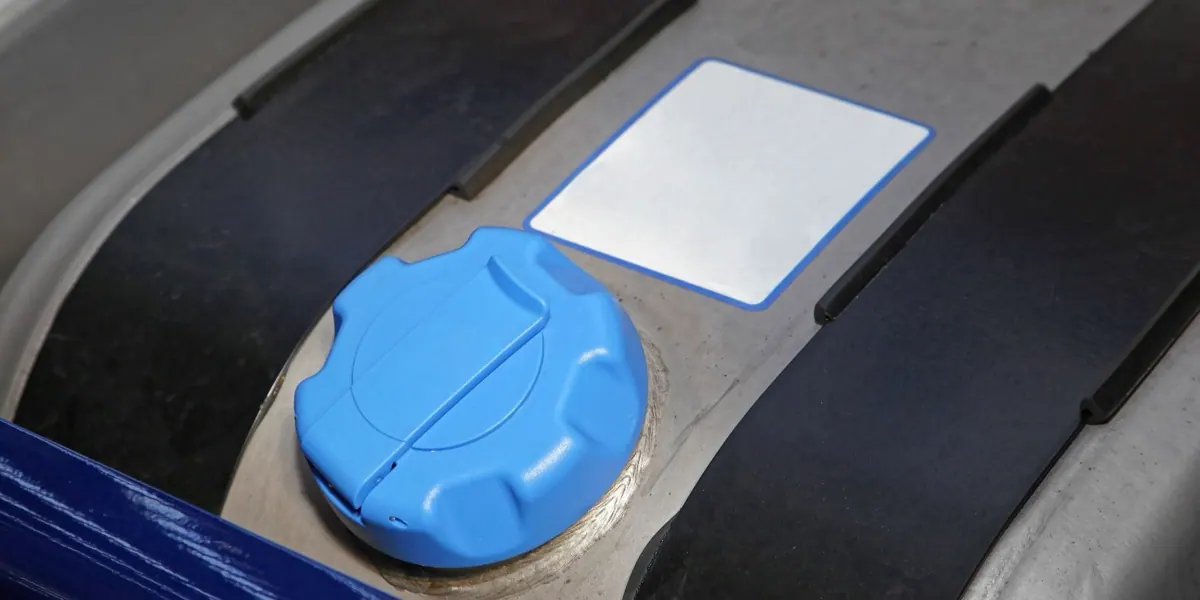
What good DEF looks like, smells like and reads
DEF is 32.5% high-purity urea in purified water, built to ISO 22241 (the basics are in what is DEF?, and AdBlue is the same fluid: DEF vs AdBlue). Navistar describes it as stable and colorless, with a weak ammonia smell. A DEF maker's spec sheet (OCI Nitrogen) lists it as colorless with a slight ammonia odor. That's your baseline. Anything else needs a closer look.
ISO 22241-1 allows 31.8–33.2% urea and a refractive index of 1.3814–1.3843 at 20°C. It also caps metals and minerals at fractions of a part per million: copper, zinc, chromium and nickel at 0.2 mg/kg each, and aluminum, iron, calcium and magnesium at 0.5 mg/kg. The full table and why 32.5% matters are in can you dilute DEF with water?. What the fluid does in the exhaust is in what does DEF do?.
Degraded DEFHow DEF degrades: heat, sun and time
DEF doesn't spoil the way fuel does. Old World Industries, which makes DEF, explains that with heat and time some of the urea reacts with the water to form ammonia and CO2. Less urea means a weaker fluid. Cummins adds that IBCs left in the heat risk water evaporation and conversion to ammonia, which is why it wants them shaded. API, Cummins, Navistar and Ford all say to keep DEF out of direct sunlight.
How long it lasts depends on how hot it's kept. API's DEF storage fact sheet prints this table:
| Constant storage temperature | Shelf life | In practice |
|---|---|---|
| At or below 50°F (10°C) | 36 months | Cool warehouse or basement. |
| At or below 77°F (25°C) | 18 months | Climate-controlled shop. |
| At or below 86°F (30°C) | 12 months | Shaded storage in a warm climate. |
| At or below 95°F (35°C) | 6 months | A tote in the sun, a closed trailer, a cab. |
| Above 95°F (35°C) | Test before use | Don't assume it's still in spec. |
API Storage and Handling of DEF (2024). OCI Nitrogen's spec sheet lists the same first three rows. Old World notes the table shows shelf life at a constant temperature; real sites swing.
Navistar recommends 23–77°F and says each 9°F (5°C) above that cuts about six months off an 18-month shelf life. Ford's owner manual says 23–68°F. Cummins says DEF stays stable for at least a year between 10°F and 90°F. Follow your engine maker's range and the date code on the container. Container materials and site setup are in our DEF storage guide.
Cold isn't the problem. DEF freezes at 12°F and comes back to spec when it thaws (does DEF freeze?). Two other time-based risks are easy to miss. Navistar doesn't recommend keeping DEF stored in a vehicle for more than six months. API says to periodically use or replace any "emergency" jug you carry.
Contaminated DEFHow DEF gets contaminated
The limits are tight enough that a dirty funnel can do it. Liebherr's AdBlue guidance lists what to keep out: fuel, oil, grease, water, dust, dirt, metals and detergents. In practice, the sources come down to six habits:
Opening a dirty filler
Volvo CE warns that dirt or dust around the tank or cap can wash in during filling. Cummins says to clean the tank before removing the cap, wipe the container before opening it, and clean the nozzle before filling.
Funnels, pitchers and reused jugs
API says to avoid common funnels, pitchers or hoses used for other fluids, and not to reuse other products' containers without thorough cleaning. Volvo CE goes further: never use a container that held anything else, even if cleaned.
Tap water and hose rinses
API's Jeffrey Harmening warns untreated water can bring in contaminants and metals. Rinse DEF equipment with distilled or deionized water, then DEF. Never top off with water. See can you dilute DEF with water?
Diesel in the DEF
Detroit says the hydrocarbons in diesel can cause seal failure in DEF system parts and set DEF quality codes. Detroit traces it to diesel accidentally added to the DEF tank. The reverse mistake is worse: DEF in the diesel tank.
The wrong pump, fitting or can
Cummins lists carbon steel, galvanized steel, copper and its alloys, zinc, lead, aluminum and magnesium alloys, and nickel-coated parts as materials DEF can corrode. It recommends polyethylene, polypropylene or 316 stainless containers. MTU says DEF in contact with copper turns blue quickly.
Paper seals and open containers
Cummins warns that the paper seal under some caps degrades over time and contaminates the DEF, so check opened containers. API suggests a closed-loop transfer system to keep airborne dirt out.
Then there's fluid that was never DEF to begin with. Navistar says agricultural-grade urea mixed with water "does not meet the minimum quality requirements." Homemade DEF is bad DEF on day one.
SignsHow to tell if DEF is bad: seven checks
Pour a sample into a clean, clear container and look at it in good light. Then smell it, check the date code and put a drop on a refractometer.
| Check | Good DEF | Bad sign, and what it points to |
|---|---|---|
| Color | Clear and colorless, like water. | Cloudy or any tint. RDO Equipment says cloudy or colored DEF is likely contaminated or old. Brenntag says not to use discolored DEF and that color may indicate mineral contamination. A blue tint points to copper (MTU). |
| Particles | Nothing floating or settled. | Debris, flakes or sediment. Brenntag says not to use DEF with visible particles. Think dirt, rust or a degraded seal. |
| Layers | One clear liquid. | A sheen or a layer on top. DEF is heavier than diesel (Detroit), so fuel floats. Treat it as fuel contamination. |
| Smell | A faint ammonia smell. | A sharp ammonia smell from fluid that sat hot is a reason to test: heat turns urea into ammonia (Old World). Fuel or solvent smell: contaminated. Don't use it. |
| Crystals | White crust on the fill neck or a spill is just dried DEF. Navistar notes dried spills leave white residue; Cummins says to clean it off. | Crystals in the liquid above 12°F. Old World says DEF can't form solids above 12°F unless the urea has concentrated, for example through evaporation from an open container. Below 12°F it's just frozen. |
| Refractometer | 32.5%. Navistar accepts 31.0–34.0% on a DEF refractometer. | Low: diluted with water. High: concentrated by evaporation. Either way, out of spec. |
| Date code | Inside the shelf life for how hot it was stored. | Past it, or stored above 95°F. API's table says to test before use. |
Refractometer routine (zero with distilled water, match sample temperature, clean the prism) is in how to test DEF with a refractometer.
A refractometer reads urea concentration, nothing else. API's Harmening calls it a misconception that checking concentration is enough, because ISO 22241 covers much more. It can't see dissolved copper, zinc or hard-water minerals at the levels ISO 22241 limits. Brenntag notes that certified labs can test every ISO 22241 parameter. If you know tap water, a metal fitting or a reused container was involved, treat the DEF as contaminated whatever the reading.
Bad DEF symptoms: warnings, codes and derates
Many SCR trucks check DEF quality on their own. Mack's DEF level sensor, for example, measures urea concentration in the tank with ultrasonic waves. When quality is off, the truck tells you, then it limits you:
- Warning lamp and message. Ford's manual: if the system becomes contaminated, the DEF warning lamp lights and a message appears.
- Quality and efficiency codes. Mack lists P207F (Reductant Quality) as "DEF quality low and SCR efficiency low. Commonly a DEF quality issue." Detroit lists DEF quality codes as SPN 3364 and NOx conversion codes as SPN 4364. Codes and wording vary by maker.
- Speed limit, then idle. Ford: keep driving without replacing contaminated DEF and the speed is limited, then the engine runs at idle speed. Normal operation doesn't return until the system is repaired. How fast inducements hit varies by maker and software (what does DEF do?).
- Other clues. Volvo CE lists increased DEF consumption, SCR malfunctions and engine shutdowns as warning signs of contamination.
Don't throw parts at it first. A quality code can also come from a sensor or wiring fault. Mack's diagnostic steps start with the sensor harness, then verify DEF quality with a refractometer. Test the fluid before you replace anything. Left alone, bad DEF costs more: API's Harmening lists catalyst poisoning, deposits and injector or filter clogging, and RDO Equipment adds possible damage to the DEF dosing pump.
What to doYou have bad DEF. What now?
- Stop using the source. If a tote, drum or bulk tank looks or tests bad, tag it and stop filling from it before more trucks get a dose.
- Test the vehicle tank and the supply. Refractometer both. Look at a sample of each in a clear container. If only one truck is off, the problem may be that truck's fill, not your stock.
- Don't fix it with water or additives. Navistar: never add water or any other fluids, chemicals or additives to the DEF tank. API warns aftermarket DEF additives can harm the fluid and void your warranty.
- Drain and refill with fresh DEF. Use the drain point and procedure in your engine or equipment manual. Ford says to replace contaminated DEF and see an authorized dealer to service a contaminated system. Some makers also call for flushing or filter checks.
- Diesel got in? Make it a shop job. Detroit replaces DEF system parts that diesel has touched. The parts list is in diesel in the DEF tank.
- Clear codes the right way through the OEM procedure or a dealer, after the fluid is fixed.
- Dispose of it properly. Navistar says not to empty DEF into drains or surface water, and to follow local environmental rules.
How to keep DEF from going bad
- Buy what you'll use while it's fresh. Rotate stock, oldest first (API). Size orders with the DEF consumption calculator or the rates in how much DEF per gallon of diesel.
- Store it cool, sealed and shaded. Below 86°F gets you about 12 months, below 77°F about 18 (API). Keep totes out of the sun.
- Clean before you open. Wipe the filler and the container, and clean the nozzle (Cummins).
- Keep DEF equipment DEF-only. Dedicated pumps, hoses and funnels, labeled. Rinse with distilled or deionized water, then DEF, never tap water (API).
- Use compatible materials. Polyethylene, polypropylene or 316 stainless. No brass, copper, galvanized or aluminum fittings (Cummins).
- Close the system. A closed-loop transfer keeps airborne dirt out (API). Cummins says a closed system helps where refilling can't be done cleanly.
- Service the DEF side. Inspect and replace the DEF tank vent filter per the manual (Cummins) and change DEF filters on schedule (Volvo CE).
- Spot-check. Cummins recommends using a refractometer on DEF in the tank and in storage. Navistar says to test periodically if DEF has to sit in a vehicle long term.
Fresh DEF, delivered and handled less
Most bad DEF comes from heat and handling, so the fewer jugs, funnels and half-empty totes on site, the better. FuelGo delivers ISO 22241 certified DEF nationwide in 2.5-gallon jug cases, 55-gallon drums, 275- and 330-gallon totes, 550-gallon tank cubes, and 750- and 1,000-gallon tanks, or direct to your equipment. With mobile fleet fueling, the driver tops up DEF along with the diesel, so nobody on your crew is pouring. DEF can ride on the same delivery and invoice as your diesel.
Closed couplers keep the fluid clean on dusty sites, and DEF-compatible pumps (12V, 115V and manual, with stainless fittings) are available. Need storage? DEF rental tanks come with stainless or approved-plastic wetted parts. See every option on the bulk DEF delivery page.
Truck derated and out of good DEF? Emergency DEF dispatch runs 24/7/365, and overnight and weekend windows are available for yards. Get a delivered quote or call 800-720-4546. A dispatcher replies within the hour.
Common questionsBad DEF: FAQ
How can you tell if DEF is bad?
What color should DEF be?
Does DEF go bad?
What does bad DEF do to a truck?
Can a refractometer tell if DEF is contaminated?
Should DEF smell like ammonia?
What are the white crystals around my DEF cap?
What should I do with bad DEF?
Sources: API, Storage and Handling of DEF fact sheet (2024) · Jeffrey Harmening (API), How to prevent problems with low-quality DEF, Heavy Duty Trucking · OCI Nitrogen, urea solution 32.5% product specification (2024) · Crown Oil, ISO 22241 specification · Navistar IK0700053, Diesel Exhaust Fluid Tips (NHTSA copy) · Cummins Emission Solutions, DEF Quality and Maintenance (Bulletin 4973789) · Old World Industries, DEF heating and cooling effect on quality and shelf life · MTU (Rolls-Royce), how to store and handle DEF · Liebherr, AdBlue FAQ · Brenntag, DEF quality matters · RDO Equipment, what happens when good DEF goes bad (2021) · Volvo CE, tips for avoiding 3 common DEF problems (2018) · Ford 2015 Transit owner's manual, diesel exhaust fluid · Mack CBR-2107-21, DEF level (UQLS) sensor troubleshooting (2025, NHTSA copy) · Detroit 13 TS-17, DEF in fuel system / diesel in DEF system (NHTSA copy)