
Can You Dilute DEF With Water? No. Here's Why.
DEF only works at 32.5% urea. A little water pushes it out of spec, and tap water brings minerals your SCR system can't use.
No. DEF must stay at 32.5% urea in purified water, and ISO 22241 allows only 31.8% to 33.2%. A quart of water in 10 gallons drops it out of range. Tap water also adds minerals that build deposits in the SCR system. If water went in, test it, then drain and refill with certified DEF as your engine maker directs.
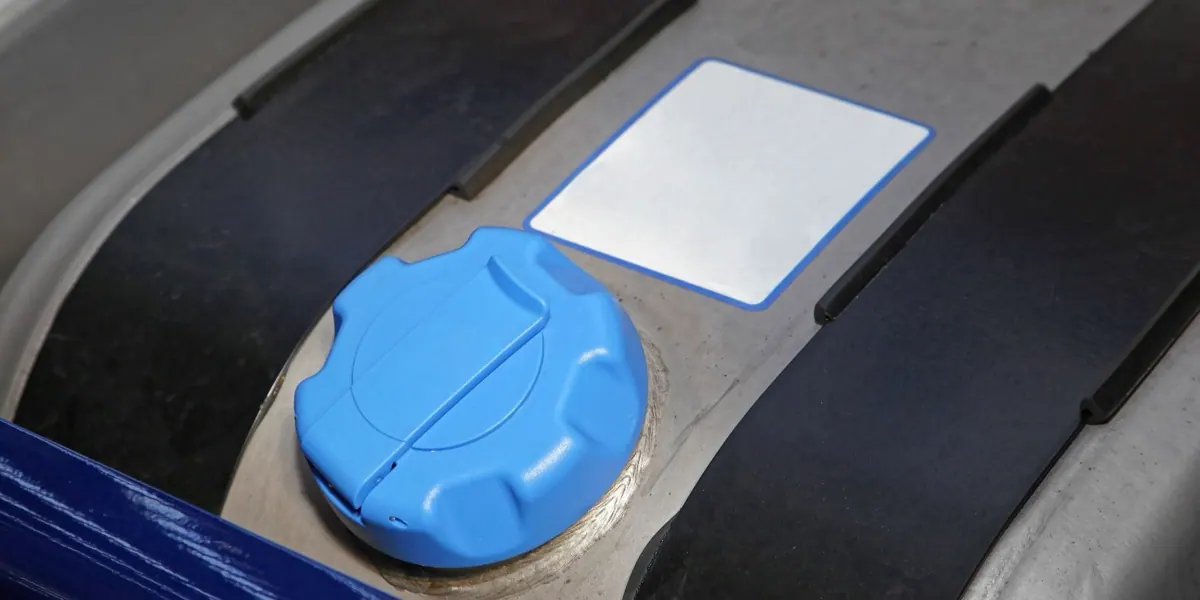
Why DEF is exactly 32.5% urea, and how tight the tolerance is
API, which runs the U.S. certification program, defines DEF as a 32.5% solution of technically pure urea in purified water. The quality rules come from ISO 22241-1. API licenses its certification mark only to marketers who show their DEF meets the current edition. What's in DEF and why, is covered in what is DEF?. AdBlue is the same fluid under another name (DEF vs AdBlue).
The 32.5% figure isn't arbitrary. At that ratio urea and water freeze and thaw together, so the fluid comes back to spec after a freeze (see does DEF freeze?). And dosing depends on it: Continental, which makes DEF tank sensors, notes the system has to know the fluid's actual urea content to inject the right amount. ISO 22241 leaves a narrow band around 32.5%:
| ISO 22241-1 property | Limit | What it means for water |
|---|---|---|
| Urea content | 31.8–33.2% by mass | About 0.7 points either side of 32.5%. Adding water only moves it one way: down. |
| Density at 20°C | 1.087–1.093 g/cm³ | Water is lighter, so diluted DEF reads light. |
| Refractive index at 20°C | 1.3814–1.3843 | What a refractometer reads. Water sits lower, so dilution shows up here. |
| Calcium, magnesium, sodium, potassium, iron, aluminum | ≤ 0.5 mg/kg each | Tap water's hard minerals are calcium and magnesium. |
| Copper, zinc, chromium, nickel | ≤ 0.2 mg/kg each | Navistar warns DEF reacts with mild iron and metals such as zinc, aluminum and nickel, so container material matters. |
| Insoluble matter | ≤ 20 mg/kg | Dirt, sediment, rust. |
Limits from the OCI Nitrogen AdBlue product specification (ISO 22241-2:2019 test methods), matched by Crown Oil's ISO 22241 table and Intertek's test list. Also listed: alkalinity ≤0.2%, biuret ≤0.3%, aldehydes ≤5 mg/kg, phosphate ≤0.5 mg/kg.
The mathHow little water it takes to knock DEF out of spec
Water adds gallons, not urea. The SCR system needs the urea. Here's what happens to 10 gallons of on-spec DEF as water goes in. This is straight arithmetic from the ISO density (about 1.09 kg per liter) and the 32.5% target.
| Water added to 10 gal of DEF | Urea, approx. | Where that lands |
|---|---|---|
| None | 32.5% | On target. |
| 1 cup | 32.3% | Still inside ISO 22241, but it has already drifted. |
| 1 quart | 31.8% | Just under the ISO minimum. Out of spec. |
| ½ gallon | 31.1% | Well outside ISO. At the bottom edge of the OEM refractometer band (31.0%). |
| 1 gallon | 29.8% | Below the OEM field limit. Expect quality faults. |
| 2 gallons | 27.5% | Badly diluted. |
Our calculation, with water at about 1 kg per liter. The OEM band is 32.5 ±1.5% on a refractometer (Navistar); see testing below.
What happensWhat happens if you put water in your DEF tank
Quality faults, then derate
Ford's owner manuals say it plainly: "Do not dilute diesel exhaust fluid with water or any other liquid." Contaminated fluid lights the DEF warning lamp, and further driving without replacing it puts the engine at idle speed. Detroit lists DEF quality fault codes as SPN 3364. How and when derates hit varies by maker, as explained in what does DEF do?.
More NOx out the stack
EPA's 2013 guidance to engine makers said dilution with water "would likely lead to a substantial increase" in NOx emissions. It also noted that quality sensors could catch many, but not all, dilution cases. So don't count on the truck to tell you.
Deposits and clogging
API's DEF program lead warns that low-quality DEF can cause "catalyst poisoning, deposits, and injector/filter clogging." Yara, which makes DEF, says the SCR system is susceptible to calcified deposits from the minerals in water.
Your bill, not the OEM's
API says DEF problems "could even void a vehicle's warranty," and that repairs can be expensive with long downtime. Navistar's DEF guidance says to "never add water or any other fluids, chemicals, or additives, to the DEF tank."
One line on the rules: the same EPA letter named watering down DEF as the most likely way operators would tamper with it. Beyond that, the reason not to do it is practical. It costs uptime and parts.
Tap, distilled, deionizedTap water, distilled water and deionized water in DEF
| Water | In the DEF tank? | For rinsing DEF equipment? |
|---|---|---|
| Tap water | No. It dilutes the urea and adds minerals. USGS says hardness comes from calcium and magnesium, and it rates water with 61–120 mg/L of hardness as only "moderately hard." ISO 22241 caps calcium and magnesium at 0.5 mg/kg each. | No. API: "Tap water can contain contaminants that are harmful to SCR systems." Navistar: tap water "will contaminate" DEF. |
| Distilled water | No. It's clean, but it still dilutes. A quart of it in 10 gallons drops DEF below 31.8%, the same as any other water. | Yes. API says to clean dispensing equipment with distilled or deionized water, followed by a rinse with DEF. |
| Deionized water | No. DEF is made with purified water, but it's mixed to 32.5% at the plant. Adding more water undoes that. | Yes, the same as distilled, followed by a DEF rinse. |
| "Homemade DEF" | No. Navistar: agricultural-grade urea "does not meet the minimum quality requirements." Mixing your own skips every ISO 22241 purity test. | N/A |
The distilled water question comes up because DEF is mostly water. The water isn't the problem; the dose of urea is. Distilled water is pure enough to rinse a tote. It is never a way to top off a tank.
TestingHow to test DEF concentration with a refractometer
A DEF refractometer measures how much light the fluid bends. The more urea, the more it bends. OTC's instructions for its 5025 DEF refractometer give the routine most handheld units follow:
- Zero it with distilled water. Put one or two drops on the prism, close the cover, and adjust the correction screw until the shadow line meets the water line.
- Match temperatures. The distilled water and the DEF should be at the same temperature. Cummins notes its refractometer (P/N 4919554) has no automatic temperature compensation and adds a correction table to the instructions. Check whether yours has one.
- Test a clean sample. Wipe the prism, add one or two drops of DEF with a clean dropper, close the cover and read where the shadow line crosses the scale.
- Clean the prism completely. Residue throws off the next reading. OTC says to re-zero every 30 minutes.
ISO 22241 sets 31.8–33.2% for the fluid itself, measured by lab methods. Navistar accepts 32.5 ±1.5% (31.0–34.0%) on a DEF refractometer in the shop, because that band allows for the tool's own tolerance, variability and calibration. Use the OEM band to decide if a tank needs attention, not to prove a batch meets ISO 22241. Your engine maker's manual has the final word.
A refractometer only reads concentration. API points out that urea concentration is just one of the characteristics ISO 22241 covers. Tap water could leave a tank reading close to normal while adding minerals a refractometer can't see. If you know tap water went in, treat the fluid as contaminated whatever the reading. For bulk supply, API recommends a Certificate of Analysis with every shipment.
Already added water?Someone already added water to the DEF. What now?
- Stop adding anything. Don't add more water, additives or "treatments." API warns aftermarket DEF additives can harm the fluid and void the warranty.
- Find out what went in and how much. Distilled water and a cup is a different job from a hose and tap water. Check whether it went into one truck or into the tote or bulk tank that fills the fleet.
- Test the tank and the supply. Run a refractometer on the vehicle tank and the source container. If the source is off, quarantine it before it reaches more trucks.
- Drain and refill with certified DEF. Yara says not to use DEF contaminated with tap water. Ford tells owners to replace contaminated fluid and see an authorized dealer to service a contaminated system. Use the drain point and procedure in your engine or equipment manual. Some systems also call for flushing or checking filters, and the steps differ by maker.
- Clear the faults the right way. Ford's manual says that once speed is limited or the engine is at idle, normal operation "will not resume until you have the system repaired." Follow the OEM procedure or go to a dealer.
- Dispose of the drained fluid properly. Navistar says not to empty DEF into drains or surface water, and to dispose of it under local environmental rules.
DEF that ended up in the diesel tank is a different and more urgent problem, covered separately. This page is about water in the DEF.
By accidentHow water gets into DEF when nobody meant it to
Most watered-down DEF isn't deliberate. It comes from handling. The guidance from API, Navistar and Yara points at the same habits:
- Rinsing with a hose. Totes, pumps or funnels washed with tap water and not rinsed with DEF afterward.
- Shared funnels and pitchers. API says to avoid common funnels, pitchers and hoses used for other fluids, and to use dedicated DEF equipment.
- Reused containers. A jug or drum that held something else, not cleaned thoroughly.
- Open or damaged seals. Yara says to keep DEF tank and container seals intact. API suggests a closed-loop transfer system to keep airborne contamination out.
Storage temperature, shelf life and container materials are in our DEF storage guide.
Buy it rightSkip the water question: buy certified DEF delivered
The simplest protection is fluid that arrives in spec and gets handled as little as possible. Look for the API certification mark and check the licensee directory at API.org/DEF. On bulk loads, ask for the Certificate of Analysis. Then keep every pump, hose and container DEF-only.
FuelGo delivers ISO 22241 certified DEF nationwide in 2.5-gallon jug cases, 55-gallon drums, 275- and 330-gallon totes, 550-gallon tank cubes, and 750- and 1,000-gallon tanks, or direct to your equipment, so nobody on your crew is pouring from jugs. DEF can ride on the same delivery and invoice as your diesel. Closed couplers keep the fluid clean on dusty sites, and DEF-compatible pumps (12V, 115V and manual, with stainless fittings) are available. See the bulk DEF delivery page. To size an order, use the DEF consumption calculator or the rates in how much DEF per gallon of diesel.
Truck derated and out of good DEF? Emergency DEF dispatch runs 24/7/365, and overnight and weekend windows are available for yards. Get a delivered quote or call 800-720-4546. A dispatcher replies within the hour.
Common questionsDiluting DEF with water: FAQ
Can you dilute DEF with water?
Can I use distilled water in DEF?
What happens if you put water in your DEF tank?
Will a truck detect diluted DEF?
What should a DEF refractometer read?
How do I fix DEF that has water in it?
Can I rinse a DEF tank or tote with tap water?
Why is DEF exactly 32.5% urea?
Sources: API, Diesel Exhaust Fluid certification program · API, Storage and Handling of DEF fact sheet (2024) · Jeffrey Harmening (API), How to prevent problems with low-quality DEF, Heavy Duty Trucking (Apr. 2019) · Jeffrey Harmening (API), Ensuring quality of DEF, Transport Topics (Mar. 2019) · OCI Nitrogen, AdBlue product specification (ISO 22241-2:2019 methods) · Crown Oil, ISO 22241 AdBlue specification · Intertek, DEF testing per ISO 22241-1 · Navistar IK0700053, Diesel Exhaust Fluid Tips (NHTSA copy) · Cummins, refractometer P/N 4919554 temperature compensation notice · OTC 5025 DEF refractometer operating instructions · Ford 2015 Transit owner's manual, diesel exhaust fluid · Detroit 13 TS-17, DEF quality fault codes (NHTSA copy) · Heavy Duty Trucking, EPA guidance letter on DEF (Jan. 2014) · Autocar Professional, Continental ultrasonic urea sensor (Feb. 2016) · Yara, how to handle and store DEF · USGS, hardness of water