
DEF storage: shelf life, temperature limits & best practices for fleets
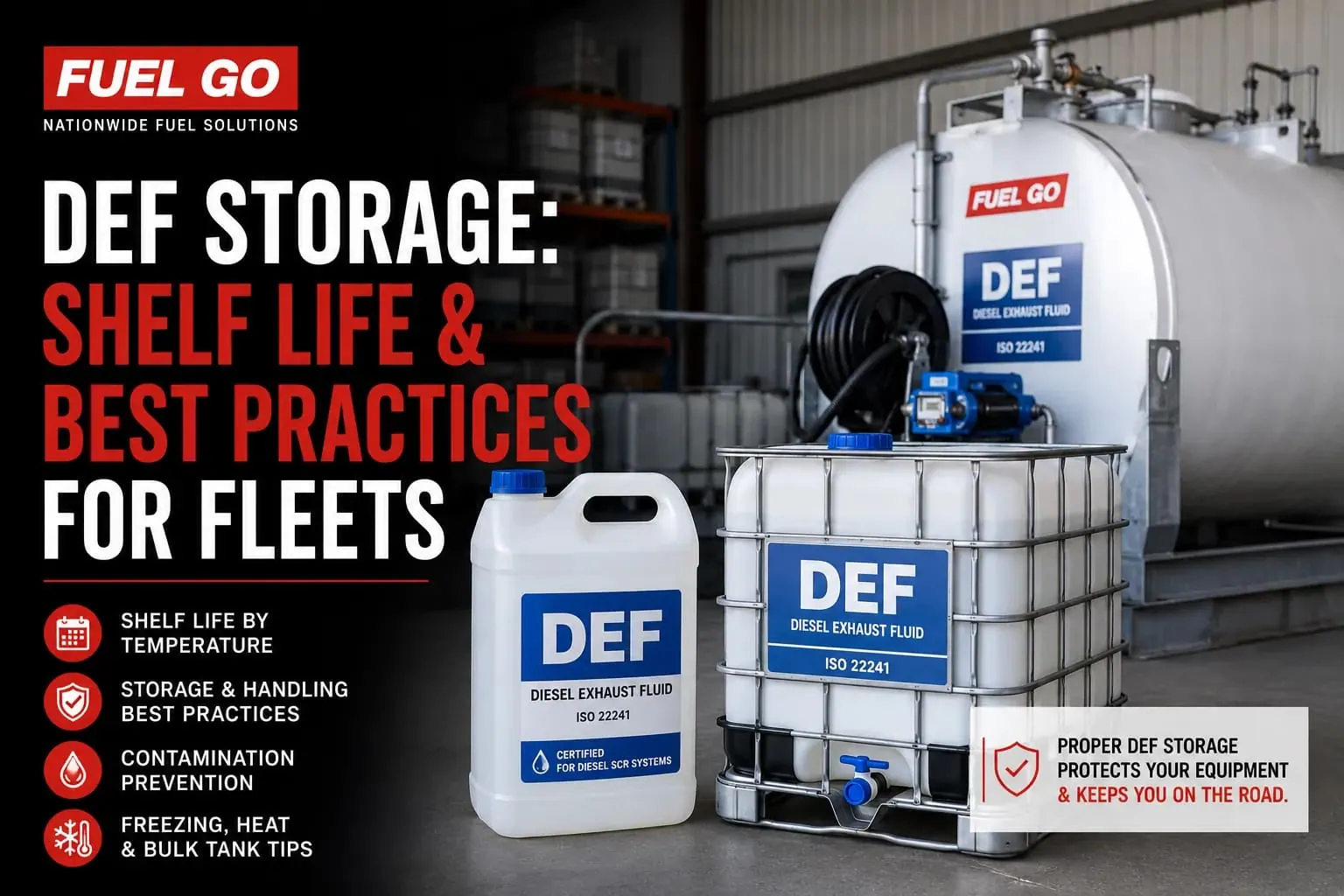
DEF is a finicky fluid. Store it wrong and the urea concentration drifts out of spec — destroying the SCR catalysts you bought it to protect. Here's exactly how to handle, store, and verify DEF for every fleet size.
DEF looks like water and feels like an afterthought — until you discover that a tote stored in direct summer sun degraded to the point of triggering SCR fault codes across your entire fleet. The good news: DEF storage isn't complicated. The bad news: the rules are precise and unforgiving.
This guide covers everything from temperature limits and shelf life math to container materials, contamination prevention, and how to actually set up DEF storage at a job site or maintenance yard. Whether you're stocking a 2.5-gallon jug or planning a 1,000-gallon bulk tank, the same rules apply.
Store DEF in a sealed container, between 12°F and 86°F (-11°C to 30°C), out of direct sunlight, away from heat sources, and in a DEF-compatible material like HDPE plastic or stainless steel. Under those conditions, DEF has a shelf life of approximately 2 years. Sustained temperatures above 86°F dramatically shorten shelf life — at 95°F sustained, shelf life drops to about 6 months. DEF that's discolored (yellow, brown, or cloudy) should never be used.
The DEF temperature window
Temperature does more damage to DEF than any other storage factor. The urea concentration is stable at room temperature, but at elevated temperatures urea slowly hydrolyzes back into ammonia — which then off-gases out of solution. The result is DEF that's still mostly water but has lost the urea concentration needed to function.
The temperature window matters more than the absolute number because sustained temperature is what degrades DEF — not brief excursions. A drum that sees a few hours at 95°F on a delivery truck is fine. A drum that sits outside in the Arizona sun all summer is not.
DEF shelf life by storage temperature
The 2-year shelf life printed on most DEF containers assumes ideal storage. Below is what actually happens at different sustained temperatures — based on the manufacturer guidance built into ISO 22241.
The pattern: every 10°F of sustained temperature above 77°F roughly halves the remaining shelf life. A drum stored in a climate-controlled warehouse will outlast the same drum stored in a non-ventilated metal shed by a factor of three or four.
Practical implication: always check the manufacture date stamped on the container before use. If a container has been sitting in summer heat for 4 months and was manufactured 14 months ago, it's likely past spec — even if the printed "best by" date hasn't arrived yet.
What happens when DEF freezes
DEF freezes at 12°F (-11°C) — the eutectic point of the urea-water solution we covered in our composition guide. The good news: freezing is reversible. Frozen DEF returns to full specification when thawed. The bad news: the freeze/thaw process has two physical consequences you have to plan for.
Expansion. Like water, DEF expands when it freezes — approximately 6.5% by volume. A completely full sealed container can rupture when frozen. All commercially packaged DEF is filled with headspace to allow expansion, but if you've decanted DEF into your own containers without leaving room, you're at risk.
Slow thaw. Frozen DEF doesn't thaw instantly. A 55-gallon drum brought from sub-zero outdoor storage indoors can take 24–48 hours to fully liquefy. Plan ahead — don't expect to use frozen DEF on demand. Most modern diesel vehicles include heated DEF tanks and supply lines that thaw the fluid quickly after engine startup, but this only handles the on-vehicle supply, not your storage.
Critically: do not heat frozen DEF aggressively to thaw it. Direct flame, electric heat tape, or hot water on the container exterior can locally exceed the 86°F degradation threshold, ruining the fluid even as the rest of the drum sits at 20°F.
Container materials: what works and what destroys DEF
DEF corrodes some metals and reacts with others. The container you store it in matters as much as the temperature you store it at. This is why you can't just pour DEF into an old fuel can — it's why the entire DEF supply chain uses specific, compatible materials.
Use these materials
- HDPE plastic — the standard for jugs, drums, and totes
- Stainless steel — used in bulk DEF storage tanks
- Polypropylene — pumps, fittings, and dispensing equipment
- EPDM rubber — gaskets and seals
- Viton / FKM — fuel pump and injector components
- Titanium — premium dispensing parts in industrial settings
Never use these materials
- Carbon steel — corrodes rapidly, contaminates the fluid with iron
- Aluminum — reacts and leaches into solution
- Copper — extremely reactive, contaminates and corrodes
- Brass — contains copper; same problem
- Galvanized steel — zinc reacts with urea
- Lead solder — contaminates and degrades catalyst
The most common real-world mistake: filling a galvanized steel utility container with DEF. Within days the zinc plating reacts with the urea and the fluid is ruined. The same applies to old aluminum fuel jugs — they look perfectly clean, but the chemistry doesn't work.
How to set up DEF storage at your site
Whether you're storing a single drum or planning bulk on-site DEF, the same setup principles apply. Follow these six steps and you'll avoid 95% of the contamination and degradation issues fleet operators experience.
Choose an indoor location with stable temperature
Inside a building is always better than outside. Stable indoor temperatures (50–75°F) maximize shelf life. If outdoor storage is necessary, use a covered, shaded location and consider insulated enclosures in summer climates.
Keep containers sealed until use
Atmospheric humidity, dust, and contaminants degrade DEF once a container is opened. Reseal jugs and drums immediately after dispensing. For totes and bulk tanks, use proper closure systems and filtered breathers.
Use dedicated dispensing equipment
The single most common contamination route is using shared funnels, pumps, or hoses that also contact diesel or other fluids. Even trace diesel in DEF damages the SCR catalyst. Label and physically segregate DEF equipment.
Maintain stock rotation (FIFO)
First-in, first-out. Place new deliveries behind existing stock so older containers get used first. Mark manufacture dates clearly. Don't let any DEF sit longer than 18 months even in ideal conditions.
Protect from direct sunlight
UV exposure accelerates urea degradation and heats containers above ambient. Store inside, under cover, or in opaque containers. If you must store outdoors, paint metal enclosures white to reflect heat and use ventilation.
Set up bulk monitoring if applicable
For bulk DEF tanks (500+ gallons), install tank-level monitoring with temperature sensors. Automated monitoring alerts you to abnormal conditions and ensures consistent fluid quality across long storage periods.
6 warning signs DEF has gone bad
Even with perfect storage, occasionally a container of DEF is compromised — either during manufacture, transit, or by accidental contamination at your site. Inspect every batch before use. These six visual and physical cues catch the vast majority of bad DEF.
Yellow or brown color
Quality DEF is clear or very faintly tinted. Visible yellow indicates urea hydrolysis from heat damage. Brown means severe degradation. Do not use.
Cloudy appearance
Cloudiness or visible particulates mean either contamination or precipitation of solids. The fluid is no longer ISO 22241-compliant.
Strong ammonia smell
Fresh DEF has only a faint odor. A pronounced ammonia smell means urea has decomposed and released ammonia gas — the fluid has lost active ingredient.
Crystallization on container
White crystals around the cap or seal indicate evaporation and concentration changes. The remaining fluid is likely out of spec.
Past manufacture-date + 2 years
Even with ideal storage, the 2-year shelf life is the upper limit. Beyond that, urea concentration drift is virtually guaranteed.
Refractometer shows off-spec
The definitive test. A reading outside 32.0–33.0% urea concentration means the fluid is no longer ISO 22241-compliant, regardless of how it looks.
When in doubt, dispose. The cost of a fresh container of DEF is trivial compared to the cost of repairing an SCR catalyst damaged by off-spec fluid.
Storage best practices by container size
Different DEF formats have different storage considerations. Match your storage strategy to the container.
2.5-Gallon Jugs
Keep sealed in original packaging. Use within 12 months of opening. Indoor storage at room temperature ideal. Avoid stacking more than 4 high.
55-Gallon Drums
Use a dedicated drum pump (HDPE or stainless). Keep bung closed when not dispensing. Avoid horizontal storage that submerges the bung in fluid.
275-Gallon IBC Totes
Store on pallets to prevent ground moisture wicking. Use the supplied bottom valve for dispensing. Refillable totes should be cleaned thoroughly between refills.
Bulk Storage Tanks (500+ gal)
Stainless steel construction required. Filtered breather vents prevent atmospheric contamination. Pair with monitoring for temperature and level tracking.
DEF storage FAQ
- Optimal storage is 12°F to 86°F — temperature is the #1 driver of DEF shelf life. Indoor climate-controlled storage always wins.
- Shelf life roughly halves every 10°F above 77°F — a drum that lasts 24 months at 70°F lasts only 6 months at 95°F.
- Freezing is reversible — DEF returns to spec when thawed, but allow time and never apply direct heat.
- Use only DEF-compatible materials — HDPE, stainless steel, polypropylene. Avoid aluminum, copper, brass, and carbon steel.
- Six visual signs of bad DEF — yellow/brown color, cloudiness, ammonia odor, crystallization, age, or refractometer failure.
- Always check the manufacture date — the printed best-by date assumes ideal storage that rarely happens in practice.
Fresh DEF, delivered when you need it.
Stop worrying about shelf life and storage drift. FuelGo delivers ISO 22241-certified DEF on a schedule that matches your usage — in jugs, drums, totes, or bulk, nationwide.