
Extended Outage Fuel Planning for Data Centers: After the First 72 Hours
Your tanks get you through the first day or three. Everything after that arrives on a truck. How to keep running generators fed, get trucks to the fill points, plan for a region in trouble and drill it before you need it.
After the first 24–72 hours, a data center runs on deliveries, not storage. An extended outage fuel plan sets each tank's reorder trigger from measured burn and arrival window, refuels running generators through remote fills, pre-clears trucks, gates and fill points, plans for closed terminals and blocked roads, and rehearses all of it in drills.
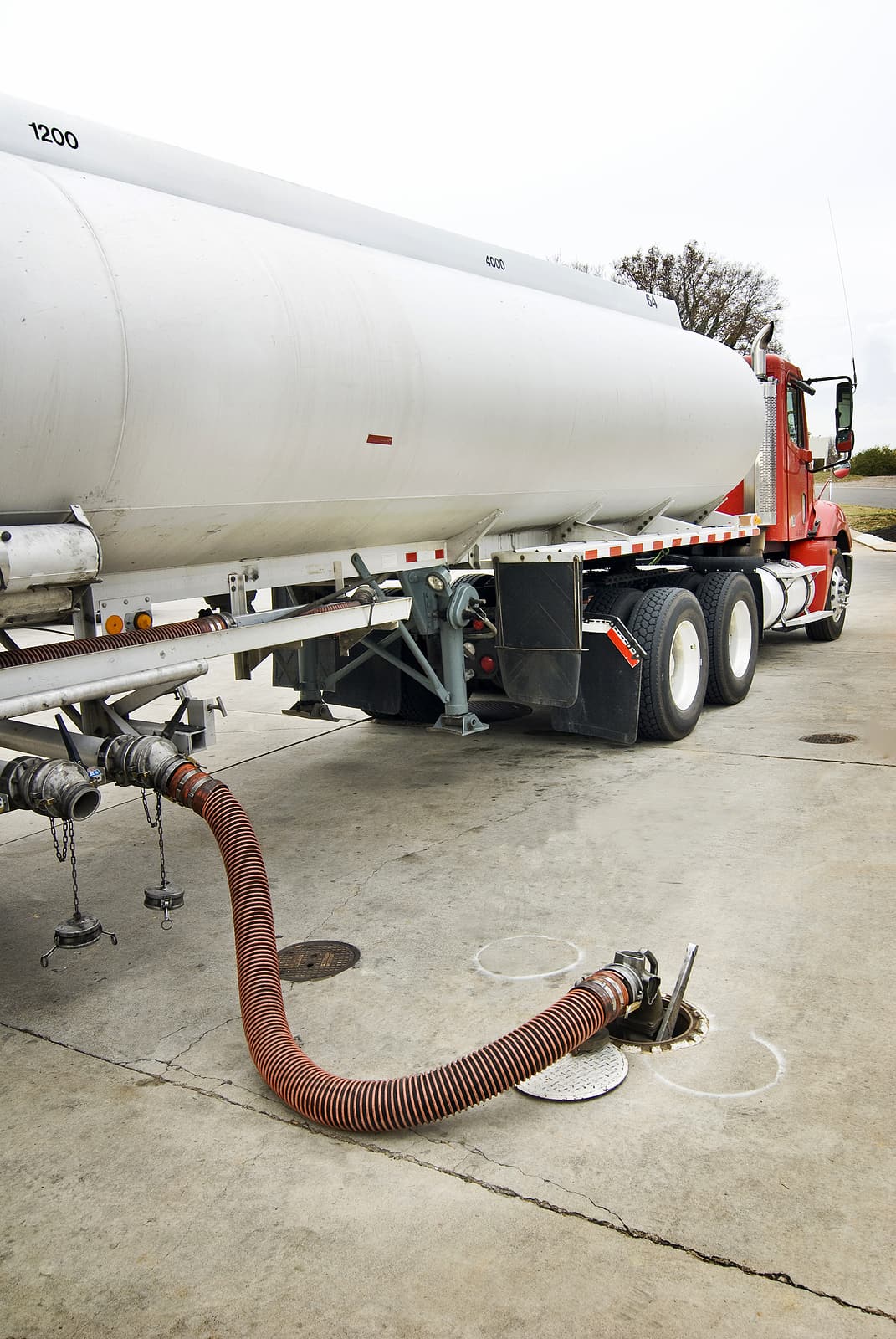
What changes after the first 24–72 hours
On-site fuel is sized for a bridge. Uptime Institute's Tier Standard sets a floor of 12 hours of fuel at N load for every Tier. Consulting-Specifying Engineer notes data centers are typically expected to support the load for 24 hours or more. Where NFPA 110 applies, the Class is the minimum time the system is designed to run at rated load without refueling; Class X covers longer requirements, such as the 96 hours some health care facilities must meet. How to size that storage is in our data center diesel sizing guide.
Once the stored hours are gone, storage stops mattering and logistics takes over. The question is no longer "how many gallons do we hold?" but "how many loads a day can reach us, from where, through what?" Three things change at once:
- Problems that only show up after many hours. FEMA's emergency power checklists name fuel system problems as the most common source of failure during extended run times, with cooling second. Uptime Institute warns that extended generator operation can overheat a day tank enough to reduce generator power. Your monthly 30-minute test never finds these.
- Everyone else is out of fuel too. On day three of a regional outage, the hospital, the water plant and the tower sites are calling the same suppliers you are. Diesel that was a phone call away on day one now needs a place in a queue.
- The supply chain behind the truck may be hurt. Terminals flood, refineries cut runs, roads close. A plan that assumes normal supply only covers the first part of the outage.
The 2021 Texas freeze shows the shape of it. Data Center Knowledge reported that "there was no shortage of diesel in the state," but getting it where it was needed was another matter: in many parts of Texas "not a single truck was moving for days," and many operators had a hard time securing deliveries to top off their tanks. One operator ran its entire Texas capacity on generators for two days that week.
The cadenceFrom burn rate to a delivery cadence
An extended outage is a steady-state problem: deliveries have to match burn, every day, for as long as the utility is down. Start from the gallons per hour your plant actually burns, then turn it into loads.
| 15 MW generator load (example) | Burn | Per day | 7,500-gal loads | Over 7 days |
|---|---|---|---|---|
| At design load | 1,185 gal/h | 28,440 gal | 3.8 a day, one every 6.3 h | About 27 loads |
| At about 40% of design | 500–535 gal/h | 12,000–12,840 gal | 1.6–1.7 a day, one every 14–15 h | 11–12 loads |
Illustrative plant from our sizing guide (10 MW IT, 15 MW generator load). The 40% row uses that guide's light-load figures. Run your own sets through the generator fuel calculator or the consumption chart.
- Measure the real burn in the first hours. Real data center load is often well below design, so the plan built on design load is the ceiling. Read tank levels (or your monitoring) every few hours, work out actual gallons per hour per tank, and tell your supplier the number. A plant at 40% of design needs less than half the trucks.
- Set a trigger per tank, not per site. Reorder when a tank still holds enough fuel to cover the supplier's arrival window plus a margin. At 1,185 gallons an hour, a 12-hour window is 14,220 gallons before margin. Once the event is regional, use the longer regional window, not the normal one.
- Order early, then keep a standing cadence. In a long outage the first order should go in while tanks are still full, followed by a daily schedule (for example, two loads at set times) rather than one call per alarm. Steady orders are easier for a dispatcher to protect than emergencies.
- Keep the sequence written down. Which tank gets fuel first, which fill point each load goes to, and which tanks can be topped from one stop. A transport can be split across fill points if they're plumbed for it; agree that before the event.
- Re-plan every shift. Load changes as cooling demand changes and halls shift. Recompute hours remaining per tank at each handover and adjust orders before the margin is gone.
Refueling generators during an extended outage, while they run
A fixed data center plant is built to take fuel while it carries load: the truck fills a bulk or sub-base tank at its fill point, and transfer pumps keep the day tanks fed. The set doesn't stop for fuel. What goes wrong is everything between the truck and the engine.
Know what the truck connects to
Consulting-Specifying Engineer notes remote fill systems carry gauges and sensors to guide the person filling, and that a tank can't be filled completely because it needs head space for expansion. Know each tank's real fill limit, so a delivery isn't sized for gallons the tank can't take.
Fuel in the building isn't fuel in the engine
After Sandy flooded the basement at 75 Broad Street in Manhattan in 2012, the electric pumps that moved diesel up from basement tanks stopped. Staff carried 5-gallon buckets up 17 flights of stairs to keep an 18th-floor generator running. FEMA's checklist: fuel transfer pumps powered by the emergency system and periodically tested.
Consumables for days, not hours
FEMA's checklists call for draining water separators during operation and keeping at least a 10-day supply of consumables, such as oil and coolant, on site. Long runs at high flow load filters. Know who changes them on a running plant, and with what spares.
Refuel the tank, not the generator
OSHA's portable generator guidance is to shut the unit off and let it cool before adding fuel. If a rental generator joins the plant for a long outage, plumb it to an auxiliary tank so deliveries go into the tank while the set keeps running.
- One product per tank. Keep dyed diesel for stationary generators separate from any clear on-road tank on the campus, and write which tank takes which on the fill-point list. Delivery drivers in an emergency may be new to your site.
- DEF runs out too. Generators with SCR aftertreatment burn diesel exhaust fluid alongside fuel, and Cat's Tier 4 Final 3516C sheets show the ratio rising with load. Plan DEF the same way as diesel; see DEF for generators.
- Winter outages need winter fuel. A load delivered on day four of an ice storm has to be rated for the nights ahead. See how to prevent diesel gelling.
- Rooftop and high-floor tanks need their own method if fill lines or pumps fail; see rooftop generator fueling.
Delivery access and staging: getting the truck to the fill point
A delivery that reaches the gate and can't unload costs as much as one that never left. FEMA's emergency power checklists say to clear vehicles, trash compactors, containers and anything else that may block access for service trucks, "including fuel providers," and to agree with local authorities that fuel delivery and generator service vehicles are treated as emergency vehicles with authorized site passage. Write the rest down per site:
| Item | What to have on file | Why it matters on day three |
|---|---|---|
| Route | Primary and alternate approach, with known flood and snow trouble spots. | The normal route may be closed. Drivers from outside the region won't know the back way. |
| Gate and security | Who meets the truck at 2 a.m., badging or escort steps, and a phone that works without the corporate network. | A security process that takes an hour per truck takes a day across a week of deliveries. |
| Truck position | Where a transport parks to unload, turning room, and what has to be moved first. | Temporary equipment, rental generators and staff cars fill yards during long outages. |
| Fill points | Fitting type, height above grade, hose distance, and which tanks share a fill. | A gravity truck alone can't fill a tank that sits above it, so pump capability matters (Consulting-Specifying Engineer). |
| Product | Grade per tank (dyed or clear, renewable diesel where approved), plus DEF. | Drafted-in drivers and trucks need it on paper, not in someone's head. |
| Records | A ticket per tank: product, gallons, time. | Reconciling deliveries against runtime later; see reading a delivery ticket. |
Staging buys time when the truck can't come as often as you'd like. Rental tanks set beside the plant add hours between deliveries, and topping off before a forecast storm means the outage starts with full tanks rather than a test-run deficit. If a site regularly needs more hours than its tanks hold, look at adding storage rather than counting on more emergency trucks.
Regional disastersFuel supply during regional disasters
A local outage is a delivery problem. A regional disaster can also be a supply problem, upstream of every supplier you could call.
| Event | What broke | Planning lesson |
|---|---|---|
| Sandy, 2012 | Energy Secretary Moniz later said Sandy heavily damaged two refineries and closed more than 40 New York Harbor terminals through water damage and loss of power. | Know which terminals your supplier loads from, and where else it can load. |
| Harvey, 2017 | Gulf Coast refinery inputs fell 34% in one week, and the Colonial Pipeline curtailed shipments before resuming at reduced rates on Sept. 6 (EIA). | A storm far away can tighten supply at your terminal days later. |
| Texas freeze, 2021 | Diesel was in the state; trucks couldn't move on iced roads. The lesson drawn afterward: keep close relationships with fuel suppliers, preferably national-scale ones (Data Center Knowledge). | Delivery capacity and roads, not fuel, can be the limit. Watch the weather earlier. |
Driving-hour limits can be relaxed, but that doesn't create trucks. Under federal rules (49 CFR 390.23), a governor or FMCSA can declare a regional emergency that lifts the hours-of-service limits for drivers providing direct assistance, for the emergency period or 30 days from the declaration, whichever is less. It lets existing drivers run longer. It doesn't add trucks, drivers or terminal capacity, and it applies only where and while a declaration is in force, so don't build a plan on it.
Plan in layers. Full, clean fuel on site; a primary supplier with your sites on file and a written outage plan; a second supplier that loads at a different terminal; and extra storage when the gap between trucks gets long. How to write those into a contract, including what "priority" really means and how force majeure can cut against you, is in our data center fuel supply agreement guide. This page is about running the plan once the outage starts.
DrillsDrill the fuel plan, not just the generators
Monthly generator exercise proves the engines start. It doesn't prove that fuel can be ordered at 2 a.m., that a transport fits the yard, or that the transfer pumps run on generator power. Run these at least once a year, and after any change of supplier, security process or tank layout:
| Drill | How to run it | What it should prove |
|---|---|---|
| Tabletop | Walk a five-day regional outage with real numbers: burn per tank, triggers, loads per day, who orders, who meets trucks, what happens when the primary supplier can't come. | The math works and every step has a named person, with backups for each shift. |
| Ordering contact check | Confirm the after-hours ordering number, your account and the site details your supplier has on file, and who on your side is authorized to order. | Contacts and accounts are current, so the first order in a real outage isn't held up. |
| Fill-point walk-down | During a load-bank test or long exercise, walk the truck path and check each remote fill's fitting, gauges and head space while the sets run. | A transport will fit, the fittings match, gauges read true and the head space is what you think it is. |
| Transfer pumps on emergency power | Run the fuel transfer system from generator power with the utility side open, and check alarms. | Fuel reaches the day tanks with the grid gone; FEMA's checklist asks for this to be periodically tested. |
| Night access | Bring a stand-in vehicle through the gate after hours, following the outage security process. | Badging, escorts and parking don't add an hour to each truck. |
| After-action | List what failed and who fixes it, then update the site file, the SLA and the supplier's records. | The next drill or outage starts from the fixed version. |
When the power comes back
- Refill before you stand down. The next event doesn't wait for your tanks to recover. Order back to keep-full levels as soon as the utility is stable, before every other site in the region does the same.
- Check the fuel. Fuel from several loads and possibly several suppliers is now mixed in your tanks. Sample it and act on the results; our data center fuel quality guide covers the schedule and tests.
- Reconcile. Match delivery tickets by tank against runtime and burn. It proves the numbers for customer reporting and shows whether your planning burn rate was right.
- Re-size if the outage outran the plan. If the event used more trucks, more hours or more patience than planned, add storage or change the program now. Our data center generator fuel hub covers storage and supply together.
Extended outage fuel from FuelGo
FuelGo sets up generator plant fuel as one program while the grid is still on: scheduled fills after weekly or monthly tests, fuel monitoring that tracks levels across every generator and schedules deliveries, and an outage response plan that fixes the delivery sequence, truck count and site access in advance. During regional outages, critical facilities like data centers are prioritized in emergency dispatch, and customers with site details already on file are dispatched first. Dispatch is staffed 24/7/365, and a person answers.
We don't quote a blanket response time. Arrival depends on your location, the distance to the nearest terminal, site access and what's happening across the region, so the dispatcher gives you a realistic window for your site. We've fueled into declared disaster areas alongside agencies including FEMA. Ask about storm pre-positioning when a forecast turns.
In a multi-day outage we can coordinate multiple trucks a day for your site and put the truck count in writing in your outage plan; we've committed to five trucks a day before. We also hold preferred storage at the terminal for events and emergencies.
We deliver dyed diesel for stationary generators, clear diesel and DEF, 20 to 4,400 gallons per drop and transport loads up to 7,500 gallons, with no minimum order. Rental tanks from 119 to 17,000 gallons, including day and auxiliary tanks, feed the generator's own tank so the set never sees an interruption, and we keep them full on the same invoice. Stored fuel gets lab fuel testing and polishing for tanks from 50 to 50,000 gallons, plus tank cleaning and pump-out. Fills are itemized by gallons, date and tank.
See emergency fuel delivery, data center fuel delivery and generator fuel delivery, get a delivered quote or call 800-720-4546. A dispatcher replies within the hour.
Common questionsData center extended outage fuel FAQ
What happens to a data center's fuel supply after the first 72 hours of an outage?
Can you refuel a diesel generator while it is running?
How often will data center generators need fuel deliveries in an extended outage?
When should a data center reorder fuel during an outage?
What should a fuel delivery access plan for a data center include?
Does diesel run short during regional disasters?
Do hours-of-service rules limit fuel trucks during an emergency?
How should a data center drill its outage fuel plan?
Sources: Uptime Institute Journal, Fuel System Design and Reliability, June 2014 (12 hours at N for all Tiers; day tank overheating in extended operation) · Consulting-Specifying Engineer, The nine major steps of designing generator fuel systems, June 2016 (24 hours or more; remote fill gauges and sensors; head space; gravity vs. pump trucks) · Consulting-Specifying Engineer, NFPA 110-2019 concepts and changes, Nov. 2019 (Class definition; Class X 96-hour example) · DHS, emergency power checklists from FEMA P-1019, Tables D-1 to D-3 (transfer pumps on emergency power; water separators; 10-day consumables; site access for fuel providers; fuel and cooling failures in extended runs) · FEMA P-1019, Emergency Power Systems for Critical Facilities, Sept. 2014 · Data Center Knowledge, Diesel bucket brigade at 75 Broad, Oct. 31, 2012 · Oil & Gas Journal, DOE to establish Northeastern gasoline reserve, May 12, 2014 (Moniz: two refineries, more than 40 terminals) · EIA, Hurricane Harvey caused U.S. Gulf Coast refinery runs to drop, Sept. 11, 2017 · Data Center Knowledge, Most Texas Data Centers Weathered the Storm, But Things Did Not Go Smoothly, March 8, 2021 · 49 CFR 390.23, Relief from regulations (Cornell LII) · OSHA, Using Portable Generators Safely. The 1,185 gal/hr, 500–535 gal/hr and 15 MW figures are from our data center sizing guide; DEF ratios from our DEF guide.