
Renewable Diesel for Data Center Generators: HVO Approvals, Storage and Carbon Reporting
Same tanks, same generators, different carbon math. What engine makers have approved, what changes in runtime and storage, how the emissions get reported, and where supply actually is.
Renewable diesel (HVO, sold as R99 or R100) meets the ASTM D975 diesel spec and drops into existing generator tanks. Cummins, Caterpillar, Kohler, mtu and Generac have published HVO approvals for their gensets. Plan on 3–5% more gallons for the same runtime, keep the tank dry, and keep each load's paperwork for carbon reporting.
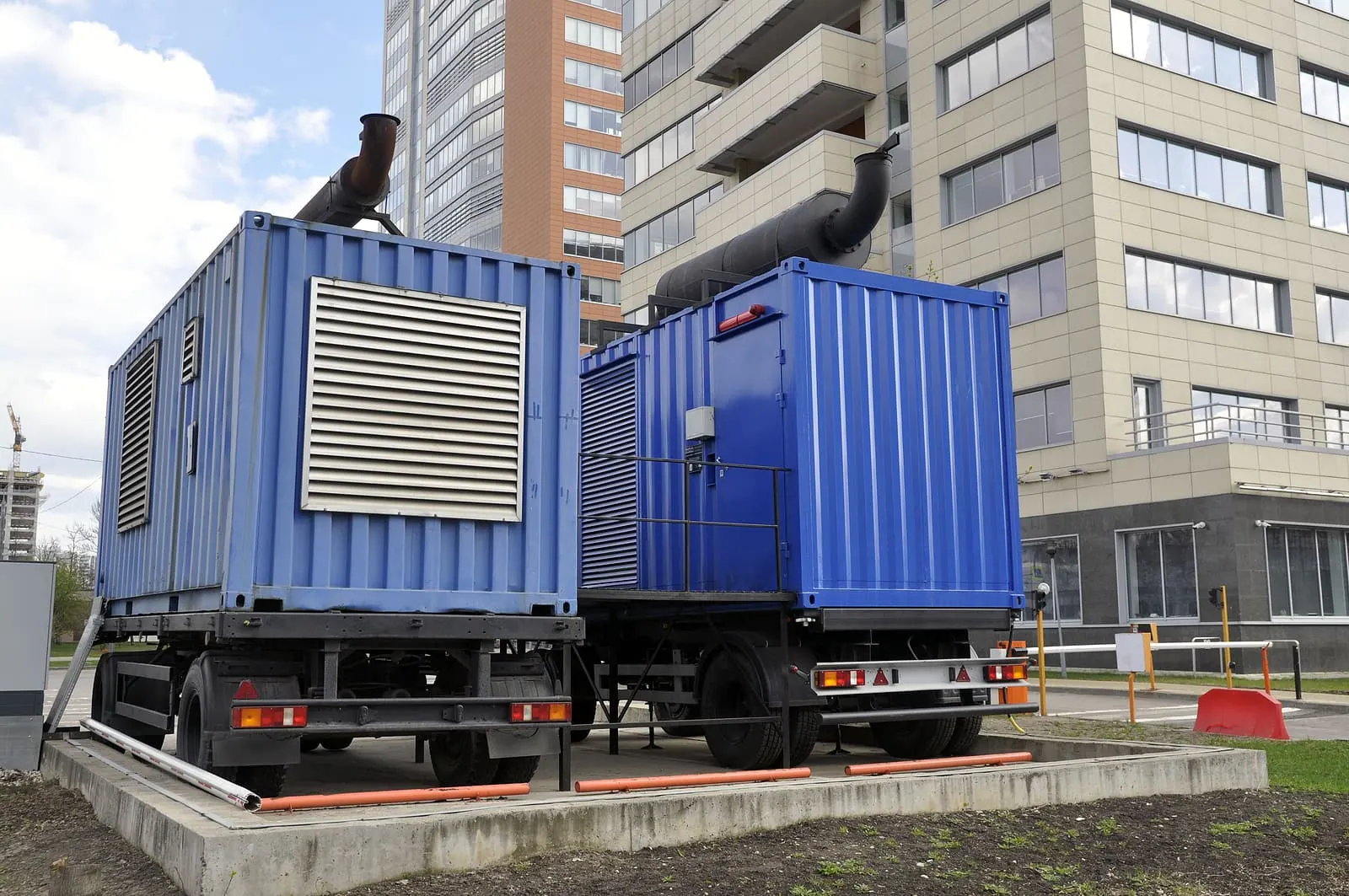
What renewable diesel is, and why data centers look at it
Renewable diesel is hydrocarbon diesel made from fats and oils. Feedstocks such as used cooking oil, animal fats and vegetable oils are hydrotreated into a fuel that EIA describes as chemically equivalent to petroleum diesel. In Europe it's called HVO (hydrotreated vegetable oil). R99 is about 99% renewable diesel with a little petroleum diesel, R100 is neat. The basics, names and FuelGo supply are on our R99 renewable diesel page.
It is not biodiesel. Biodiesel (FAME) is a different chemistry, sold in blends, and Caterpillar's renewable fuels FAQ says it has a much shorter shelf life than diesel or HVO and is not recommended for standby power. That storage point is why data centers, whose generators barely run, look at renewable diesel rather than higher biodiesel blends. Blend levels and engine limits for biodiesel are in biodiesel vs. diesel.
The pull is carbon. Generator fuel is one of the few direct emissions a data center controls, and swapping the fuel doesn't need new generators or tanks. The rest of this guide is what has to be true before you make the swap.
SpecsASTM D975 vs. EN 15940: which spec applies
In the U.S., renewable diesel is sold as D975 diesel. EIA, the DOE Alternative Fuels Data Center and Neste's renewable diesel handbook all say it meets ASTM D975. Neste says it fulfills Grade No. 2-D, the 15 ppm sulfur grade stationary generators burn, and that D975 sets no density limit, so it can be blended with petroleum diesel in any ratio.
EN 15940 is the European spec for paraffinic diesel. HVO fails Europe's regular diesel spec, EN 590, on one property only: its density is below the minimum. So Europe gave paraffinic fuels their own standard, EN 15940, and many engine maker approvals were written against it.
Cummins' genset approval names EN 15940 fuels. Caterpillar accepts EN 15940 or ASTM D975. Generac and Kohler spec sheets cite both. Before the first load, read your maker's wording and ask the supplier which specification the product is certified to.
Which generator makers approve HVO
These are the makers' own statements, oldest first. Approvals change, and they apply to models, not brands, so treat this as a starting point and get your model's fuel bulletin.
| Maker | What they approved | Spec named | Source and date |
|---|---|---|---|
| Cummins | Its entire line of diesel generator sets, in standby applications. Existing emissions data sheets and EPA Tier 2 certifications apply on HVO. | EN 15940 paraffinic fuels, incl. HVO | Cummins press release, Dec. 2021 |
| Rolls-Royce (mtu) | Series 1600 and Series 4000 generator sets, full performance without modification. | EN 15940 (HVO, BtL, PtL) | Rolls-Royce press release, May 11, 2022 |
| Kohler (now Rehlko) | KD Series mission-critical generators, 400 kW to 4 MW, new or already installed, no adaptations. KD spec sheets list approval for HVO/renewable diesel. | EN 15940 / ASTM D975 (spec sheets) | KHL, July 5, 2022; KD spec sheets |
| Generac Industrial | Complete stationary and mobile diesel portfolio in current production (SD, MD, PLY, TLY, RD, RA), blends up to 100% HVO, covered under existing warranties. | ASTM D975 and EN 15940 | Generac white paper, Oct. 2022 |
| Caterpillar | All Cat generator sets, on 100% diesel, 100% HVO or any blend; standby and prime. Tested on 3516 and C175-20 sets. | EN 15940 (preferred) or ASTM D975 | Cat renewable liquid fuels FAQ (undated web page) |
Kohler's power business was renamed Rehlko in 2024. The Kohler 2022 statements predate the rename.
- Get it in writing for your serial numbers. A press release covers a product line. Your warranty covers specific engines, so ask the dealer or maker for a fuel approval letter that names them.
- Read the limits. Cummins' approval is for standby use. If any of your sets run prime or continuous duty, check that rating separately.
- Loop in your environmental team. Ask whether the generators' air permit names the fuel before the first delivery, not after.
Runtime: plan on 3–5% more gallons
Renewable diesel is lighter, so a gallon carries a little less energy. It weighs about 6.4–6.7 lb per gallon against about 7.1 for #2 diesel (see how much diesel weighs). Sources put the effect in a narrow band:
| Source | What it says |
|---|---|
| Kohler KD spec sheets | Volumetric fuel consumption up to 4% higher on HVO/renewable diesel than on #2 ULSD |
| DOE energy figures | About 4% less energy per gallon than ULSD |
| Neste handbook (2016) | About 5% less energy per liter than summer diesel; vehicle tests averaged about 3% more fuel by volume |
What that does to a tank. At 4% more fuel per hour, a tank sized for 48 hours on ULSD runs about 46 hours on R99 (48 ÷ 1.04). In the 10 MW example from how much diesel a data center needs, a plant burning 1,185 gallons an hour would burn about 1,232 on renewable diesel. If your runtime commitment has no margin, either add storage or count the shortfall now. Rerun your numbers with the generator fuel calculator and add the 4%.
Power is usually unchanged on modern engines. Neste reports the same power and torque in common rail engines, but 3–5% lower maximum power with older mechanical injection systems, because those inject the same volume of a less energy-dense fuel. If an older set is loaded near its full rating, ask the maker.
StorageStorage: better than biodiesel, same housekeeping as diesel
Stability is the reason renewable diesel suits standby tanks. Neste's handbook says its stability is at the level of conventional diesel, that it needs no "use before" date, and names emergency generator sets among the uses where long idle periods aren't a problem. It reports a tank of neat renewable diesel left for 8 months after a bus trial came out clear, with no microbial growth.
Sources differ on microbes, so keep sampling. Cummins' approval calls HVO "not prone to bacterial growth." Neste is more careful: water dissolves into renewable diesel about as much as into diesel, or less, but microbes can still grow at a fuel-water interface, warm tanks around 86°F strongly encourage it, and tanks should be kept free of water and drained on a schedule. A data center tank that holds fuel for years still needs the program in data center generator fuel quality.
Tell the lab it's R99
Neste says the Rancimat oxidation test (EN 15751), written for biodiesel blends, is not valid for renewable diesel. The methods used for petroleum diesel apply. Record the switch date so results aren't compared against the wrong baseline.
Confirm the additive
Like ultra-low sulfur diesel, neat renewable diesel needs a lubricity additive (Neste). D975 caps wear scar at 520 µm. Ask the supplier to confirm each load is treated.
Watch old seals after the switch
Renewable diesel has almost no aromatics. Neste says old nitrile seals that swelled in aromatic or biodiesel fuel can shrink, and its only reported leaks came from vehicles over 10 years old. Check older sets for weeps after the first fills.
Diesel yes, high biodiesel no
Renewable diesel mixes with petroleum diesel in any ratio. Neste advises against storing it with more than 7% biodiesel, so a tank that held B20 should be drawn down or polished first. Polishing an old tank before the first load is cheap insurance.
Cold weather works differently. Neste says cold-flow additives give only minor improvement in renewable diesel, and its cold filter plugging point sits close to its cloud point. The fix is buying the right seasonal grade, not more additive. Ask for the cloud point before winter; gel temperatures side by side are in what temperature diesel gels.
CarbonCarbon reporting: what changes and what doesn't
Lifecycle carbon intensity depends on the feedstock. The DOE Alternative Fuels Data Center says renewable diesel cuts carbon intensity by 65% on average against petroleum diesel, based on California's Low Carbon Fuel Standard certified values. Neste puts its own product at 40–90% lower depending on feedstock. Engine makers quote "up to" figures: up to 90% (Rolls-Royce, Kohler) and up to 75% (Generac). Use the number that comes with your fuel, not a marketing maximum.
| Item | Petroleum diesel | Renewable diesel |
|---|---|---|
| CO2 from burning it in the generator | Scope 1 | Reported separately as biogenic CO2, outside the scopes (GHG Protocol memo item) |
| CH4 and N2O from combustion | Scope 1 | Still Scope 1 |
| Producing and transporting the fuel | Scope 3, Category 3 | Scope 3, Category 3 (this is where feedstock and processing show up) |
| Petroleum share of R99 (about 1%) | n/a | Fossil CO2, Scope 1 |
Based on the GHG Protocol Corporate Standard FAQ and Scope 3 Technical Guidance. Other disclosure frameworks can treat biogenic emissions differently.
The exhaust is not zero. Kao Data, a U.K. operator, told The Register that its site-level reductions on HVO were 13% for particulates and 6% for NOx, while the "up to 90%" figure is a lifecycle number. Your air permit still sees a diesel engine.
Renewable content is proven on paper. Neste notes that routine lab tests can't tell renewable from petroleum hydrocarbons in a blend. Content rests on the supplier's declaration and blending records, with carbon-14 testing (ASTM D6866) only if it's disputed. For each delivery, keep:
- The delivery ticket and product transfer document showing product name and gallons by tank.
- Renewable content (R99, R100 or a stated blend) and the specification it's certified to.
- Carbon intensity or emission factor the supplier will stand behind, with its basis and feedstock if available.
- A log of any ULSD added during outages or supply gaps, so blended tanks are accounted for honestly.
This is general information about how renewable diesel is commonly reported. Emission factors, frameworks and claims rules differ by reporting program and change over time. Confirm your treatment with your sustainability team, auditor or adviser before you publish numbers.
Availability: mostly a West Coast fuel
Most U.S. renewable diesel is burned in California. EIA reported in February 2025 that it made up nearly 65% of California's transportation distillate in the third quarter of 2024, and roughly 15% or more in Oregon and Washington (EIA's latest quarters for each), because those three states run clean fuel programs that reward it. The DOE says nearly all domestically produced and imported renewable diesel is used in California.
East of the Rockies it is a smaller, longer supply chain. EIA reported in December 2024 that the East Coast had become a consistent destination for small volumes, about 5,000–7,000 barrels a day at record months in 2024. None is produced there; it arrives by import or from other U.S. regions.
- Lead time is part of the decision. Away from the West Coast, confirm the supply route and lead time before you commit a campus to it.
- Keep a fallback. Because renewable diesel and ULSD mix in any ratio, an emergency refill with ULSD during a long outage is a reporting issue, not an engine issue. Write that into your fuel supply agreement and your emergency fuel plan.
- Price depends on the market. DOE's July 2025 price report had renewable diesel in California at $5.10 a gallon against $5.09 for diesel. In France, Digital Realty told The Register in April 2025 it pays about 25% more per liter. Get a delivered quote for your site; current diesel benchmarks are in the diesel price report.
Public data center examples
These are public announcements by the companies involved. They are industry examples only, not FuelGo customers or projects.
| Operator | What was announced | Source |
|---|---|---|
| Microsoft | Cummins said it partnered with Microsoft to run QSK95 generator sets on HVO at Microsoft's Des Moines, Iowa and Phoenix, Arizona data center sites. Microsoft's fact sheet says its Swedish datacenters use an HVO50 fuel with at least 50% renewable raw material. | Cummins, Dec. 2021; Microsoft fact sheet, 2022 |
| Digital Realty | First U.S. use of HVO at three sites: PDX12 (Hillsboro, Ore.), SC1 (Santa Clara, Calif.) and LAX12 (El Segundo, Calif.), after more than 20 European sites. The company projected about 12,000 metric tons of CO2 avoided compared with previous years. | The Register, Apr. 11, 2024 |
| EcoDataCenter (Sweden) | Switched the emergency generators at its Falun site, 32 mtu systems on Series 4000 engines, from fossil diesel to HVO. | Rolls-Royce mtu press release, Nov. 2024 |
Note where the U.S. examples sit: two of Digital Realty's three sites are in California and one in Oregon, the states where EIA says the fuel is concentrated.
SwitchingSwitching a data center to renewable diesel: 8 steps
- Get the approval letter from the engine maker or dealer for your models and duty rating.
- Check the air permit with your environmental team for any fuel specification.
- Test and polish the tanks so the first load doesn't go on top of water, sludge or a high biodiesel blend.
- Recalculate runtime with 3–5% more gallons per hour and decide whether to add storage.
- Agree the documents that come with every load: spec, renewable content, carbon intensity basis.
- Baseline the new fuel with a lab sample from the first delivery, and tell the lab it's R99.
- Set the winter grade and its cloud point before the first cold month.
- Plan supply and fallback: lead time, the backup fuel during emergencies, and how blended tanks get reported.
R99 delivered to your generators
FuelGo delivers R99 renewable diesel nationwide, alongside dyed and clear diesel on the same account, with sustainability documentation for your ESG reporting. R99 isn't stocked at every terminal: where we can pull it locally it moves like any other load, and where there's no local terminal we bring it in by rail or barge. Dispatch confirms the supply route and lead time for your site before we quote.
Before the first fill we can run lab fuel testing and polish tanks from 50 to 50,000 gallons, so the renewable fuel goes into a clean tank. Deliveries run 20 to 4,400 gallons per drop and transport loads up to 7,500, scheduled around your generator tests. Dispatch is staffed 24/7/365. See our data center fuel delivery page and the data center generator fuel guide. Get a delivered quote or call 800-720-4546; a dispatcher replies within the hour.
Common questionsRenewable diesel for data center generators FAQ
Can data center generators run on renewable diesel?
Does renewable diesel meet ASTM D975?
Which generator makers approve HVO?
How much more renewable diesel does a generator burn?
How long can renewable diesel be stored in a generator tank?
How do data centers report renewable diesel emissions?
Can you mix renewable diesel with regular diesel in a generator tank?
Where is renewable diesel available?
Sources: EIA, Biofuels explained (renewable diesel chemically equivalent to petroleum diesel; meets ASTM D975) · DOE AFDC, Renewable diesel (meets D975 and EN 15940, not EN 590 density; 65% average lower carbon intensity per CARB LCFS; nearly all used in California) · Neste Renewable Diesel Handbook, May 2016 (D975 No. 2-D; EN 15940; density and heating value; ~3% fuel consumption; power in older injection; cold properties; stability and emergency generators; water and microbes; lubricity; seals; FAME storage; 14C; 40–90% GHG) · KHL, Cummins generator sets approved for HVO, Dec. 7, 2021 · Cummins press release, Dec. 21, 2021 (standby approval; Tier 2 certifications; bacterial growth; Microsoft Des Moines and Phoenix QSK95) · Rolls-Royce, mtu gensets approved for sustainable fuels, May 11, 2022 · KHL, Kohler expands HVO to power gen products, July 5, 2022 · Kohler KD2000 spec sheet G5-626 (HVO/RD approval; up to 4% more by volume) · DOE AFDC Fuel Properties Comparison (energy per gallon) · Equipment World, Kohler Energy changes name to Rehlko, 2024 · Generac Industrial Power, Introduce Sustainability in your Diesel Equipment Today with HVO, 10/2022 · Caterpillar, Renewable Liquid Fuels: 3500 and C175 Series Generator Sets FAQ · GHG Protocol FAQ (biomass CO2 in a memo item; CH4 and N2O in Scope 1) · GHG Protocol Scope 3 Technical Guidance, Category 3 · EIA Today in Energy, Feb. 18, 2025 (West Coast consumption; ~65% of California transportation distillate in 3Q24) · EIA Today in Energy, Dec. 3, 2024 (East Coast small volumes) · DOE Clean Cities Alternative Fuel Price Report, July 2025 · The Register, HVO is not an emission-free swap for diesel in datacenters, Apr. 25, 2025 · The Register, Digital Realty HVO in the U.S., Apr. 11, 2024 · Microsoft, Datacenter fuel safety and sustainability fact sheet (HVO50 in Sweden) · Rolls-Royce mtu, EcoDataCenter relies on HVO, Nov. 2024. The 46-hour and 1,232 gal/h figures are FuelGo calculations from these sources.