
How to Reduce Fleet Fuel Costs: 15 Ways That Don't Start at the Pump
The pump price is the fuel cost you control least. These 15 go after what you do control: gallons burned, gallons lost, and paid hours spent getting fuel.
To reduce fleet fuel costs, cut three things: the gallons you burn, the gallons you lose and the paid hours spent getting fuel. Start with idle time, top speed, tire pressure and driver coaching, which cost little. Then close theft and short deliveries, and fuel vehicles where they park instead of sending drivers to the pump.
Ways 1–8: burn fewer gallons per mile and per hour
1Cut idle time
A heavy-duty truck burns about 0.8 gallon an hour idling, and a typical long-haul truck idles about 1,800 hours a year, roughly 1,500 gallons (DOE). Where warranties and service intervals run on engine hours, idling costs more than the fuel. A diesel-fired heater uses 0.04–0.08 gallon an hour and an APU 0.2–0.5. Write an idle policy, then enforce it with telematics idle reports, for trucks and for job-site machines.
2Govern top speed
EPA SmartWay's rule of thumb: every extra mph costs a truck about 0.1 mpg. EPA's own fact sheets put the gap between 55 and 65 mph anywhere from 7% to 20%, depending on the truck. Changing the maximum speed setting on an electronically controlled engine costs next to nothing. The trade-off: 60 mph instead of 65 adds about 8% to drive time, so weigh it against how drivers are paid.
3Keep tires at pressure, and aligned
Truck tires 10 psi low cut fuel economy by 0.5–1%, and they can lose up to 2 psi a month with nothing wrong (EPA SmartWay). In a survey EPA cites, less than half the tires on combination trucks were within 5% of their recommended pressure. Pressure monitoring or automatic tire inflation catches it between yard checks. For pickups and vans, DOE puts the loss at about 0.2% per psi. Check alignment whenever tires wear unevenly.
4Spec aerodynamics where trucks run the highway
Wind resistance is most of a truck's energy loss at highway speed (EPA). SmartWay puts a full aero tractor package at over 3% better fuel economy than a typical tractor, up to 15% on a classic truck with no aero at all, and up to 11% with an aerodynamic trailer added. Most SmartWay-verified trailer skirts are rated at 4–5%. The gain grows with speed and distance, so spec it for interstate tractors, not short stop-and-go routes.
5Maintain for fuel, not just uptime
Use your per-unit numbers: a truck burning clearly more than its siblings on the same routes belongs in the shop. Injector deposits are one cause, and detergent-additized fuel can help clean them up over time (see premium vs regular diesel). Run the oil grade the maker specifies; DOE puts that gain at 1–2% for light-duty vehicles. Don't count on air filters: DOE says replacing a clogged one on a diesel improves acceleration, not mileage.
6Coach drivers with scorecards
EPA SmartWay lists the habits that waste fuel: fast acceleration, high rpm, excess shifting, unnecessary idling and roundabout routes. It puts typical gains from driver training at 5% or more, and cites a Canadian estimate of 10% for training plus monitoring. Score each driver on idle, speed and harsh events from telematics, review it with them, and tie a simple incentive to it.
7Optimize routes
The cheapest gallon is the one a truck never needs. UPS projected in 2015 that its ORION routing software would cut 100 million miles and 10 million gallons a year once fully deployed in the U.S.; later reporting put the savings at around 9 million gallons a year. You don't need UPS's scale. Routing software, fewer backtracks and consolidated stops pay off for any fleet running multiple stops a day.
8Right-size the fleet
DOE's rightsizing guidance asks two questions of every vehicle: is it still being used, and is it the right type, class and size for the job? A one-ton crew cab hauling a laptop, or a spare tractor parked most of the month, burns fuel and maintenance budget for little work. Pull utilization by unit, then reassign, downsize or retire.
Ways 9–12: stop losing fuel you already paid for
9Close the theft and card-misuse gaps
Fuel leaves fleets two ways: drained after hours from tanks and parked machines, and a few gallons at a time through shared cards, personal vehicles and fills logged to units that were down. Limit cards by unit, product and gallons, lock caps and site tanks, and flag any fill bigger than the unit's tank. The full playbook is in our fuel theft guide.
10Reconcile delivered against dispensed gallons
Every delivery ticket should match what the tank actually took: a meter that started at zero, the right product and site, and a gauge reading before and after. Then the gallons that leave a site tank should match the gallons logged into units. A gap on either side is a short delivery, a leak or theft. See how to read a fuel delivery ticket.
11Keep fuel clean and winter-ready
A gelled filter or a wet tank never shows up on the fuel invoice. It shows up as a tow, a stranded crew and a lost shift. Buy winter fuel rated for your coldest night before the cold arrives, add anti-gel while the fuel is still above its cloud point, and drain water from tanks and separators. See how to prevent diesel gelling and what temp diesel gels. Stored fuel that has sat for months can be tested and polished.
12Manage DEF like fuel
Most engine makers put DEF use at about 2–3% of diesel burned, higher on some current engines (see how much DEF per gallon). Let it run out and the SCR system steps the engine down in power; EPA relaxed that schedule in 2025, but a derated truck still isn't earning. Track DEF by unit alongside fuel, stock it where trucks park, and size it with the DEF consumption calculator.
Ways 13–15: stop paying for the act of fueling
13Stop paying drivers to go get fuel
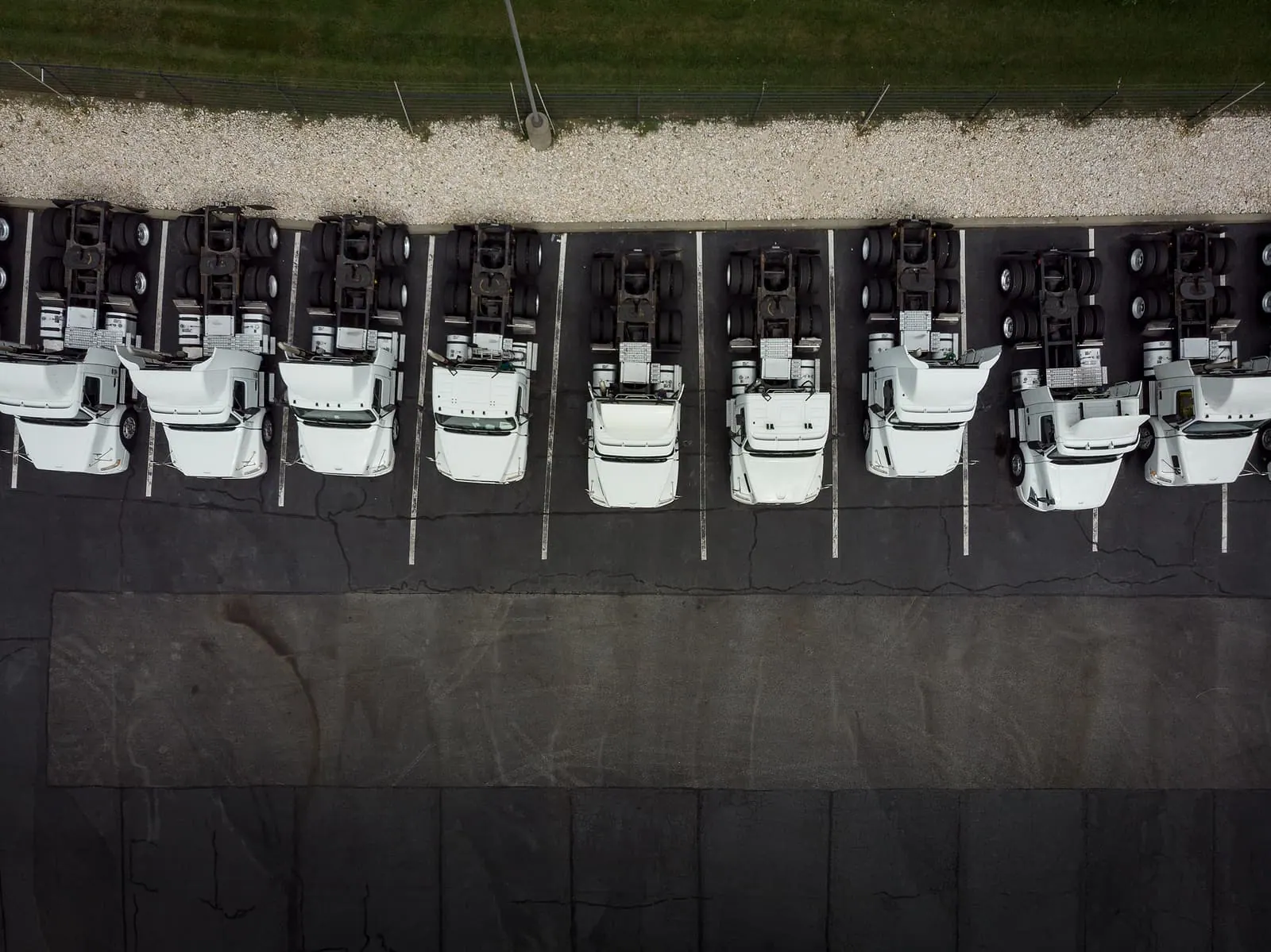
Geotab's study of 14 million trips found a station stop added about 20 minutes: 8 off route and 12 at the station, with a 2.2-mile detour, about seven times a month. For 20 vehicles that's roughly 47 paid hours a month. Wet hosing fuels each unit where it parks, usually overnight. Those hours count only if they become stops, earlier starts or less overtime, so compare on-site delivery vs fuel cards in the fleet fueling cost calculator.
14Monitor tanks, set reorder points, run every site on one account
Sticking tanks by hand and ordering when someone remembers leads to run-outs and rush orders. Give each tank a reorder point: the gallons you burn during the delivery lead time, plus a reserve you never dip into. Monitoring then triggers refills from actual consumption. For fleets spread across states, one fuel account replaces a different vendor, invoice format and phone number in every region.
15Put dyed diesel only where it belongs, and claim tax you didn't owe
Dyed diesel skips the 24.3¢ federal excise (it still pays the 0.1¢ LUST tax) and, in most states, state fuel tax. It's for eligible off-road use: construction equipment, generators, farm machines. Anything registered for the road runs clear. When taxed clear diesel was burned in off-road equipment, the business that bought and used it may be able to claim the federal tax back. See dyed vs clear diesel, the off-road diesel tax refund and diesel taxes by state.
Not tax advice. Which uses qualify, state refunds and the records you need vary. Confirm with a tax professional before you change what goes in your tanks or file a claim.
Take fueling off your drivers' clock
FuelGo's mobile fleet fueling is wet hosing: our driver fuels each truck or machine where it's parked, usually overnight, and scans a barcode on each unit at the meter, so a fleet report lists gallons by vehicle or asset. One route can carry clear on-road diesel, dyed off-road diesel and DEF, billed as separate line items. No minimum order, from 5 vehicles to 500.
For yard and site tanks, bulk delivery runs 20 to 4,400 gallons per drop and transport loads up to 7,500, with tank monitoring that schedules refills off real consumption. We deliver in all 50 states, with every location on one account and centralized billing. Dispatch runs 24/7/365. Get a delivered quote or call 800-720-4546; a dispatcher replies within the hour.
Common questionsFleet fuel cost FAQ
What is the fastest way to reduce fleet fuel costs?
How much fuel does idling waste?
Does driving slower really save fuel in trucks?
How much fuel does low tire pressure cost?
Is on-site fleet fueling cheaper than fuel cards?
How can I tell if fleet fuel is being stolen or shorted?
Can dyed diesel lower fleet fuel costs?
Sources: U.S. DOE / Argonne, Long-Haul Truck Idling Burns Up Profits (2015): idle fuel use, hours, heaters and APUs · DOE fueleconomy.gov, driving more efficiently (light-duty idling) · DOE fueleconomy.gov, keeping your vehicle in shape (tire pressure, oil grade, air filters) · EPA SmartWay, Reducing Highway Speed (EPA-420-F-16-029) · EPA SmartWay, Driver Training (EPA-420-F-16-030) · EPA SmartWay, Maintaining Proper Tire Inflation Pressure (EPA-420-F-16-035) · EPA SmartWay, Improved Aerodynamics (EPA-420-F-16-023) · EPA SmartWay verified list of aerodynamic devices · DOE AFDC, fleet rightsizing · UPS ORION release (March 2015) · Trellis, how UPS uses ORION · Geotab, the business impact of off-route fleet refueling · DieselNet, EPA revised DEF inducement guidance (Aug. 2025) · IRS Publication 510, Excise Taxes · IRS, Instructions for Form 4136