
What Is Black Diesel?
Uses, legality, and what commercial operators actually use to fuel their equipment, including how black diesel compares to dyed diesel and off-road diesel.
Black diesel is fuel made from recycled waste oils: used motor oil, hydraulic fluid, and other petroleum lubricants. It is not a commercially available, EPA-approved fuel. It is frequently confused with dyed diesel (red diesel), a completely different product and what commercial operators actually use for off-road equipment. FuelGo delivers dyed diesel nationwide →
What Is Black Diesel?
Black diesel is a term used to describe fuel produced from recycled or waste oils, primarily used motor oil, hydraulic fluid, transmission fluid, and other petroleum-based lubricants that have been collected, filtered, and processed into a usable fuel. It gets its name from the dark color these waste oils have after use.
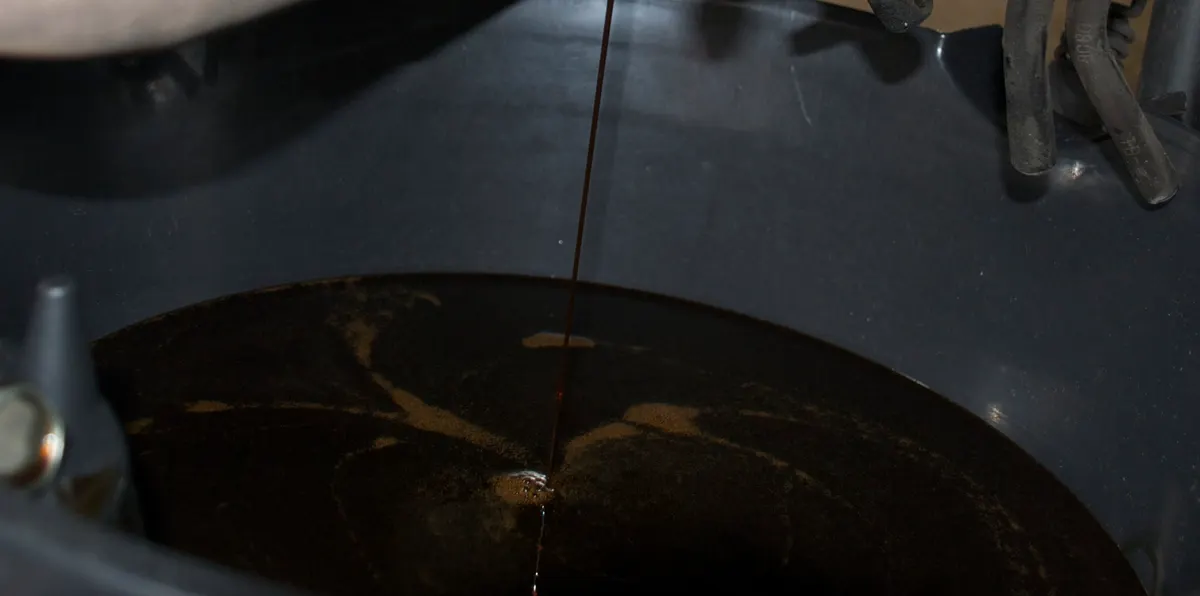
Black diesel is not a commercially sold, regulated fuel product in the United States. It is not available at fuel stations, not sold by licensed fuel distributors, and not legal for use in on-road vehicles under EPA regulations. It exists primarily as a DIY or informal fuel solution in off-grid settings, and its quality varies enormously depending on how it was processed.
Many people searching for "black diesel" are actually looking for dyed diesel (off-road diesel), a completely different, fully legal, commercially available product. Dyed diesel is the standard fuel for off-road equipment in the US and is what FuelGo delivers nationwide.
Black Diesel vs. Dyed Diesel: What's the Difference?
Dyed diesel, also called red diesel or off-road diesel, is chemically identical to clear diesel but with a red dye added for federal tax identification. Black diesel and dyed diesel share nothing in common except that both can be used in diesel engines.
| Factor | Black Diesel | Dyed Diesel (Off-Road) |
|---|---|---|
| Source | Recycled waste oils | Petroleum refinery |
| EPA approved | No | Yes, federally regulated |
| Legal for equipment | Generally not compliant | Yes, all off-road use |
| Commercially available | No | Yes, licensed distributors |
| Quality consistency | Inconsistent | Consistent, ASTM D975 |
| Cost vs. clear diesel | Variable / unregulated | $0.24–$0.94/gal less tax, by state |
| Delivered to job sites | No | Yes, nationwide delivery |
Is Black Diesel Legal?
In the United States, black diesel made from recycled oils is generally not legal for use in vehicles subject to EPA emissions standards and is not approved as a commercial fuel under ASTM standards. Using non-compliant fuels in EPA-regulated engines can void warranties, damage emissions control systems, and result in regulatory penalties.
If you need a legal, cost-effective diesel for off-road equipment, dyed diesel (off-road diesel) is the correct product. It performs the same as clear diesel at a lower price, with full regulatory compliance and consistent ASTM D975 quality.
What to use insteadWhat Do Commercial Operators Actually Use?
For construction sites, agricultural operations, mining, events, and any other off-road application, these are the commercially available fuel options:
Off-Road Diesel (Dyed)
The standard fuel for excavators, generators, loaders, agricultural machinery, and other off-road equipment. It skips the federal excise tax and most state road taxes: $0.24–$0.94 a gallon less tax than clear diesel, depending on the state. FuelGo delivers off-road diesel nationwide →
Clear Diesel (On-Road)
For trucks, vans, and any diesel vehicle on public roads. Subject to federal and state highway taxes. FuelGo delivers on-road diesel →
Renewable Diesel (R99)
A drop-in replacement for petroleum diesel made from renewable feedstocks. No engine modifications required, with significantly lower carbon emissions. Learn about R99 →
Diesel Exhaust Fluid (DEF)
Required for diesel engines with SCR systems, standard on most trucks since 2010. Running out derates or shuts down the engine. FuelGo delivers bulk DEF →
How Is Off-Road Diesel Delivered to Job Sites?
Unlike clear diesel purchased at retail stations, off-road diesel is delivered directly to job sites, storage tanks, and equipment yards by licensed fuel distributors. This is more practical, since off-road equipment can't drive to a gas station, and more cost-effective, as bulk pricing is consistently lower than retail.
For projects needing on-site storage, FuelGo offers diesel fuel tank rental: double-walled tanks delivered and set up at your location. Use our free Tank Size Calculator to find the right size for your operation.
FuelGo delivers off-road diesel, clear diesel, and DEF to construction sites, industrial facilities, farms, and fleet yards across all 50 states, 24/7. Scheduled deliveries, emergency deliveries, and tank rental are available with no minimum order. Get a free quote or call 800-720-4546.
Common questions